The government shutdown was avoided. The real budget fight was just quietly moved to December.

Wednesday · September 2, 2026
The Daily Digest
Dark Bulls
Dell beat estimates by 44% and raised its forecast $23 billion overnight. Congress avoided a shutdown — and shoved the real fight past Election Day. Djokovic lost in the first round. And Charlie Kirk's accused killer will stand trial for his life.
A dense Wednesday. Dell's earnings last night were genuinely stunning — revenue up 58%, EPS nearly double expectations, full-year guidance raised by $23 billion. Congress passed a stopgap spending bill 370-48 and quietly moved the real budget fight to December. Tropical Storm Edouard hit the Texas coast. Djokovic's historic US Open winning streak ended Sunday in five sets. And a Utah judge ruled that Tyler Robinson will stand trial for Charlie Kirk's assassination. Let's get into it.
📈 Money & Markets

Dell just beat estimates by 44% — and raised its full-year forecast by $23 billion overnight.
Dell Technologies reported fiscal second-quarter results after Tuesday's close that left Wall Street speechless. Revenue came in at $46.97 billion, up 58% year over year and above every analyst estimate. Adjusted earnings per share hit $7.04 — against expectations of $4.92, a beat of 44%. Net income more than tripled from a year ago, rising to $4.13 billion. The stock surged roughly 9% in after-hours trading, adding tens of billions in market capitalization in minutes.
The infrastructure solutions group — Dell's AI server business — delivered $31.78 billion in revenue, up 89% from a year earlier, against a consensus estimate of $29.61 billion. AI-optimized servers alone contributed $16.4 billion. What everyone had been watching — the operating margin on those AI servers — held at levels that satisfied investors. CEO Jeff Clarke said price increases stemming from climbing memory costs are tracking to recover more than the typical two-thirds of input cost increases within 90 days. That's the margin reassurance markets needed.
"When a company shipping $16 billion worth of AI servers in a single quarter raises its full-year forecast by $23 billion, the message is clear: the AI infrastructure buildout is accelerating, not slowing."
— Dark Bulls
The guidance was the real story. Dell raised its full-year fiscal 2027 forecast to $25.50 in adjusted EPS on $192 billion in revenue — up from $17.90 and $165-$169 billion at the prior report. Analysts had been expecting $18.92 per share and $172.67 billion in revenue. That $23 billion raise to the revenue outlook in a single quarter is the kind of revision that resets an entire thesis. Dell shares had already gained roughly 236% year to date coming into this week.
For investors watching the broader AI trade, Dell's report carries a message that extends beyond the stock. The AI infrastructure buildout is not slowing. It is not experiencing a margin collapse. When the companies spending $150 billion a quarter on AI infrastructure keep accelerating their orders, the spending is real — and Nvidia, Dell, and the rest of the supply chain are going to keep benefiting from it.
Dell Q2 FY2027 · Sept 1, 2026
$46.97B
Revenue (+58% YoY)
$7.04
Adj. EPS (est. $4.92)
$192B
New FY27 revenue guide
Advertisement
If you're near or over 73, this matters.
Most retirees take their Required Minimum Distributions (RMDs) the default way. In cash. And that's where the problem starts.
Because taking RMDs the wrong way can mean:
· More taxes for Washington
· Less compounding for you
· A smaller legacy for your family
What most retirees don't realize is that IRS Code 408(m) allows RMDs to be handled differently — in a way that may help protect more of what you've earned. But timing matters. Once the distribution hits your account, options shrink fast.
We created a free guide explaining:
· The #1 RMD trap
· Why inflation quietly erodes cash distributions
· How some retirees are repositioning before it's too late
Because the most expensive mistake… is waiting until after the check clears.
Allegiance Gold, LLC is not a broker-dealer and does not provide investment, tax, or legal advisory services. Precious metals, like all investments, carry risk, are not suitable for all investors, and past performance does not guarantee future results. Please consult your own investment, tax, or legal advisor prior to making any investment decision. Copyright Allegiance Gold, LLC 2026
🏛️ Politics
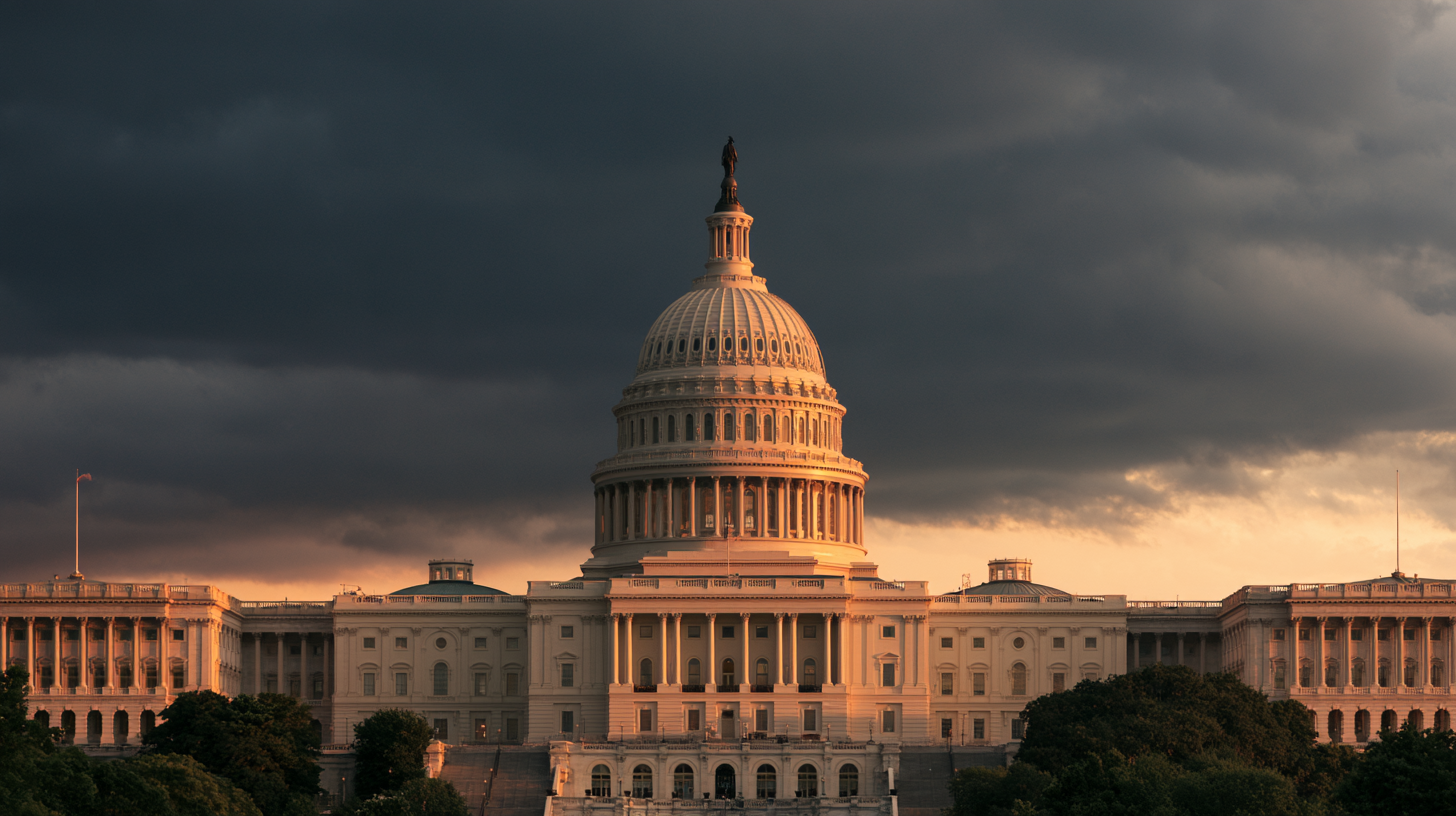
Congress just voted 370-48 to avoid a government shutdown — and quietly pushed the real budget fight past the November elections.
The House passed a continuing resolution Tuesday on a lopsided 370-48 vote, extending current federal spending levels through December 11 and sending the bill to President Trump's desk for signature. The Senate had already passed the measure 90-6 in August. Without action, federal funding would have expired October 1, the start of the new fiscal year. Another shutdown — after what federal employees described as the most disruptive stretch of shutdowns in memory — was averted.
The math behind the vote is worth understanding. Congress has passed exactly three of the 12 annual appropriations bills required to fund the government for a full year. The Senate has passed zero. The CR is not a solution — it's a postponement. The December 11 deadline lands five weeks after the November 3 midterm elections, meaning the next serious budget fight will happen with a potentially very different Congress.
"This will allow Congress time to get past the November elections, and allow us time to assess and move forward." — House Appropriations Chairman Tom Cole, on the House floor.
— Rep. Tom Cole (R-OK)
The timing is intentional on both sides. Republicans didn't want a shutdown dominating the final weeks of the midterm campaign. Democrats didn't want to be blamed for one either. Cole acknowledged the politics directly — about as candid an admission as you'll hear on the House floor that a piece of legislation is primarily about not losing seats.
The CR includes two notable policy provisions: one blocks an OMB rule that would have put federal grant funding under political appointee review, and another prevents the administration from transferring funds to Border Patrol from other programs. Representative Betty McCollum made a point of noting the CR does not include the Iran war supplemental funding Trump had requested. For federal employees, the practical effect is simple: agencies keep running, paychecks keep coming, and the next fight moves to December.
Advertisement
APR Insights
Trump's Executive Order #14330 Moves to the Department of Labor
Here's What Happens Next
 President Trump signed Executive Order #14330 — a sweeping change that could forever alter Americans' retirement accounts.
For the first time ever, physical precious metals like gold are being formally opened to retirement portfolios. The order is set to take effect in 2027, and J.P. Morgan projects a massive wave of demand could send gold prices toward $8,500 per ounce.
But here's what most people don't realize: You don't have to wait for these changes.
If you're 59½ or older, you can move part of your 401(k) or IRA into gold, today — tax-deferred and penalty-free.
President Trump signed Executive Order #14330 — a sweeping change that could forever alter Americans' retirement accounts.
For the first time ever, physical precious metals like gold are being formally opened to retirement portfolios. The order is set to take effect in 2027, and J.P. Morgan projects a massive wave of demand could send gold prices toward $8,500 per ounce.
But here's what most people don't realize: You don't have to wait for these changes.
If you're 59½ or older, you can move part of your 401(k) or IRA into gold, today — tax-deferred and penalty-free.
With Executive Order #14330 now signed, the timing has never been clearer:
▶ Gold prices rose 64% in 2025
▶ J.P. Morgan forecasts gold hitting $8,500/oz
▶ Ray Dalio recommends a 10–15% gold allocation for all investment portfolios
If you want to capitalize on this trend, we've created a free guide that explains how to buy physical gold with your retirement account.
© 2026 APR Insights. All rights reserved. Tax benefits depend on individual circumstances. Always consult a tax professional. Not all retirement accounts qualify.
🌍 Science & World

Tropical Storm Edouard made landfall near the Texas-Louisiana border — the first named storm to hit the Gulf Coast this season.
The storm formed Monday evening over the northwest Gulf and moved onshore Tuesday near the Texas-Louisiana border, bringing sustained winds of around 40 miles per hour and heavy rainfall to the Houston and Galveston areas. Harris and Galveston Counties were under flood watches from early Tuesday morning through Wednesday. Coastal Brazoria, Galveston, and all of Chambers County remained under tropical storm warnings as Edouard pressed slowly inland Tuesday evening.
The timing — hitting the Gulf Coast just as the Labor Day holiday weekend ended — was unwelcome but not catastrophic. Meteorologists characterized the storm as short-lived, with wind speeds kept below the threshold triggering evacuation orders for most areas. The larger concern was rainfall: storms moving slowly through the Gulf tend to dump significant water over a compressed geography, and the Houston area's flat terrain and extensive concrete coverage makes it particularly prone to flooding even from modest systems.
"The Gulf of Mexico accounts for a significant share of U.S. offshore oil and natural gas production. Even weak systems can trigger precautionary shutdowns of platforms."
— Dark Bulls
Energy infrastructure in the region reported no major disruptions as of Tuesday evening. For most Americans, the Gulf Coast storm season's first landfall serves as a reminder that while the Iran situation has dominated energy news this summer, domestic weather remains its own variable in the supply picture. As of Tuesday night, Edouard was downgraded to a tropical depression after making landfall, with the primary remaining threat being heavy rainfall and flooding across eastern Texas and southwest Louisiana through Wednesday morning.
Advertisement
In 1992, Starbucks went public at a split-adjusted price of approximately $0.27.
Today, its stock trades above $108. That's a gain of roughly 40,000%. A tiny stake of $1,000 turned into almost half a million dollars.
But unless you invested in Starbucks back in 1992, that opportunity is already gone. The bigger question is: Where could coffee's next major growth story come from?
 The global coffee market is projected to reach approximately $380 billion by 2033. Its next breakout company may not be built around thousands of cafés. It may begin with the farms… and that's the opportunity that could dwarf Starbucks returns.
Meet Green Coffee Company. It owns approximately 45 Colombian farms and 10 million coffee trees. It holds exclusive rights to Juan Valdez coffee products across U.S. and Canadian retail — already reaching Target, Walgreens and thousands of North American locations.
Individual investors can now own a stake while the company is still private. No accreditation required.
This is a paid advertisement for Green Coffee Company's Regulation A offering. Please read the offering circular at https://invest.greencoffeecompany.com/. Timelines are subject to change. Listing on the NASDAQ is contingent upon necessary approvals, and reserving a ticker symbol does not guarantee a company's public listing.
The global coffee market is projected to reach approximately $380 billion by 2033. Its next breakout company may not be built around thousands of cafés. It may begin with the farms… and that's the opportunity that could dwarf Starbucks returns.
Meet Green Coffee Company. It owns approximately 45 Colombian farms and 10 million coffee trees. It holds exclusive rights to Juan Valdez coffee products across U.S. and Canadian retail — already reaching Target, Walgreens and thousands of North American locations.
Individual investors can now own a stake while the company is still private. No accreditation required.
This is a paid advertisement for Green Coffee Company's Regulation A offering. Please read the offering circular at https://invest.greencoffeecompany.com/. Timelines are subject to change. Listing on the NASDAQ is contingent upon necessary approvals, and reserving a ticker symbol does not guarantee a company's public listing.
The global coffee market is projected to reach approximately $380 billion by 2033. Its next breakout company may not be built around thousands of cafés. It may begin with the farms… and that's the opportunity that could dwarf Starbucks returns.
Meet Green Coffee Company. It owns approximately 45 Colombian farms and 10 million coffee trees. It holds exclusive rights to Juan Valdez coffee products across U.S. and Canadian retail — already reaching Target, Walgreens and thousands of North American locations.
Individual investors can now own a stake while the company is still private. No accreditation required.
This is a paid advertisement for Green Coffee Company's Regulation A offering. Please read the offering circular at https://invest.greencoffeecompany.com/. Timelines are subject to change. Listing on the NASDAQ is contingent upon necessary approvals, and reserving a ticker symbol does not guarantee a company's public listing.
🏀 Sports

The biggest shock at Flushing Meadows wasn't in Tuesday's schedule — it happened Sunday, and we're still processing it.
Novak Djokovic, four-time US Open champion and the man who had won 19 straight first-round matches at Flushing Meadows going back to 2006, lost in the first round Sunday to Argentine qualifier Mariano Navone, 7-6, 5-7, 4-6, 6-2, 6-1. The defeat ended a 20-year unbeaten streak in opening rounds at this tournament — Djokovic's first first-round Grand Slam loss since 2017. He had been trying to become the first man to win 25 Grand Slam singles titles.
Navone, ranked 68th in the world, played the match of his life. He came back from a set and a break down, took control of the fifth set, and closed it out while Djokovic — visibly fatigued and moving less freely than usual — couldn't find the shots that have defined two decades of dominance. The most telling number isn't the sets: it's the 4 hours and 36 minutes the match lasted. That's a brutal opening round for a 39-year-old body.
"With both Sinner and Djokovic out of the men's event, the draw has suddenly become the most open US Open in years. Alcaraz is now the de facto favorite."
— Dark Bulls
With both Sinner (withdrew injured) and Djokovic (eliminated in round one) out of the men's event, Alexander Zverev is now the top seed and the highest-ranked player still in the tournament. Carlos Alcaraz, who advanced Monday in straight sets after four months away, is the de facto favorite on form and recent performance. Tuesday's Day 2 schedule includes Zverev's first-round match against Lorenzo Sonego. The draw, without its most dominant modern champion, is suddenly more open than anyone expected when the bracket was announced.
Advertisement
Did you claim your $2,000 tariff dividend from Trump yet?!
Because it's not just a payout — it's the first sign of a massive wealth shift already in motion.
Trump's calling it a Restoration Dividend. Others say it's "America's next great reset."
Here's the truth: This isn't about charity — it's about taking control back. Your savings. Your retirement. Your freedom.
The first checks are just the beginning. The real opportunity? Is what comes next.
By the time the media catches up… it'll already be too late.
⚖️ Crime & Law

Nearly a year after Charlie Kirk was shot dead at a Utah university, his accused killer will stand trial — and could face the death penalty.
Utah District Judge Tony Graf ruled Tuesday evening that Tyler Robinson, 23, will be tried on aggravated murder charges in the assassination of Charlie Kirk on September 10, 2025. Robinson allegedly shot Kirk once in the neck from a rooftop more than 400 feet away as Kirk spoke to a crowd of thousands at Utah Valley University in Orem. The ruling came after months of preliminary hearings, and the defense's argument that prosecutors hadn't met the evidentiary bar failed to persuade the judge.
The aggravated factor at issue was whether Robinson's decision to fire a high-powered rifle into a crowd of thousands constituted a knowing risk to others beyond his intended target. Prosecutor Ryan McBride called it "common sense" that firing into a crowd puts everyone in danger. Judge Graf agreed, finding "sufficient evidence to support a reasonable belief that the defendant is the individual who shot and killed Charlie Kirk." Robinson entered a plea of not guilty to all seven counts against him.
"You can't shoot a rifle into a crowd of 3,000 people without knowing that you create a great risk of death to all those around your target. You just can't do it." — Prosecutor Ryan McBride
— Utah County Deputy Attorney
The evidence presented during preliminary hearings included security camera footage, forensic DNA matching Robinson's profile to the rooftop where the shooter fired, and what prosecutors described as Robinson's own admissions in text messages and online communications. Defense attorney Staci Visser challenged the state's interpretations, particularly the inferences drawn from the DNA evidence.
Kirk's widow, Erika Kirk, and his parents were present in the courtroom for the ruling. The Kirk family's statement described Tuesday's decision as "an important step in our family's pursuit of justice." Robinson's family was also present. A trial date has not yet been set, but what is now clear is that the proceeding, when it happens, will be a capital murder case — with the prosecution seeking execution as the punishment.
📋 In Brief
Dell's guidance in numbers.
Full-year fiscal 2027 revenue forecast raised to $192 billion, up from $165-$169 billion. Adjusted EPS guidance raised to $25.50 from $17.90. For fiscal Q3, Dell is calling for $49 billion in revenue and $6.50 in adjusted EPS — both well above what analysts had modeled. The stock was trading up roughly 9% in after-hours Tuesday and has gained approximately 236% year to date.
The Kirk trial timeline.
Judge Graf's ruling sets the stage for what is expected to be one of the most closely watched criminal trials in the country. Robinson faces 10 counts including aggravated murder. A trial date has not been announced. Utah is a death penalty state, and the prosecution has made clear it intends to seek that sentence. The anniversary of Kirk's assassination falls next Wednesday, September 10.
Edouard weakening.
As of Tuesday night, Tropical Storm Edouard was downgraded to a tropical depression after making landfall near the Texas-Louisiana border. The center was moving inland through Southeast Texas, with the primary remaining threat being heavy rainfall and flooding across eastern Texas and southwest Louisiana through Wednesday morning.
— David
Dark Bulls
Published Monday–Friday