162,000 jobs. September hike is now real. Happy Labor Day.

Friday · September 4, 2026
The Daily Digest
Dark Bulls
Jobs came in three times stronger than expected — September rate hike is now real. The U.S. may have bombed a wedding in Iran. Two workers pulled alive from a Nepal tunnel after nine days. And it's the last Dark Bulls before Labor Day.
A Friday that starts with one of the biggest jobs report surprises of the year — 162,000 payrolls against a 53,000 estimate — and immediately reshapes the September Fed meeting. Reuters reported this morning that U.S. military investigators believe a SLAM-ER missile hit the Iranian wedding, not an Iranian misfire. In Nepal, two hydropower workers were pulled alive from a tunnel nine days after being trapped. And America's food safety system is quietly fraying. Let's get into it — then enjoy the long weekend.
📈 Money & Markets
The August jobs report just came in three times stronger than expected — and put a September rate hike firmly on the table.
The Bureau of Labor Statistics reported Friday morning that the U.S. economy added 162,000 jobs in August — far exceeding the Dow Jones consensus estimate of 53,000. It was the strongest monthly gain since March. The unemployment rate held steady at 4.1%. Prior months were also revised upward: June moved from 20,000 to 31,000 jobs, and July's initially reported loss of 23,000 was revised to a gain of 21,000. The picture that emerges isn't a labor market in boom mode, but it's clearly not in the deterioration some had feared.
Average hourly earnings rose 0.3% in August, bringing the year-over-year wage gain to 3.1%. The labor force participation rate edged up to 61.6%. An alternative unemployment measure that includes discouraged workers and involuntary part-timers fell to 7.7% — its lowest since June 2025. These are not the numbers of a labor market weakening in any meaningful way. And that matters enormously for what happens September 15-16.
"Warsh told us the Fed's focus is on inflation, not employment. PCE is at 3.7%. And now the jobs market is demonstrably not falling apart. The Fed has no reason to hold back."
— Dark Bulls
The Federal Reserve meets in eleven days. Going into this morning's report, traders were already pricing a 57% chance of a September hike following Warsh's hawkish Jackson Hole speech. That number moved above 65% after the data hit the wire. The September CPI report, due next Thursday, is now the final variable. If it comes in hot, a hike is essentially certain.
For Americans carrying variable-rate debt — adjustable mortgages, home equity lines, floating-rate car loans — this is the morning that just made a September rate increase feel real rather than theoretical. A 25-basis-point hike adds roughly $25-50 per month on a $200,000 variable-rate balance. It's not catastrophic. But it's not the direction anyone with debt wants to see things move heading into fall.
August Jobs Report · Sept 4, 2026
162K
Jobs added (est. 53K)
4.1%
Unemployment rate
65%+
Sept hike odds (post-report)
Advertisement
Quick story for you this Labor Day Weekend…
When a baby-faced Wall Street broker named Irving Weiss said the market was headed for disaster, the veterans in his office laughed at him. "Is this kid trying to hurt our business?" they said.
Because two days later, the Dow crashed almost 13% — then another 12% the very next day. By the time the dust settled, the average stock had lost about 90% of its value. He knew how to play it too, turning $500 into what would be worth $2 million today. Nobody laughed at Irving after that.
And the system he built remains utilized one century later by his son, Dr. Martin Weiss of Weiss Ratings…
 Martin has used Irving's secret to accurately predict nearly every major market event of the last 55 years — including double-digit inflation in 1971, Black Monday in 1987, a tech-wreck warning in 1999, the 2008 financial crisis, and the 2020 Covid crash.
But Weiss Ratings didn't just warn of dangers. It signaled massive opportunities such as Apple three years before the iPhone, Netflix while it was still mailing out DVDs, and Nvidia a decade before AI made headlines.
And right now, Weiss Ratings is flashing green on a new set of stocks — while warning investors to dump five popular names before it's too late.
This Labor Day weekend only, get full access to both of these lists through Weiss Ratings Plus — for just a fraction of its usual price.
This timely opportunity waits for no one,
Martin has used Irving's secret to accurately predict nearly every major market event of the last 55 years — including double-digit inflation in 1971, Black Monday in 1987, a tech-wreck warning in 1999, the 2008 financial crisis, and the 2020 Covid crash.
But Weiss Ratings didn't just warn of dangers. It signaled massive opportunities such as Apple three years before the iPhone, Netflix while it was still mailing out DVDs, and Nvidia a decade before AI made headlines.
And right now, Weiss Ratings is flashing green on a new set of stocks — while warning investors to dump five popular names before it's too late.
This Labor Day weekend only, get full access to both of these lists through Weiss Ratings Plus — for just a fraction of its usual price.
This timely opportunity waits for no one,
Tom Mustin
Host, Weiss Ratings
Martin has used Irving's secret to accurately predict nearly every major market event of the last 55 years — including double-digit inflation in 1971, Black Monday in 1987, a tech-wreck warning in 1999, the 2008 financial crisis, and the 2020 Covid crash.
But Weiss Ratings didn't just warn of dangers. It signaled massive opportunities such as Apple three years before the iPhone, Netflix while it was still mailing out DVDs, and Nvidia a decade before AI made headlines.
And right now, Weiss Ratings is flashing green on a new set of stocks — while warning investors to dump five popular names before it's too late.
This Labor Day weekend only, get full access to both of these lists through Weiss Ratings Plus — for just a fraction of its usual price.
This timely opportunity waits for no one,Tom Mustin
Host, Weiss Ratings
🏛️ Politics
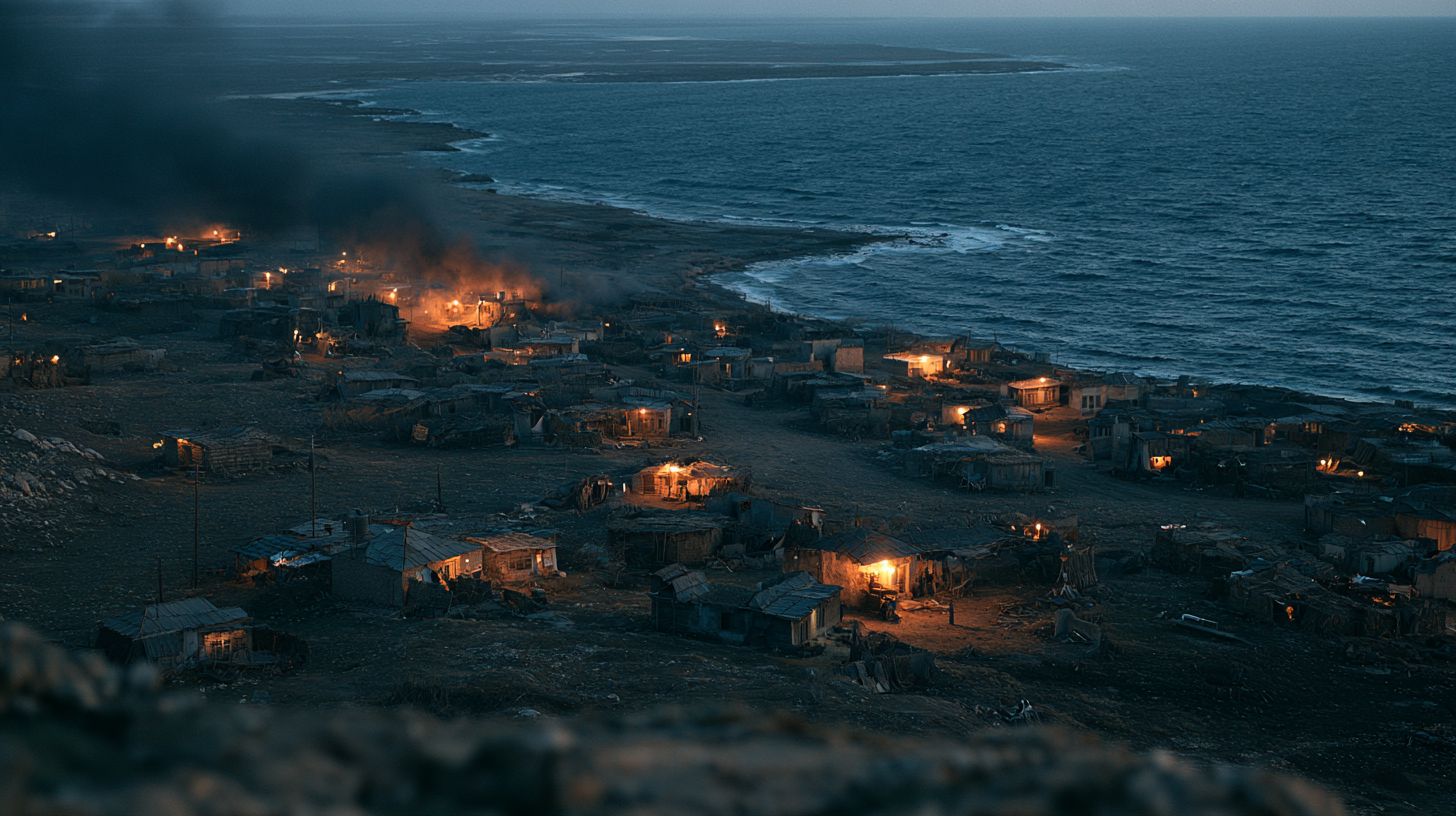
The U.S. may have struck a wedding in Iran — and the question of whether it was an accident or something worse is now the most politically combustible issue in the war.
Iranian officials reported Wednesday that an American airstrike hit a private home in the village of Kuhestak in Sirik County, in Hormozgan province along the Strait of Hormuz, during a wedding ceremony. Five people were killed. Seventy were wounded — officials said most were women and children. The IRGC Aerospace Force commander vowed retaliation, saying "the pure blood of these oppressed martyrs will not go unanswered." Iran launched retaliatory strikes on U.S. assets in Kuwait and the UAE on Thursday.
Vice President JD Vance, confronted by reporters at the White House Thursday, said he was "extremely skeptical" of the Iranian account. CENTCOM said the military was aware of the reports and reiterated that "the U.S. military never targets civilians." Defense Secretary Hegseth said they were "still investigating." President Trump went further: "We figure it was done by Iran, because they're very inaccurate with their munitions."
"Reuters reported Friday that preliminary assessments from U.S. military investigators suggest the strike was American — specifically involving a SLAM-ER standoff land-attack missile."
— Dark Bulls
Then Reuters reported Friday, citing U.S. military investigators, that preliminary assessments suggested the strike was American. Hormozgan province is home to Iranian military installations and missile batteries — the village of Kuhestak sits in an area that has been an active strike zone. Whether the strike hit a legitimate military target and a wedding happened to be occurring nearby, or whether intelligence was wrong about the location, or something else — none of that is established yet.
What is established is the political dynamic the incident creates. Iran has now struck back at American bases in Kuwait and the UAE. Congress is asking questions the administration isn't answering. The UN Secretary-General has called for an independent investigation. The image of women and children wounded at a wedding has become the defining visual of this week's war — regardless of how the military inquiry ultimately resolves. How Washington handles the investigation and its findings will determine whether this episode closes or opens.
Advertisement
Everybody is talking about the massive $2 Trillion tech move happening right now.
 But almost nobody knows the actual name of the startup driving it. While mainstream financial news outlets cover the headlines, the identity of this powerhouse remains buried in official filings.
Internal corporate figures project growth of up to 8,000% this year alone — enough to turn a $1,000 positioning into $80,000 as public trading begins. Faster than early-stage Tesla. Faster than SpaceX. Outscaling Nvidia at its absolute peak.
Goldman Sachs and Morgan Stanley are already positioning institutional funds ahead of retail investors. In my brand-new presentation, I reveal the exact name of this startup — completely free of charge. Plus, I'll show how everyday investors can learn how to claim a $50 pre-IPO stake before mainstream news catches on.
To your wealth,
But almost nobody knows the actual name of the startup driving it. While mainstream financial news outlets cover the headlines, the identity of this powerhouse remains buried in official filings.
Internal corporate figures project growth of up to 8,000% this year alone — enough to turn a $1,000 positioning into $80,000 as public trading begins. Faster than early-stage Tesla. Faster than SpaceX. Outscaling Nvidia at its absolute peak.
Goldman Sachs and Morgan Stanley are already positioning institutional funds ahead of retail investors. In my brand-new presentation, I reveal the exact name of this startup — completely free of charge. Plus, I'll show how everyday investors can learn how to claim a $50 pre-IPO stake before mainstream news catches on.
To your wealth,
Jeff Brown
Founder & CEO, Brownstone Research
But almost nobody knows the actual name of the startup driving it. While mainstream financial news outlets cover the headlines, the identity of this powerhouse remains buried in official filings.
Internal corporate figures project growth of up to 8,000% this year alone — enough to turn a $1,000 positioning into $80,000 as public trading begins. Faster than early-stage Tesla. Faster than SpaceX. Outscaling Nvidia at its absolute peak.
Goldman Sachs and Morgan Stanley are already positioning institutional funds ahead of retail investors. In my brand-new presentation, I reveal the exact name of this startup — completely free of charge. Plus, I'll show how everyday investors can learn how to claim a $50 pre-IPO stake before mainstream news catches on.
To your wealth,Jeff Brown
Founder & CEO, Brownstone Research
🌍 Science & World
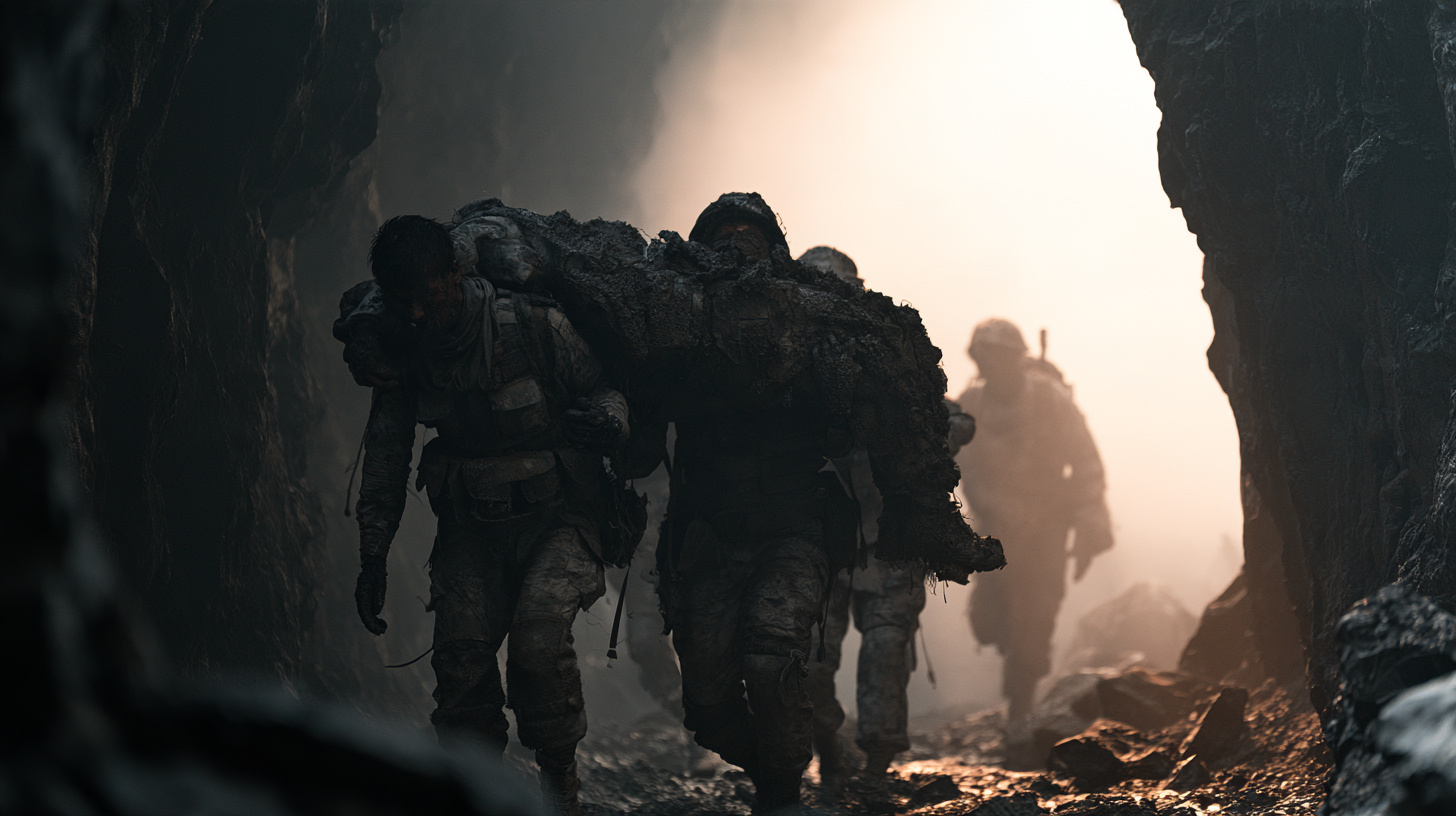
Nine days after the Himalayan floods swept away their workplace, two workers were pulled alive from a Nepal tunnel — and one said: there are more people alive inside.
Rescue teams pulled Sanjay Sah, 30, a mechanical foreman, and Kabir Maharjan, 45, a mechanical supervisor, from a tunnel at the Trishuli 3A hydropower project in Nepal's Rasuwa district on Friday morning. They had been trapped since August 26 — nine days — after the glacial flood surge swept through the region, destroying roads, collapsing tunnel sections, and filling underground passages with debris. Rescuers had first heard voices from inside the tunnel that morning; within hours they had made physical contact and begun extraction. Images released by the Nepalese Army showed soldiers carrying one of the men out on their back, covered in mud.
"I can't explain what we are feeling at the moment. We are just grateful to God," said Amir Maharjan, the brother of one of those rescued. One of the survivors told army spokesperson Brig. Gen. Raja Ram Basnet that more people are alive inside the tunnel. Nepal's communications minister wrote: "We are waiting for the rescue of more and more people." The search continues at Trishuli 3A and approximately a dozen other hydropower projects — more than 900 workers are missing from those sites, with roughly 500 believed to be trapped in tunnels.
"The two tunnel survivors are a small piece of a much larger tragedy. But they're the piece that, this morning, is giving the families of hundreds of missing hydropower workers a reason not to give up."
— Dark Bulls
The odds of survival after nine days underground are not supposed to be favorable. The workers survived in a sealed tunnel environment where they apparently had some air circulation and access to water. The fact that two came out alive and reported others still living changes the nature of the rescue operation from recovery to active extraction. The overall disaster toll stands at more than 1,280 dead and 5,620 missing across Nepal and China. The two tunnel survivors are a small piece of a much larger tragedy — but this morning, they are the piece giving families a reason not to give up.
🧠 Health & Life · 50+
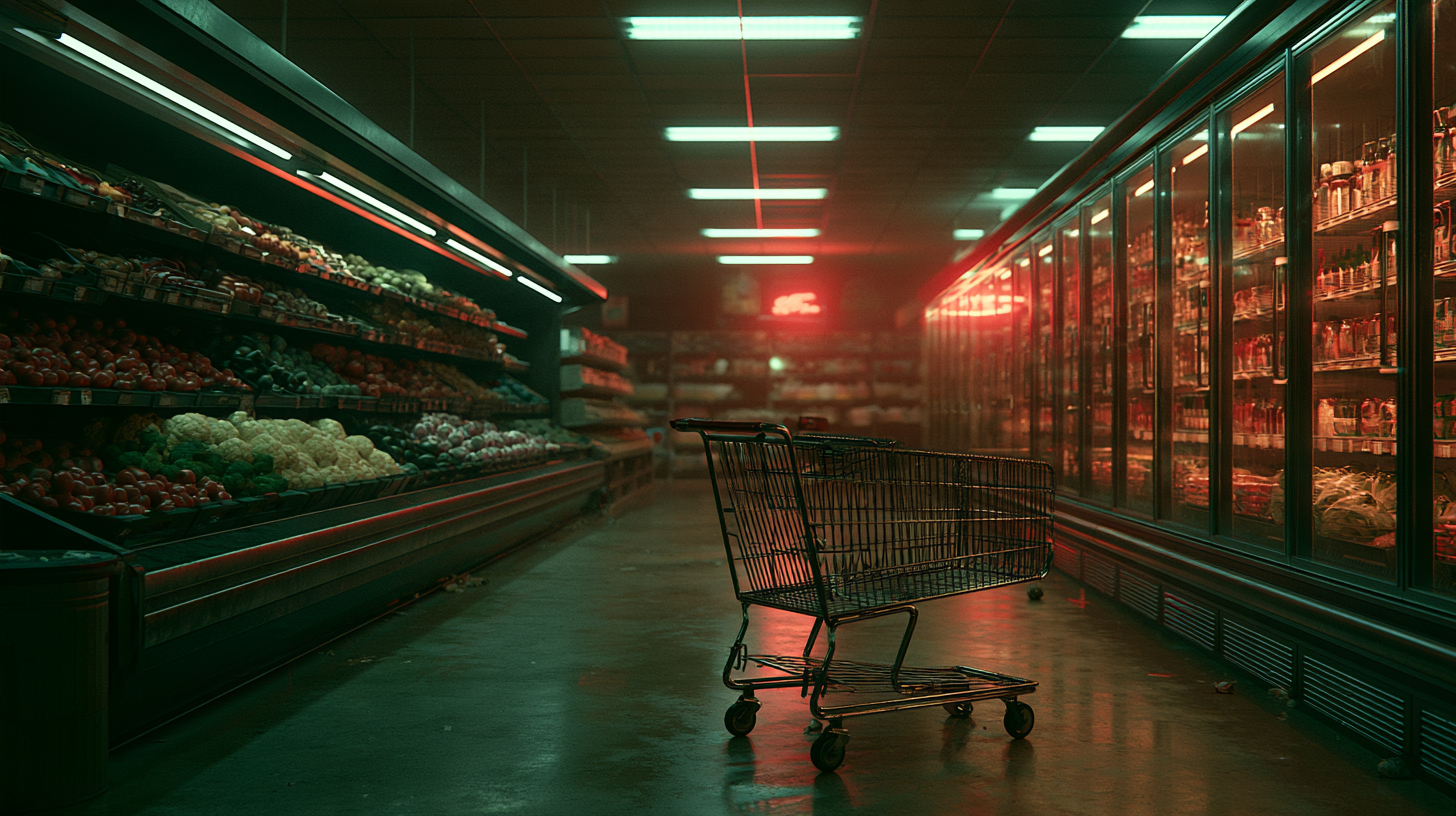
America's food safety system has been quietly dismantled — and the outbreaks are getting harder to ignore.
This summer has seen an unusual number of food-borne illness outbreaks across the United States, and the timing isn't coincidental. The FDA has lost roughly 3,500 positions since early 2025, including significant reductions in its food safety and inspection workforce. The CDC has seen similar cuts to its outbreak response teams. What that means in practice is longer response times when contamination is detected, less proactive surveillance, and more gaps between when an outbreak begins and when the public is warned.
California growers have been particularly hard hit. Romaine lettuce — a crop the FDA has closely monitored since repeated E. coli contamination events dating back to 2018 — became the center of a new contamination scare in August. Farmers plowed millions of heads back into the soil rather than risk shipping potentially contaminated product. Workers were laid off. Supply chains were disrupted. Growers described the decision as economically devastating but unavoidable given the uncertainty.
"When the official guidance from federal agencies becomes unreliable, professional medical organizations have to step in to fill the gap. That's what happened this week."
— Dark Bulls
The leading medical groups — including the American Academy of Pediatrics, the Infectious Diseases Society of America, and the American College of Physicians — jointly updated their flu and COVID vaccine recommendations this week amid what they described as "significant public confusion" stemming from inconsistent messaging from federal health authorities. The implication was clear: when official federal guidance becomes unreliable, professional organizations have to fill the gap.
For anyone over 50, the practical takeaway is more vigilant label-reading, a preference for fully cooked over raw produce when the source is unclear, and staying current with vaccine recommendations from your own physician rather than relying solely on federal guidance. The infrastructure for protecting the food supply still exists — but it's operating with less capacity than two years ago, and the effects are becoming visible.
Advertisement
 Donald Trump just did it again. At a rally, he confirmed his Rebate Stimulus Plan — but it's not just about sending out checks.
Behind closed doors, Trump's team is pushing a strategic wealth-protection move that could matter far more than a one-time payment.
Donald Trump just did it again. At a rally, he confirmed his Rebate Stimulus Plan — but it's not just about sending out checks.
Behind closed doors, Trump's team is pushing a strategic wealth-protection move that could matter far more than a one-time payment.
✅ Skyrocketing inflation
✅ A weakening dollar
✅ Markets spinning out
This isn't just a "bonus" — it's a chance to shield your savings from what's coming. And while Washington hands out checks, the people who act before the next wave hits could be the only ones who come out ahead.
It's fast, no cost, and could be the smartest move you make this year.
P.S. Once those checks start rolling out, this window may slam shut.
🏀 Sports

Day 4 at Flushing Meadows delivered everything the draw promised — and set up a third round that looks genuinely exciting.
Alexander Zverev converted his second-round challenge into a statement. Against Quentin Halys on Thursday, Zverev looked considerably fresher than the night before, moving well and demonstrating the kind of clean, dominant ball-striking that makes him a legitimate title threat. He advances to the third round where he faces Alejandro Tabilo — a player he leads 2-0 in their head-to-head. The body looked fine. The tennis looked better.
Taylor Fritz had the kind of afternoon that wins tournaments. His second-round match against Mattia Bellucci ended 6-0, 6-1, 6-1 — a scoreline that, after a week of gritty four and five-set battles, looked almost surreal. Fritz has been playing well all summer and is positioned as one of the most credible American threats in the draw. He faces Francisco Cerundolo in the third round, a matchup where his big serve and heavy groundstrokes give him a structural advantage.
"Gaël Monfils, 40 years old, played what is expected to be his final career Grand Slam match. The crowd gave him something close to a farewell ceremony. He's been here since 2004."
— Dark Bulls
The story of the Day 4 evening session was 40-year-old Gaël Monfils. Playing what is expected to be his final career Grand Slam appearance, the French crowd favorite fell to Learner Tien — 3-6, 4-6, 3-6. The score doesn't capture what happened at Arthur Ashe, where a packed house gave Monfils something close to a farewell ceremony. He'll retire from professional tennis after this tournament, having played his first US Open in 2004.
Friday's Day 5 is headlined by Alcaraz's third-round match — the match of the week. His second-round performance, coming back emphatically after dropping the first set, was encouraging enough that the defending champion is now looking more like a genuine favorite and less like a player managing his way back from injury. The wrist is holding. The tennis is improving with each match. That's exactly the trajectory you'd want to see heading into the second week.
📋 In Brief
Jobs report reaction.
Federal funds futures moved sharply after this morning's 162,000 payrolls print, with September hike odds now above 65%. The next FOMC meeting is September 15-16. The August CPI report, due next Thursday, September 11, is now the decisive data point. A hot number — anything above 3.5% — and the hike is almost certain.
Nepal death toll update.
The overall death toll from the August 26 glacial flood stands at 1,280 dead and 5,620 missing across Nepal and China as of Friday morning. The tunnel rescue of Sanjay Sah and Kabir Maharjan is the first confirmed live rescue of hydropower workers trapped underground since the disaster began. More than 500 workers are believed to be trapped in tunnels across the region.
Happy Labor Day.
This is the last Dark Bulls until Tuesday, September 8. Enjoy the long weekend. We'll be back with the news, context, and analysis you need for the week ahead — including the September CPI report on Thursday, which may be the most important economic data point of the fall.
— David
Dark Bulls
Published Monday–Friday