Iran wants a toll booth at Hormuz. That's not a negotiating position — it's a declaration.

Wednesday · August 26, 2026
The Daily Digest
Dark Bulls
Inflation came in hot, Iran wants to toll the world's oil highway, and Roger Federer made 20,000 people forget what year it was.
This morning's PCE inflation print came in above expectations, and money markets immediately priced in a December Fed rate hike. Tomorrow Jackson Hole opens, Iran's parliament is advancing a plan to charge ships to transit the Strait of Hormuz, and Johns Hopkins just published data on loneliness and dementia that every American over 50 should read. Plus: last night at Arthur Ashe Stadium, something genuinely wonderful happened.
📈 Money & Markets
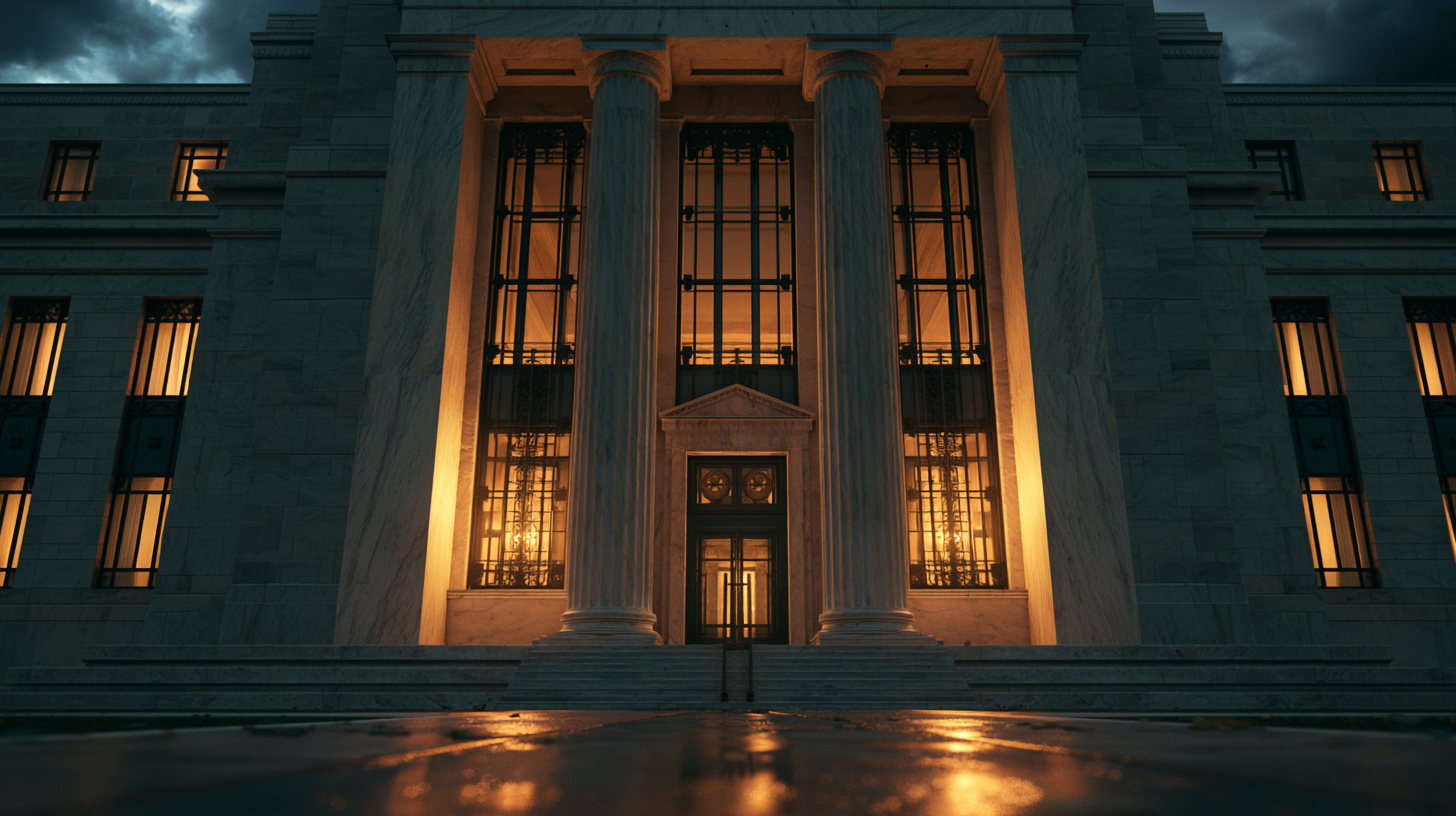
The Fed's favorite inflation gauge came in hot this morning — and Wall Street is now pricing in a rate hike.
The Bureau of Economic Analysis released July's PCE price index at 8:30 this morning, and it delivered an unwelcome number: headline inflation held at 3.7% year-over-year, above the 3.6% consensus. Core PCE — the Fed's preferred measure, stripping out food and energy — stayed at 3.3%. Personal income rose 0.4%, beating expectations. Consumer spending, however, grew just 0.2% — a sign that Americans are starting to feel the squeeze.
Markets read the data clearly and didn't like what they saw. Stocks and bonds fell together — a combination that signals genuine inflation anxiety rather than a simple flight to safety. Money markets moved to fully price in a Fed rate hike by December. Short-dated Treasuries underperformed. The 10-year yield, which had been easing all week, reversed course.
"The Fed targets 2% inflation. At 3.7%, we're nearly double that. Every month that gap persists is a month rates stay higher than borrowers would like."
— Dark Bulls
The timing couldn't be more loaded. Jackson Hole opens tomorrow, and new Fed Chair Kevin Warsh delivers his first major address as chair on Friday morning. He told reporters after July's FOMC meeting that he wanted the speech to "frame the big questions" — not debate quarter-point moves. That's an unusually philosophical framing for a Fed chair, which markets interpret as either reassuring wisdom or a signal he won't be bailing them out anytime soon.
For anyone with a mortgage, a savings account, or a retirement portfolio, the PCE number matters more than most people realize. The Fed targets 2% inflation. At 3.7%, we're nearly double that. Every month that gap persists is a month the Fed stays uncomfortable — and a month rates stay higher than borrowers would like. The question Warsh needs to answer on Friday is whether the Fed has a credible path to closing it.
Key Numbers · Aug 26, 2026
3.7%
PCE Inflation YoY
3.3%
Core PCE YoY
Dec
Rate hike fully priced
Advertisement
Editor's note:
Life in America is about to take a very strange turn, says one of Wall Street's best-connected millionaires, who called the 2000 and 2008 crises, all while building his own $200 million hedge fund firm.
At Harvard, Whitney Tilson became close friends with billionaire hedge-fund manager Bill Ackman... He took on radical socialist New York City mayoral candidate Zohran Mamdani in a public debate last year... He accurately forecast the 2000 tech wreck and starred in an Emmy-winning 60 Minutes episode on the 2008 financial crisis... And he's one of the best-connected insiders in America today, with dozens of millionaire and billionaire friends. (He even bakes cookies for Warren Buffett at Christmas.)
I'm telling you this today because Tilson says the next six months are going to be a time of extreme change in our country.
He's warning that America is in the early stages of a crisis that no one in our country can avoid. It's connected to the huge (and rapid) changes we've seen as a result of AI and other radical new technology.
But Tilson isn't merely warning of more job losses, or another big selloff in the stock market (though he says both of those things are highly likely in the near future).
He says we're living through a permanent reset that'll destroy the America you grew up in.
"I'm 59. I'm a father. And what's coming in America's near future keeps me awake at night, frankly," he said.
That's why he's stepping forward publicly today. If he's right, 2026 will be a year like no other – and it's crucial you prepare. In fact, there are several things Tilson recommends you do immediately to get ready. (Step #1 alone could make you more than stocks, bonds, and even gold.)
I strongly encourage you to take a few minutes to hear Tilson's latest prediction. We've posted everything you need to know on our website, free of charge. Everything you need to know is right here.
Regards,
Matt Weinschenk
Publisher and Director of Research, Stansberry Research
Matt Weinschenk
Publisher and Director of Research, Stansberry Research
🏛️ Politics

Iran and Pakistan say the Hormuz talks are moving — but Tehran's parliament wants to charge ships to pass through.
Pakistan's interior minister Mohsin Naqvi reported Tuesday that his country's mediators held a "very positive and productive meeting" with Iranian President Pezeshkian, and that "significant progress" had been made toward reopening negotiations with Washington. The conditions Iran conveyed through Pakistan center on the collapsed June 17 memorandum of understanding — Tehran wants the U.S. to return to that agreement, including a disputed article governing Iranian arrangements for the strait.
The same day, Iran's parliament advanced a plan to charge fees for commercial vessels transiting the Strait of Hormuz. A senior Iranian lawmaker was explicit that these negotiations are "in no way about" reopening the strait — they concern navigation routes and vessel movement. Oman, which has been managing access alongside Iran, opposes any tolls. Washington has called the idea unacceptable.
This is the central tension that has stalled every round of talks since the April ceasefire. Iran wants sovereignty over the strait recognized and monetized. The United States wants free navigation restored as a precondition for any deal. Those aren't just different negotiating positions — they're incompatible frameworks. One side is treating Hormuz as leverage; the other insists it's non-negotiable.
President Trump declared Tuesday that all mines in the strait have been removed or detonated, and threatened to destroy any vessel that attempts to place new ones. "We are watching every square inch of the strait," he said. Qatar's prime minister spoke by phone with Iran's foreign minister about a proposed temporary shipping channel — a workaround that would allow some traffic to move while the larger dispute continues. Whether that intermediate step can hold both sides together long enough for a real agreement remains the question no one in the region can answer right now.
Advertisement
It didn't require a vote from Congress, and it didn't need a public debate.
With a single stroke of a pen, President Trump is moving forward with replacing the traditional dollar infrastructure.
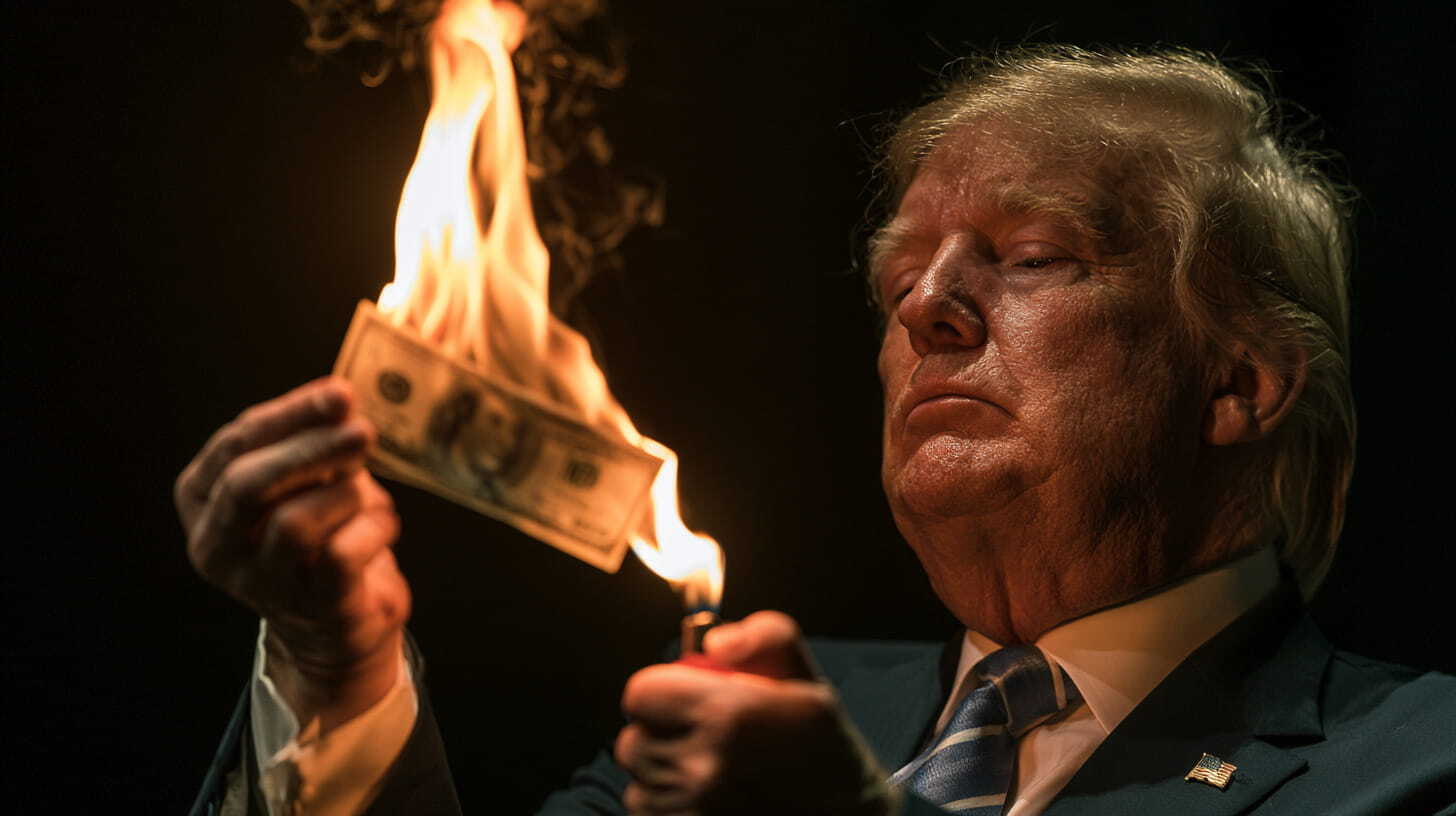 This triggers the biggest structural transformation to America's money in 52 years, completely resetting the rules for cash, savings, and retirement accounts.
A massive shift in wealth has already started behind closed doors.
Porter Stansberry has just gone live with an urgent briefing detailing the five vital companies positioned to capture this new monetary order — including the exact name and ticker symbol of his #1 stock to buy before the markets move again.
Don't Click Away.
This triggers the biggest structural transformation to America's money in 52 years, completely resetting the rules for cash, savings, and retirement accounts.
A massive shift in wealth has already started behind closed doors.
Porter Stansberry has just gone live with an urgent briefing detailing the five vital companies positioned to capture this new monetary order — including the exact name and ticker symbol of his #1 stock to buy before the markets move again.
Don't Click Away.
This triggers the biggest structural transformation to America's money in 52 years, completely resetting the rules for cash, savings, and retirement accounts.
A massive shift in wealth has already started behind closed doors.
Porter Stansberry has just gone live with an urgent briefing detailing the five vital companies positioned to capture this new monetary order — including the exact name and ticker symbol of his #1 stock to buy before the markets move again.
Don't Click Away.
🌍 Science & World
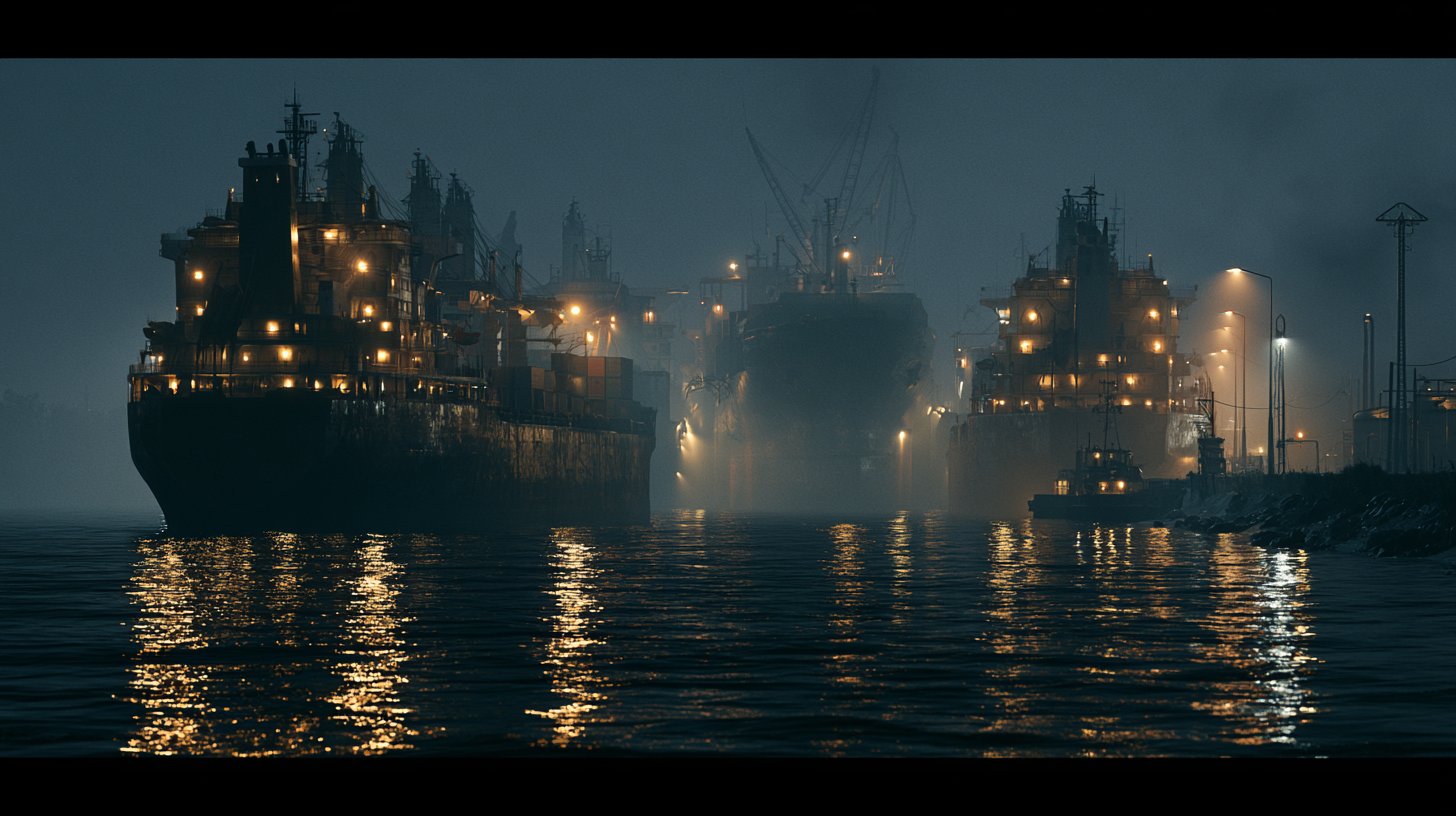
Iran's parliament wants to turn the world's most critical oil chokepoint into a toll road — and that idea alone could keep markets on edge for months.
The proposal advancing through Iran's legislature this week would require commercial vessels transiting the Strait of Hormuz to pay fees to Iranian authorities. The practical details remain vague — but the political signal is clear. Tehran is treating its position at Hormuz not as a temporary bargaining chip but as a permanent structural advantage it intends to formalize. About 20% of the world's daily oil consumption moves through that 21-mile-wide passage. There is no viable alternative for most of the oil that comes from Iraq, Kuwait, Qatar, and Iran itself.
The economic logic from Tehran's perspective is straightforward. Six months of war and sanctions have, by Iran's own president's admission, "multiplied" the country's economic difficulties several times over. Revenue has declined sharply. If the regime survives, it wants something durable — not just a return to the pre-February status quo, but a changed relationship with the waterway that ensures a permanent revenue stream and an enduring geopolitical lever.
"A toll booth at Hormuz isn't a negotiating position. It's a declaration of what Iran thinks the post-war order should look like."
— Dark Bulls
The problem is that every other party with a stake in Hormuz — the U.S., Oman, Gulf states, Japan, South Korea, China — views tolls as fundamentally unacceptable. Oman has managed the strait alongside Iran for decades and opposes charges. The U.S. position is that free navigation through international waters is non-negotiable. And the Gulf states that depend on Hormuz for their own exports have no interest in setting a precedent where Iran can tax their oil shipments.
Oil fell toward $85 a barrel Wednesday on optimism about the Pakistan-mediated talks. That optimism is fragile. The gap between what Iran is asking for and what the rest of the world is willing to accept hasn't narrowed — it's formalized. A toll booth at Hormuz isn't a negotiating position. It's a declaration of what Iran thinks the post-war order should look like.
Advertisement
Dear Reader,
Every week, strange white crates leave a high-security Tesla compound in Lathrop, California.
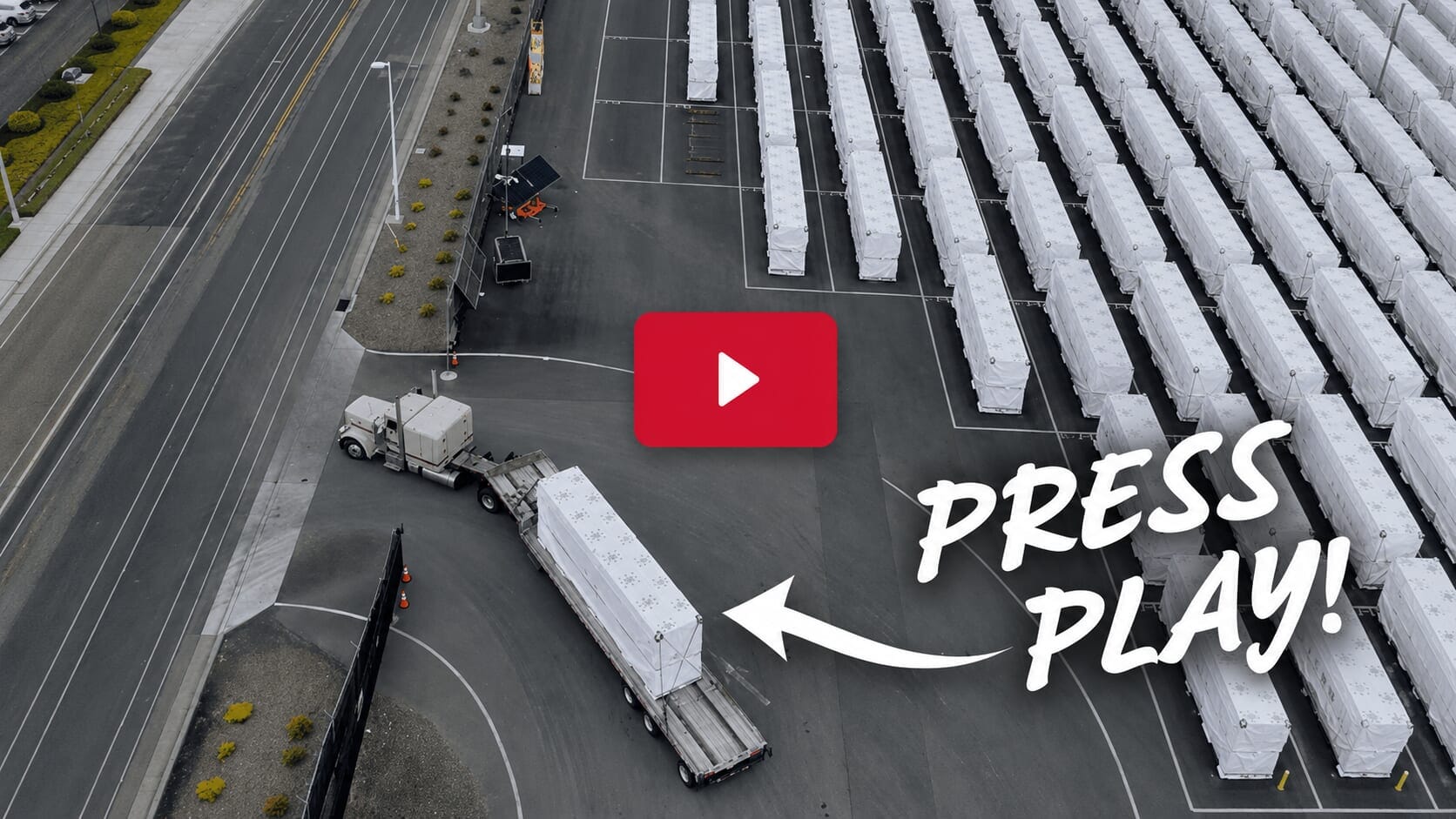 They've appeared near the Hoover Dam… At an Air Force base in Georgia… And in the heart of New York City. An estimated 4,000 now sit across 48 locations in 14 states.
But the crates themselves aren't the real story. They reveal Elon's favorite playbook:
Build the infrastructure quietly. Let everyone else notice when it's already too late.
Now, a newly filed patent suggests he may be repeating that exact playbook with artificial intelligence. The breakthrough is being called "M.A.G.I."
And while the public remains distracted by Tesla, SpaceX, and xAI… one little-known supplier could be quietly positioning itself at the center of Elon's next potential empire.
They've appeared near the Hoover Dam… At an Air Force base in Georgia… And in the heart of New York City. An estimated 4,000 now sit across 48 locations in 14 states.
But the crates themselves aren't the real story. They reveal Elon's favorite playbook:
Build the infrastructure quietly. Let everyone else notice when it's already too late.
Now, a newly filed patent suggests he may be repeating that exact playbook with artificial intelligence. The breakthrough is being called "M.A.G.I."
And while the public remains distracted by Tesla, SpaceX, and xAI… one little-known supplier could be quietly positioning itself at the center of Elon's next potential empire.
They've appeared near the Hoover Dam… At an Air Force base in Georgia… And in the heart of New York City. An estimated 4,000 now sit across 48 locations in 14 states.
But the crates themselves aren't the real story. They reveal Elon's favorite playbook:
Build the infrastructure quietly. Let everyone else notice when it's already too late.
Now, a newly filed patent suggests he may be repeating that exact playbook with artificial intelligence. The breakthrough is being called "M.A.G.I."
And while the public remains distracted by Tesla, SpaceX, and xAI… one little-known supplier could be quietly positioning itself at the center of Elon's next potential empire.
🏀 Sports
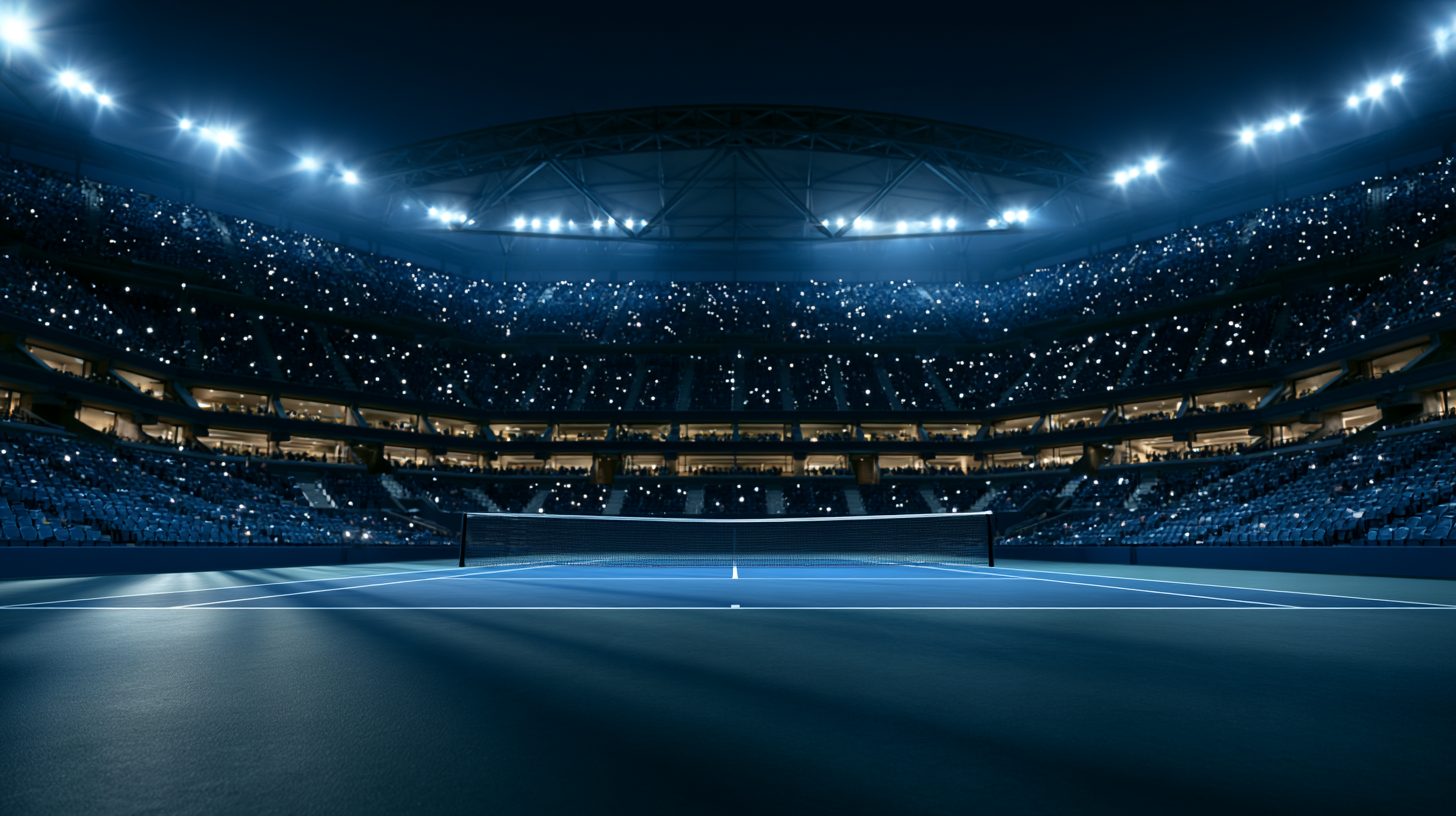
Roger Federer walked back onto Arthur Ashe Stadium Tuesday night for the first time since 2019 — and the place went absolutely still before it erupted.
The event was billed as "An Icon Returns to New York," but that undersells what actually happened. Federer, 45 years old and seven years removed from his last U.S. Open match, played a one-set exhibition against longtime rival Andy Roddick and won 6-3. Then he partnered John McEnroe to defeat Roddick and Andre Agassi 7-5 in doubles. The crowd gave him a standing ovation before he'd hit a single ball. It's the kind of reception that reminds you how rarely a sports career ends the way fans wish it would.
The four men on that court — Federer, Roddick, McEnroe, Agassi — represent a combined 28 Grand Slam titles and four decades of American tennis history. There was something genuinely moving about watching them play for fun, with nothing at stake except the pleasure of it. Federer said beforehand he was "nerve-racking, to be honest" — he hadn't played a real set since Wimbledon 2021. He didn't look it.
He won't be coming back to the tour — he was direct about that. "There are way too many obstacles," he said. "The body is done." He'll be inducted into the International Tennis Hall of Fame on Saturday in Newport. His twin boys, 12, and twin girls, 17, were there to watch. He said he hoped it would be "a special occasion for them" since they don't remember much of his actual career. That detail alone says something about how quickly a sporting life passes. The U.S. Open main draw begins Sunday — but Tuesday night at Arthur Ashe, that was something else entirely.
🧠 Health & Life · 50+
A major new study says loneliness raises your risk of dementia by 31% — and the mechanism isn't what most people assume.
Johns Hopkins researchers analyzed data from more than 12,000 Americans over the age of 50, tracking them over eight years. The finding: persistent social isolation was associated with a 31% higher risk of developing dementia, independent of other risk factors including cardiovascular health, depression, education level, and physical activity. This wasn't about people who occasionally felt lonely — it was about those who described chronic, sustained isolation as a feature of their daily lives.
What makes this study different from earlier work in the same area is that it attempts to untangle the mechanism. Loneliness, the researchers found, appears to trigger a sustained low-grade inflammatory response in the body — similar to chronic stress — which over time damages neural tissue and accelerates cognitive aging. The brain isn't just responding to sad feelings. It's responding to the biological reality of reduced stimulation, fewer social cues to process, and the absence of the cognitive demands that human relationships impose.
"Social connection isn't a lifestyle preference — it's a health variable with roughly the same weight as blood pressure or cholesterol."
— Dark Bulls
The practical implication is uncomfortable but important: social connection isn't a lifestyle preference — it's a health variable with roughly the same weight as blood pressure or cholesterol. The American medical system has gotten reasonably good at measuring and managing those. It has almost no infrastructure for addressing social isolation in people over 50, despite decades of research pointing to its consequences.
For the 45-and-older readers of this newsletter, the honest advice hasn't changed, but this study makes it harder to dismiss: the quality and consistency of your social relationships is one of the most powerful things you can manage for your long-term cognitive health. Not the most exciting medical recommendation. Possibly the most important one.
Advertisement
Something strange lurks in President Trump's financial disclosures.
Over the past year, his managers executed more than 20,000 stock transactions. CNN ran the whole list against his Truth Social feed and found at least 44 purchases across 21 companies — bought within a week of him publicly praising those exact companies, their products, or their CEOs:
Porter Stansberry
· Intel up 307%
· Dell up 271%
· AMD up 201%
· Micron up 134%
· GE Aerospace up 96%
· Nvidia up 91%
The White House says the President's account is in a third-party trust and he has no idea what's being bought. Maybe that's true. And maybe Jeffrey Epstein did kill himself. And maybe the sun will rise in the West tomorrow.
But I doubt it.
The real question is: why these companies?
It isn't coincidence and it isn't corruption either. These companies are all connected to a new economic and political doctrine — a playbook this administration has secretly adopted and that I believe is about to change everything in America. How you work, transact, save, and invest is all being fundamentally shifted as this new doctrine replaces the ideals of our Founding Fathers and unless you know what it means… you'll be caught off guard.
Once you see the list, however, you know exactly where the money is going next.
Good investing,Porter Stansberry
📋 In Brief
Jackson Hole opens tomorrow.
The Kansas City Fed's annual symposium runs August 27-29 at Jackson Lake Lodge in Wyoming. New Fed Chair Kevin Warsh delivers his first keynote as chair on Friday morning at 8 a.m. ET. Markets are watching for any signal on the December rate decision. After this morning's PCE print, the stakes of what he says — or doesn't — just got considerably higher.
Canada tariffs are already moving prices.
Less than a week after 50% duties took effect on Canadian lumber, dairy, and building materials, contractors and retailers are reporting the first price adjustments. Industry groups say new-home construction costs could rise by $8,000–$12,000 per unit if tariffs remain in place through the fall building season.
Federer gets his Hall of Fame moment Saturday.
After Tuesday night's exhibition at Arthur Ashe, Roger Federer will be formally inducted into the International Tennis Hall of Fame in Newport, Rhode Island on August 29. McEnroe, Agassi, and Roddick will all be present. The U.S. Open main draw begins the following day.
— David
Dark Bulls
Published Monday–Friday