Canada trade deal collapses, gold hits 3-month high, and scientists crack the memory code

Tuesday · August 25, 2026
The Daily Digest
Dark Bulls
Gold tops $4,650 as U.S. debt hits $40 trillion. Washington torches its trade deal with Canada. And scientists crack a 25-year mystery about why some 80-year-olds remember better than you do.
It's a Tuesday that comes loaded. Gold is sitting at its highest level in more than three months, the U.S.-Canada trade relationship just had its worst rupture in years, and Washington is threatening Iran with what it calls the largest financial offensive ever mounted. On a lighter note: some researchers have finally figured out why certain people in their 80s have sharper memories than most of us do in our 50s. Let's get into it.
📈 Money & Markets
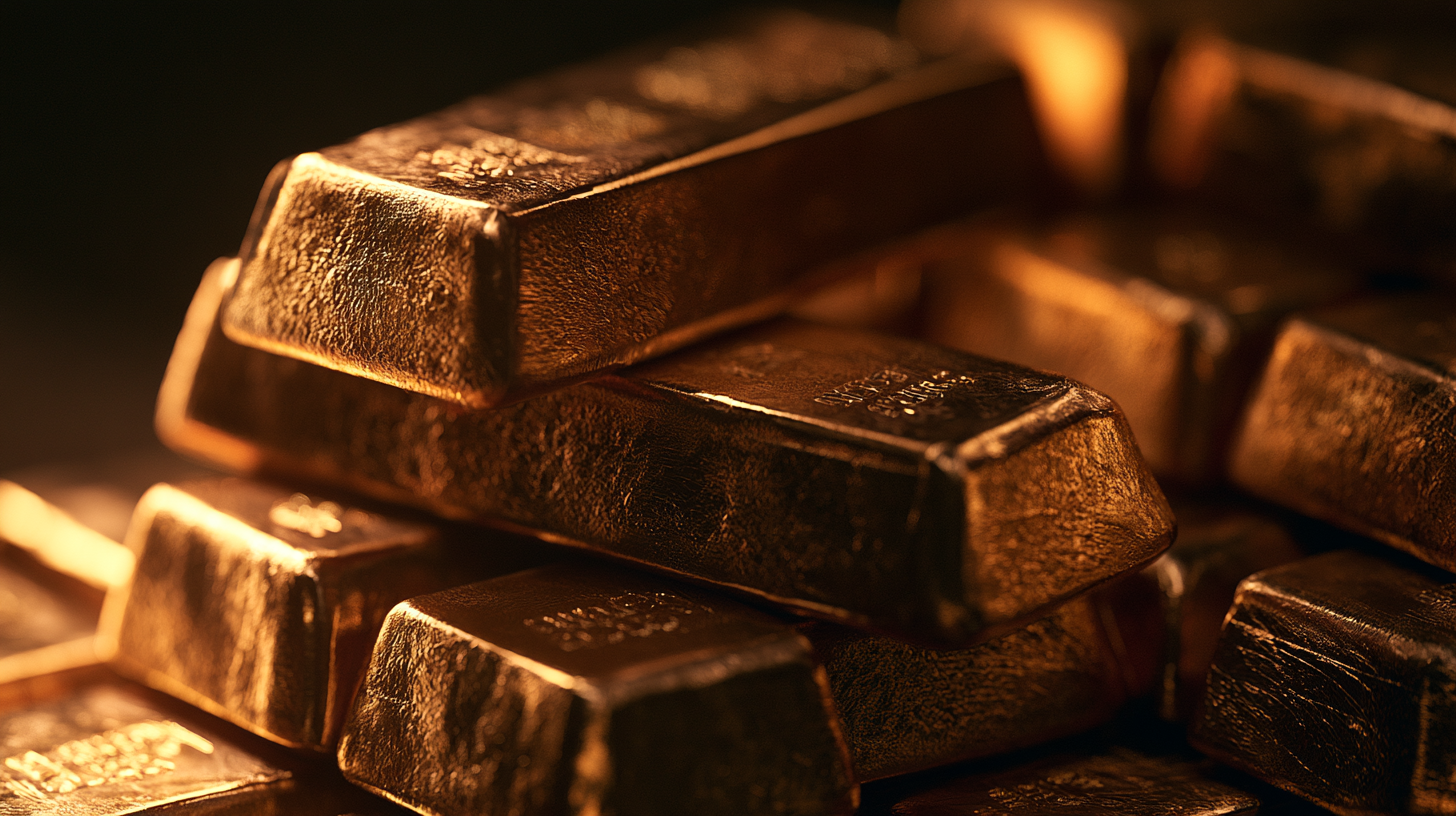
The dollar is cracking, the debt just crossed $40 trillion, and gold knows exactly what that means.
Gold climbed above $4,650 an ounce this week — its highest level in more than three months — and the reason isn't hard to find. U.S. government debt is now well above $40 trillion, and the bond market has been making that felt all month. Long-term Treasury yields hit their highest levels in nearly two decades before Washington stepped in. When borrowing costs for the world's largest economy start moving like that, markets notice.
Treasury Secretary Scott Bessent announced an expansion of the government's bond buyback program — essentially, Washington buying its own debt to keep long-term interest rates from spiraling. The move temporarily steadied yields, but markets read between the lines. If the government has to prop up its own bond market, that tells you something about the direction of demand — foreign central banks, particularly China and Japan, have been reducing their Treasury holdings over the past year, and that trend isn't reversing.
"A weaker dollar erodes the real value of what you've saved — quietly, and without headlines."
— Dark Bulls
Gold doesn't pay interest. It doesn't issue earnings reports. What it does is absorb anxiety — and right now there's plenty of that. The 30-year Treasury yield hit its highest level since 2007 before the buyback news pushed it back down. The dollar weakened. Gold-backed ETFs saw their biggest inflows in weeks. For anyone holding retirement savings in a standard 60/40 portfolio, these moves are worth paying attention to.
The deeper question is whether the buyback program is a real solution or just a pressure valve. Most analysts think it's the latter. A $40-trillion debt load doesn't get fixed by buying bonds — it gets fixed by growing your way out, cutting spending, or inflating the problem away. Historically, the third option has been the most politically convenient. Gold, sitting at $4,650 an ounce and climbing, is voting on which path it expects.
Market Snapshot · Aug 25, 2026
$4,650+
Gold / oz
$40T
U.S. National Debt
4.7%
10-yr Treasury yield
Advertisement
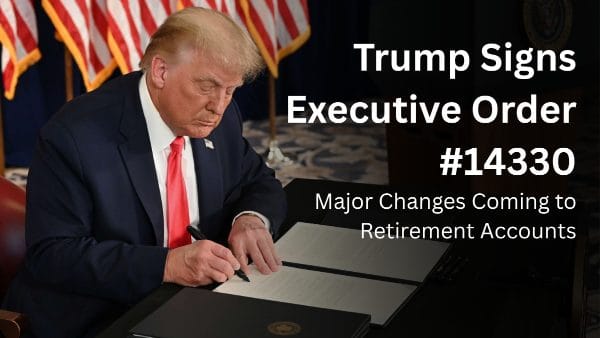 On August 7th President Trump signed Executive Order #14330.
For the first time ever, Americans will soon be able to hold precious metals (like gold & silver) inside 401(k)s.
That means more than $12 trillion in retirement savings could soon start flowing into the precious-metals market, creating one of the largest wealth shifts in modern history.
Since the announcement, gold prices have soared from $3,400 to over $4,000 per ounce, a 17% jump in just months.
And the momentum may just be getting started.
Once the order takes effect in 2026, J.P. Morgan believes the demand could send gold prices toward $6,000 per ounce.
Billionaire investor Ray Dalio now recommends keeping 10–15% of your portfolio in gold to protect against inflation, debt, and market volatility.
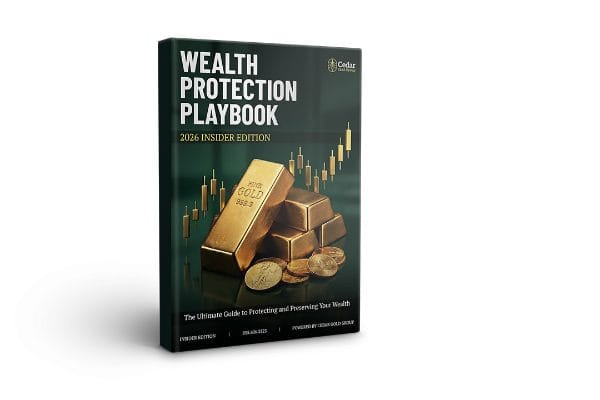
To help investors stay ahead of the curve, Cedar Gold Group released the 2026 Wealth Protection Playbook — a free guide revealing a little-known strategy for buying and storing gold BEFORE this executive order takes effect.
(Yes, this works with 401(k), IRA, TSP, 403(b), or even cash.)
On August 7th President Trump signed Executive Order #14330.
For the first time ever, Americans will soon be able to hold precious metals (like gold & silver) inside 401(k)s.
That means more than $12 trillion in retirement savings could soon start flowing into the precious-metals market, creating one of the largest wealth shifts in modern history.
Since the announcement, gold prices have soared from $3,400 to over $4,000 per ounce, a 17% jump in just months.
And the momentum may just be getting started.
Once the order takes effect in 2026, J.P. Morgan believes the demand could send gold prices toward $6,000 per ounce.
Billionaire investor Ray Dalio now recommends keeping 10–15% of your portfolio in gold to protect against inflation, debt, and market volatility.
To help investors stay ahead of the curve, Cedar Gold Group released the 2026 Wealth Protection Playbook — a free guide revealing a little-known strategy for buying and storing gold BEFORE this executive order takes effect.
(Yes, this works with 401(k), IRA, TSP, 403(b), or even cash.)
 Don't wait. With demand accelerating after this executive order, waiting could cost you.
Sincerely,
Don't wait. With demand accelerating after this executive order, waiting could cost you.
Sincerely,Cedar Gold Group
🏛️ Politics

The U.S.-Canada trade relationship just hit its most serious rupture in a generation.
Trade talks between Washington and Ottawa collapsed last Friday night, hours after President Trump told reporters the two sides had "pretty much" struck a deal. By midnight, 50% tariffs were in effect on roughly $20 billion worth of Canadian goods — lumber, dairy, wine, cement, and more. Canadian Prime Minister Mark Carney called the American demands "uneconomic and unfair" and announced Canada would match every dollar of tariffs with retaliatory measures of its own, kicking in September 8.
The sticking point, in the end, was autos. The two economies are deeply intertwined on vehicle manufacturing — a single car can cross the U.S.-Canada border six or seven times during production. Trump's team wanted tariffs on autos and auto parts held at 15%. The Canadian side argued that even 15% threatened to make their industry unviable and push automakers to shift production entirely to the United States.
For Americans, this isn't abstract. Canada supplies about 63% of all U.S. crude oil imports — and notably, energy was carved out of the new tariffs entirely, which tells you how much leverage Ottawa still holds. But lumber, dairy, and building materials are a different story. Canadian lumber accounts for roughly a quarter of what American builders use. A 50% tariff on that wood doesn't stay at the border — it moves directly into the price of new homes and renovations, and the U.S. housing market was already stressed before this week.
Carney has staked his political identity on standing firm against Washington's pressure, and for now his domestic audience is squarely behind him. History suggests these disputes eventually get resolved — but the path there is usually messier and more expensive than anyone expects at the start. The bill, as always, gets sent to ordinary consumers on both sides of the border.
Advertisement
Editor's Note:
As the co-founder of Meridian Capital and co-creator of APP digital asset platform, legendary tech investor Andy Howard has helped over 23k people (from 128 countries) navigate nearly every market cycle. Today, he's identified a potential explosive opportunity in the scarce fuel powering Trump's New American Money Grid. The same infrastructure: BlackRock, JPMorgan, and Vanguard are already betting billions on. Click here to get the trade or read below.
Most people have no clue this is happening.
But BlackRock, JPMorgan, Goldman Sachs, and Fidelity are already quietly positioning themselves before the general public catches on.
Because they know Trump just triggered what could be the biggest wealth migration in American history when he recently signed the Clarity Act.
Even BlackRock CEO Larry Fink said, "This is the next major evolution in market infrastructure."
I'm Andy Howard. I've been deep in the weeds of blockchain technology for years.
When I invested in Kaspa in 2022… Many doubted its meteoric rise. But it went up as high as 4,040% in 18 months.
When I first bought Injective in 2023, 1000's on Wall Street missed the trade. It climbed as high as 1,064% in one year.
When I bought Sui at 57 cents in 2024, while millions of investors hesitated. It went up as high as $5.36 six months later — an 840% gain.
Now I see something even BIGGER brewing...
Trump just signed a law forcing America's entire $382 trillion financial system onto a brand new blockchain-based "Money Grid" by April 2027.
In fact, the president himself is saying this could be "The greatest revolution in financial technology since the birth of the internet itself."
And every transaction on this new grid burns a small amount of one specific digital asset …permanently removing it from circulation.
Every. Single. Transaction.
The more the system grows, the scarcer it gets. And with $909 billion in daily volume projected...
I'm predicting this could potentially be one of… if not THEE most explosive wealth opportunities I've come across…
That's why you can't drag your feet here… Because once most retail investors catch wind of this, it could be too late…
Your future looks bright,
Andy Howard
The Edge™ Senior Blockchain Analyst
Andy Howard
The Edge™ Senior Blockchain Analyst
🌍 Science & World

Washington just threatened Iran with what it's calling the largest financial offensive in history — and the oil markets believe it.
Treasury Secretary Scott Bessent announced Monday the rollout of what he called "the single greatest financial offensive ever marshalled against an adversary" — a sweeping sanctions campaign targeting not just Iran itself, but any country or company that continues doing business with Tehran. The message was unambiguous: trade with Iran, and you trade with us at your peril.
Oil prices fell roughly 2% on the news, which might seem counterintuitive — tighter sanctions on Iran could reduce global supply. But markets are reading the announcement as a signal that Washington is serious about enforcement this time, and that Iranian exports, which had crept back up to meaningful levels in recent years, could be sharply curtailed. Less Iranian oil flowing through workarounds means less upward pressure on prices, at least in the near term.
"A cornered government with few remaining economic options is harder to predict than one with room to maneuver."
— Dark Bulls
The bigger wildcard is the Strait of Hormuz. About 20% of the world's daily oil consumption passes through that narrow waterway, which Iran has repeatedly threatened to close in past confrontations. So far those threats have remained threats. As the financial pressure on Tehran intensifies, though, the calculus in Iran changes.
For the average American, this plays out at the gas pump and in heating bills this fall. Oil has been elevated all summer, and Middle East tension is one of the main reasons why. A miscalculation — by either side — in the Gulf region could send prices sharply higher in a matter of days. The administration is betting that maximum financial pressure produces a negotiated outcome. That bet has been placed before, with mixed results.
Advertisement
Small Colorado Company (Backed by Sam Altman) Could Save U.S. Power Grid
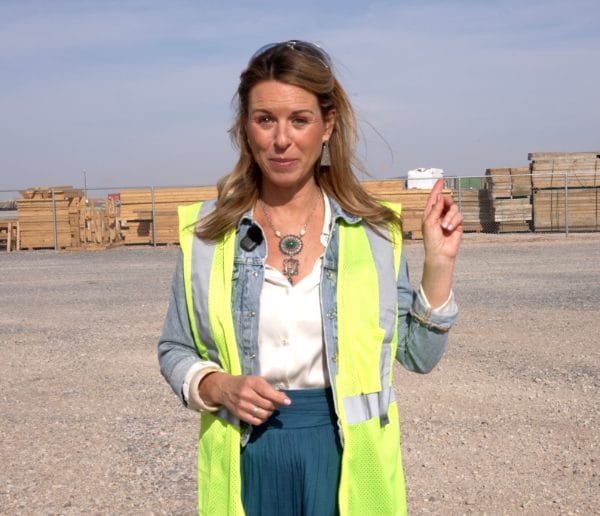 A small Colorado company now owns rights to a tech that could save the entire public power grid from collapse. And billionaire Sam Altman is now an investor.
A small Colorado company now owns rights to a tech that could save the entire public power grid from collapse. And billionaire Sam Altman is now an investor.
🧠 Health & Life · 50+

Scientists spent 25 years studying people in their 80s with the memory of someone half their age — and they finally know what sets them apart.
Northwestern University's SuperAger program has followed 290 remarkable individuals since 2000 — people who are 80 or older but perform on memory tests the way a typical 50-year-old does. Researchers have now examined 77 donated SuperAger brains after death, and the findings point to something more specific than good genes or clean living: SuperAgers have significantly more of a specific type of large neuron in the entorhinal cortex, a brain region critical to memory formation.
What makes this particularly striking is what SuperAger brains don't have — or rather, have far less of. Tau tangles, one of the two hallmark abnormalities associated with Alzheimer's disease, were dramatically reduced in SuperAger tissue compared to typical older adults who had maintained normal cognition. The difference wasn't subtle. These weren't people who had aged slowly — they had aged in a fundamentally different way, neurologically speaking.
"The brain appears to have more capacity to maintain itself than medicine once believed. The old model was essentially one of inevitable decline. The SuperAger data suggests the trajectory isn't fixed."
— Dark Bulls
The practical question is what any of us can do with that information. The researchers are careful to note that the SuperAger profile isn't simply the result of lifestyle choices — genetics clearly plays a role. But broader research into this population suggests SuperAgers tend to share certain habits: higher levels of social engagement, frequent mentally demanding activity, and better-preserved physical health overall. None of those are guarantees. All of them are levers worth pulling.
For anyone over 50 reading this, the most honest takeaway is that decline is not destiny. The SuperAger data tells us that some combination of biology, behavior, and perhaps sheer stubbornness can keep a brain decades younger than its owner's birth certificate suggests. That's worth knowing — and worth acting on.
Advertisement
Wall Street spent a decade declaring the end of coal.
Then the AI revolution hit a brick wall.
Data centers running advanced AI models are draining power grids at a rate America hasn't seen in generations.
Even Washington acknowledges that coal must power this tech boom.
Instead of burning dirty coal, a patented process called FASForm™ technology fractionates raw coal into clean hydrogen, jet fuel, and ultra-low sulfur diesel.
It turns raw coal into a zero-emission engine targeting a $2.1 trillion global commodity market.
Frontieras North America is already building an $850 million commercial plant in West Virginia to lead this energy revival.
They've raised $45M+ from 14,000 investors, backed by a $150M commitment, and reserved the NASDAQ ticker "FASF".
Current private round shares are available directly to individual investors at $9.87 per share.
This is a paid advertisement for Frontieras's Regulation A offering. Please read the offering circular at https://invest.frontieras.com/
Reservation of the ticker symbol is not a guarantee that we will be listed on the NASDAQ. Listing on the NASDAQ is subject to approvals.
Under Regulation A, a company may change its share price by up to 20% without requalifying the offering with the Securities and Exchange Commission.
Sources* The global market for our products is worth a combined value of over $2.1 trillion —
GlobeNewsWire.com,
MarketsAndMarkets.com,
TransparencyMarketResearch.com,
FortuneBusinessInsights.com,
MarketResearchFuture.com,
PrecedenceResearch.com
— David
Dark Bulls
Published Monday–Friday