What your grocery bill and the Strait of Hormuz have in common

Monday, August 17, 2026
The Daily Digest
Dark Bulls
Markets at all-time highs. Iran talks in freefall. A 24-year-old kid in Chicago making history. And new science that may be the best reason yet to lace up your shoes.
Today's digest covers five stories that matter. The S&P 500 is back at records, but the economy underneath is sending some contradictory signals. Washington's 60-day ceasefire with Iran expired this morning with no deal, and the Strait of Hormuz — the bottleneck for 20% of the world's oil — remains effectively shut. A global food crisis is quietly building. And Pete Crow-Armstrong is doing something at Wrigley Field that baseball hasn't seen in years.
📈 Money & Markets

The Markets Are Flying — But the Economy Under the Hood Is Sending Mixed Signals
Wall Street is in a good mood this Monday. The S&P 500 touched another record last week, the Nasdaq is up this morning, and a surge in AI revenue — led by Anthropic's latest earnings — has investors convinced that the billions being poured into artificial intelligence will keep paying off. Semiconductor stocks rallied hard in premarket trading. The bull market, for now, remains very much alive.
But there's a catch. This week, the country's biggest retailers report earnings — Walmart, Target, Home Depot, Lowe's, TJX. These companies are the real economy. They know before anyone else whether Americans are spending or pulling back. And the early signs aren't great: consumer spending dropped unexpectedly last month, and July's jobs report was weak. Gasoline is running about a dollar a gallon higher than it was before the Iran conflict started. That gap between a soaring stock market and a strained consumer is worth watching carefully.
"The gap between a soaring stock market and a strained consumer is the story of this summer — and retail earnings this week may finally force a reckoning."
— David Yorke, Dark Bulls
On the inflation front, there's genuine good news. Core CPI rose just 2.5% year over year in July — the slowest pace since March 2021. That cooled expectations for another Fed rate hike in September. Right now, 94 out of 104 economists surveyed expect the Fed to hold rates steady at 3.50–3.75% next month. Bond markets rallied on the news, with the two-year Treasury yield ticking down to around 4.16%.
For anyone with a mortgage, a savings account, or money in a 401(k), the Fed holding steady is the best outcome right now. It means borrowing costs don't go up again, and it keeps the market rally from being choked off. But one number should give you pause: margin debt — money investors borrow to trade stocks — just hit $1.5 trillion, a full 50% higher than a year ago. When borrowed money is this deep in the market, corrections don't just hurt. They cascade.
Market Snapshot · August 17, 2026
+0.1%
S&P 500 Futures
2.5%
Core CPI, yr/yr
4.17%
2-Yr Treasury Yield
$88.50
Brent Crude / bbl
Advertisement
After all the SpaceX hype …
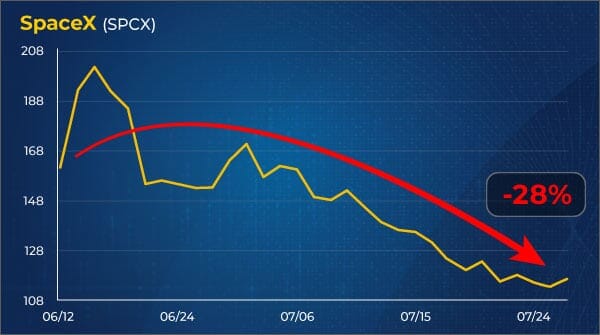 The stock is down 28% since IPO day.
And most early investors are down money.
It happens every time.
Uber, Meta, Robinhood, Duolingo … All these recent IPOs — and plenty of others — saw their value cut in half within six months of IPO day.
The truth is:
You've been lied to.
By Wall Street, elite insiders and lazy hype mongers on TV.
The only people who get rich on IPOs are the ones who get in before the IPO.
I'm talking about friends, family, founders and big Wall Street banks.
Not you.
Except for right now.
You see, I've found a way for you to get a stake in the Anthropic IPO — before they go public. You could cash in on day one. While everyone else is scrambling to get shares.
Best regards,
The stock is down 28% since IPO day.
And most early investors are down money.
It happens every time.
Uber, Meta, Robinhood, Duolingo … All these recent IPOs — and plenty of others — saw their value cut in half within six months of IPO day.
The truth is:
You've been lied to.
By Wall Street, elite insiders and lazy hype mongers on TV.
The only people who get rich on IPOs are the ones who get in before the IPO.
I'm talking about friends, family, founders and big Wall Street banks.
Not you.
Except for right now.
You see, I've found a way for you to get a stake in the Anthropic IPO — before they go public. You could cash in on day one. While everyone else is scrambling to get shares.
Best regards,
 Michael Robinson
Director of Tech Strategies
Weiss Ratings
The stock is down 28% since IPO day.
And most early investors are down money.
It happens every time.
Uber, Meta, Robinhood, Duolingo … All these recent IPOs — and plenty of others — saw their value cut in half within six months of IPO day.
The truth is:
You've been lied to.
By Wall Street, elite insiders and lazy hype mongers on TV.
The only people who get rich on IPOs are the ones who get in before the IPO.
I'm talking about friends, family, founders and big Wall Street banks.
Not you.
Except for right now.
You see, I've found a way for you to get a stake in the Anthropic IPO — before they go public. You could cash in on day one. While everyone else is scrambling to get shares.
Best regards,
Michael RobinsonDirector of Tech Strategies
Weiss Ratings
🏛️ Politics
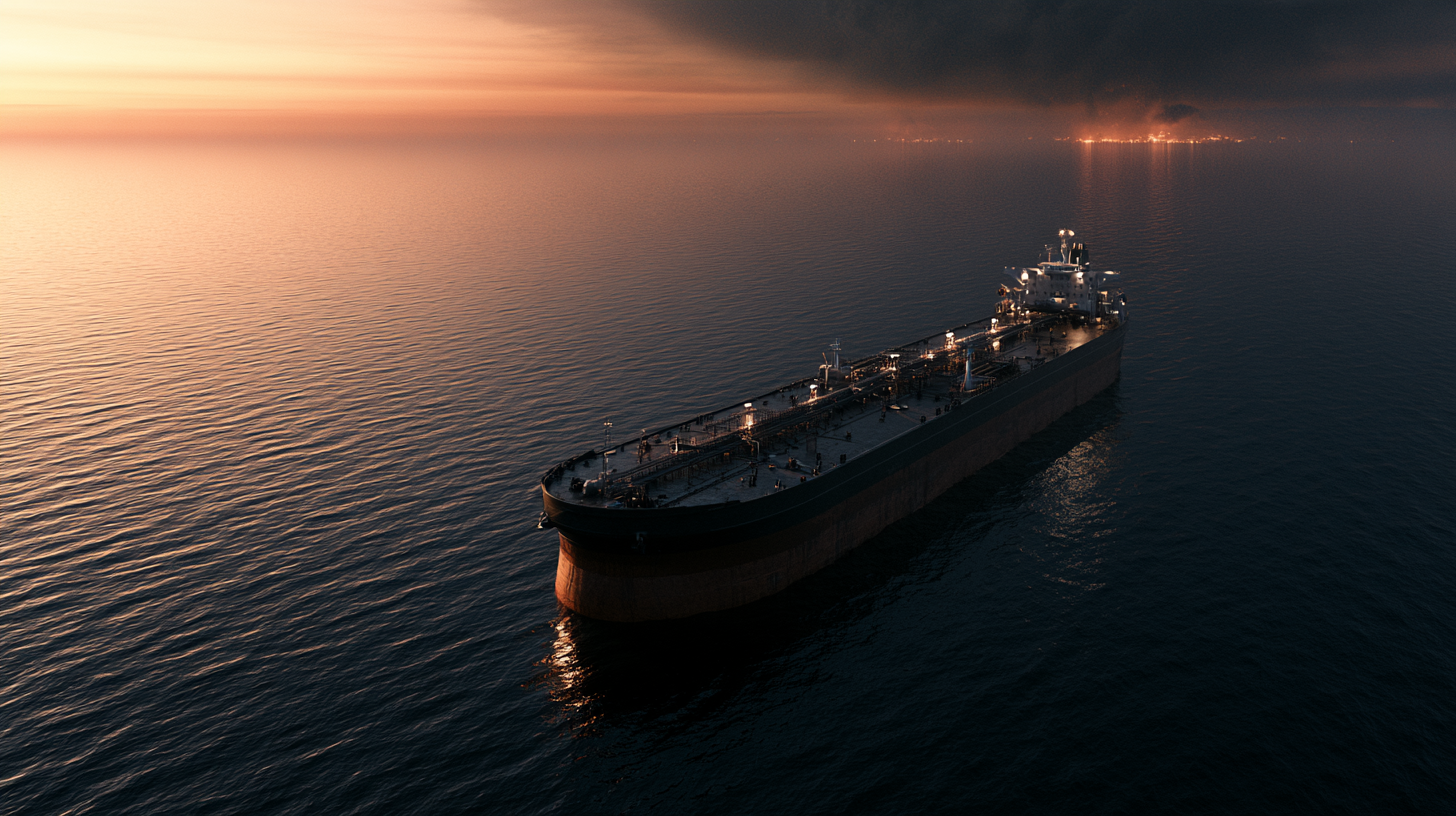
The Iran Ceasefire Expired This Morning. No Deal. No Talks. And Trump Is Threatening to Bomb Oman.
The 60-day ceasefire between the United States and Iran ended today, and the situation is uglier than most people realize. Shipping through the Strait of Hormuz — the narrow waterway where roughly one fifth of the world's traded oil flows — has ground to a near-complete halt. Kpler data showed almost no vessel movement through the strait by Sunday. Drone strikes on tankers were reported as recently as last Thursday, causing minor damage but deepening the sense that no one controls this corridor anymore.
Oman has been the back-channel mediator in all of this, talking to Tehran while Washington insists it won't negotiate directly. That arrangement just got more complicated. President Trump said Monday that the U.S. would "bomb" Oman if the Gulf nation "gets in the way." That statement — aimed at a country that has been trying to broker peace — is the kind of thing that ends diplomatic channels fast. Iran, for its part, continues to deny any direct talks with the U.S. while informal contacts reportedly continue through the Revolutionary Guard.
This matters to your wallet in a very direct way. Oil is already sitting at $88.50 a barrel, up 6% last week alone. Gasoline prices are roughly a dollar per gallon higher than they were before this conflict began in late February. Every week the Strait stays closed is another week of pressure on energy costs that feeds through to everything — groceries, airline tickets, heating bills come winter. There is no resolution in sight, and the diplomatic calendar looks empty.
Advertisement
220 Executive Orders in just one year.
And with nearly three full years left on the clock… I have just uncovered the unthinkable.
Very soon, President Trump is expected to issue what I now know will be his FINAL Executive Order.
I know that sounds insane… I didn't believe it myself.
But then I saw the scorched-earth details of the leak — coming directly from a whistleblower inside the White House — and I realized immediately: This is the endgame.
This announcement will shock the global system to its core.
I managed to secure the full story for you right here.
🌍 Science & World
A Wheat War Is Building Quietly — and History Says This Is When Things Get Dangerous
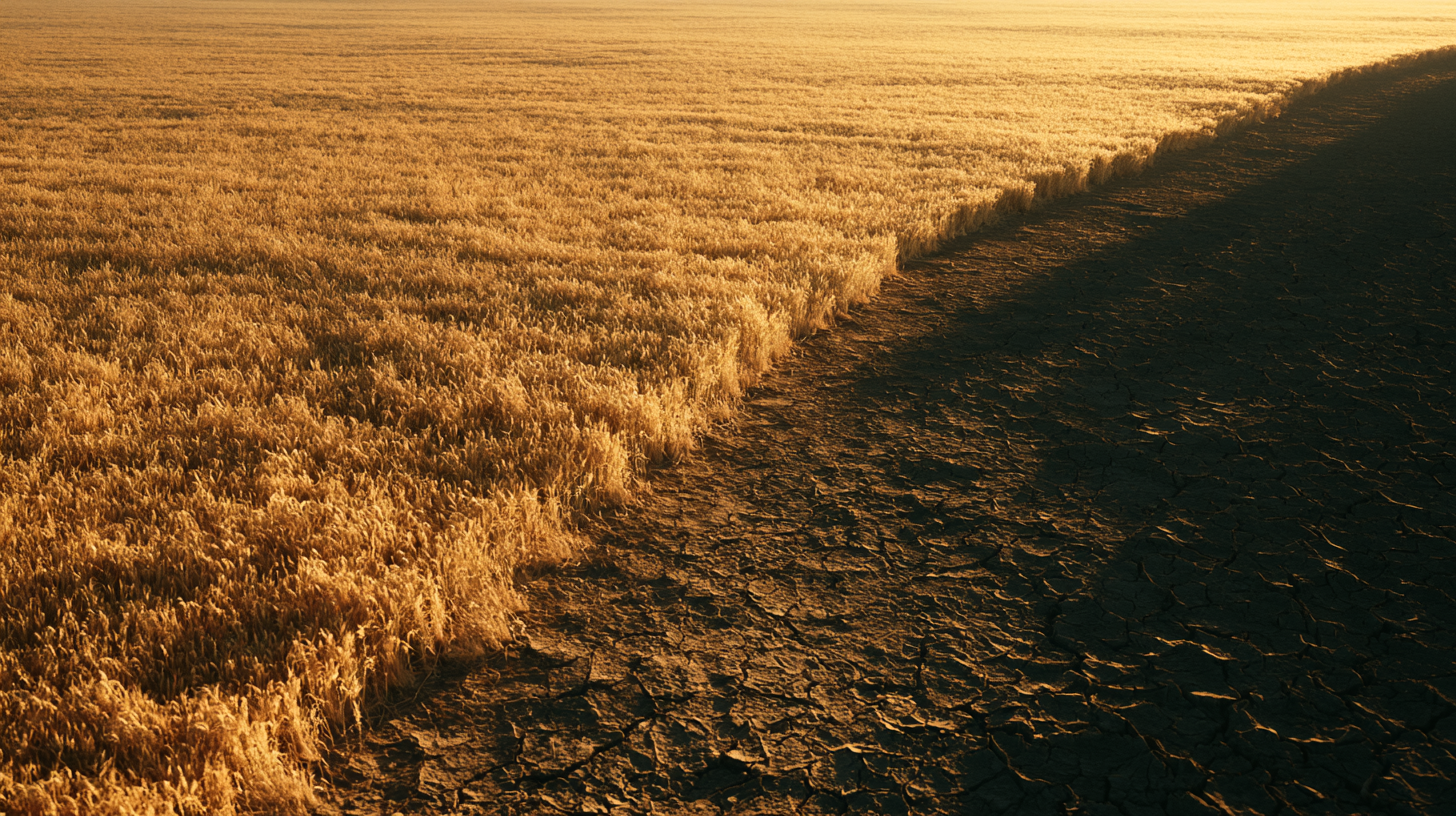
Three crises are happening at once, and they're all hitting the global food supply at the same time. Military blockades in the Black Sea are restricting grain exports from Ukraine and Russia. The Strait of Hormuz shutdown is cutting off fertilizer shipments that come through the Persian Gulf. And severe weather anomalies — drought in key growing regions — are pushing crop yields down across multiple continents. Individually, any one of these would be manageable. Together, they're pushing wheat and staple food prices toward territory that makes analysts genuinely nervous.
The historical record on this is sobering. Spikes in basic food prices — bread, grain, cooking oil — have preceded political collapses and mass unrest more reliably than almost any other economic signal. The Arab Spring of 2011 was directly triggered by wheat prices hitting record highs. Before that, the French Revolution. Food is the one thing that transcends politics, ideology, and economics. When people can't afford to eat, governments fall.
For Americans, this isn't an abstract foreign-policy story. Grocery prices have already been running hot for two years. A global wheat shock would show up at the checkout line — in bread, pasta, cereals, and anything that relies on grain inputs. The energy price spike from Iran has already cost the average household hundreds of dollars this year. A food price spike on top of that would squeeze household budgets further. Pay attention to this one. It's moving slower than a stock market story, but it doesn't move backward easily.
Advertisement
I need to be upfront with you.
This report normally sells for $97.
Investment firms pay $5,000+ for the same intelligence inside it.
But today — for a limited number of readers — I'm sending it to you completely free.
Here's what's inside:
The Bellweather Signal — 7 warning signs that predicted every major economic collapse since 1929.
Right now, all 7 are flashing red.
I've spent 15 years helping conservative Americans protect their wealth from government overreach and economic manipulation.
After watching millions of hardworking families get wiped out in 2008, I made a promise:
Never again would I let good people get blindsided by a crisis the insiders saw coming.
This report is that promise kept.
Financial newsletters charge $97–$297 for research like this. Today it's yours free. But I can only send it to the next group of readers who claim it — after that, it goes back to full price.
🧠 Health & Life · 50+

What You Do in Your 50s Shapes Your Brain in Your 70s. New Research Makes That Case Better Than Ever.
A large new study published this week found that physical activity in midlife — your 50s and early 60s — measurably slows cognitive decline decades later. The researchers tracked thousands of people over many years, controlling for diet, genetics, and other health factors. The conclusion was unambiguous: people who moved regularly in middle age showed significantly less cognitive decline in their 70s and 80s than those who didn't. The effect was strongest among Mexican American adults, suggesting that some brain-protective mechanisms may differ across populations — a finding that opens interesting questions for future research.
The study also found that blood sugar control in midlife matters almost as much as exercise. People who maintained healthy glucose levels — even without being diabetic — had sharper cognitive function in old age. This is significant because blood sugar creeps up gradually for many Americans in their 50s, often without symptoms or a diagnosis. The damage accumulates quietly. What you do now is writing a letter to your future self that won't be opened for twenty years.
"What you do now is writing a letter to your future self that won't be opened for twenty years."
— David Yorke, Dark Bulls
The practical implications here aren't complicated. You don't need a gym membership or a personal trainer. The research consistently shows that regular walking — thirty minutes most days — delivers a significant portion of the cognitive benefit. So does any activity that gets your heart rate up: gardening, swimming, dancing, a bike ride. The key word is consistency over years, not intensity over weeks. A brutal week at the gym followed by two months on the couch does nothing for your long-term brain health. A modest daily habit, maintained through your 50s and into your 60s, can make a profound difference.
🏀 Sports

A 24-Year-Old at Wrigley Is Challenging Shohei Ohtani for MVP — and Chicago Is Starting to Believe
In a summer of grim news, baseball is giving us something genuinely fun to watch. Pete Crow-Armstrong, the 24-year-old center fielder for the Chicago Cubs, is putting together one of the more complete seasons anyone has had in the National League in years. He's sitting at 28 home runs, 30 stolen bases, and leads the entire major leagues with 22 Outs Above Average on defense. His WAR — the stat that attempts to measure a player's total value — is 8.0, the best in the NL. He signed a $115 million extension with Chicago earlier this year, and right now, that looks like a bargain.
The NL MVP race is essentially a two-man contest between Crow-Armstrong and Shohei Ohtani of the Dodgers. Ohtani is, by any reasonable measure, the most talented baseball player alive — he hits and pitches at an elite level simultaneously. But a lingering knee injury has kept him off the mound lately, and without the pitching side of his game, his WAR gap against Crow-Armstrong has widened. Two weeks ago, the two faced off at Wrigley in a series that felt like a preview of October. Crow-Armstrong homered twice. The Cubs swept.
This week, the Cubs host the White Sox in the Crosstown Classic — a rare moment when both Chicago teams are actually good at the same time. The Cubs are chasing the Brewers for the NL Central lead, four games back. The White Sox are in first place in the AL Central. A city that has spent much of the last decade watching losing baseball is suddenly watching something different. There are worse ways to spend a Monday in August.
— David
Dark Bulls
Published Monday–Friday