Warsh speaks at 10 a.m. Nobody knows what he'll say. Here's what's at stake.

Friday · August 28, 2026
The Daily Digest
Dark Bulls
Warsh speaks at 10 a.m. and nobody knows what he'll say. Chinese hackers were inside NASA and the Fed for eight years. Iran agrees to write down its Hormuz terms. And Alcaraz is back.
It's a Friday that starts with the most scrutinized speech in global finance this year. Fed Chair Kevin Warsh delivers his first Jackson Hole keynote at 10 a.m. ET — and markets have been positioning all week for a moment that could move bonds, stocks, and the dollar significantly. Alongside that: the FBI just revealed an eight-year Chinese hacking campaign inside American institutions, Iran took a first diplomatic step on Hormuz, the Nepal disaster is still growing, and the US Open starts Sunday with Alcaraz making his comeback. Let's get into it.
📈 Money & Markets
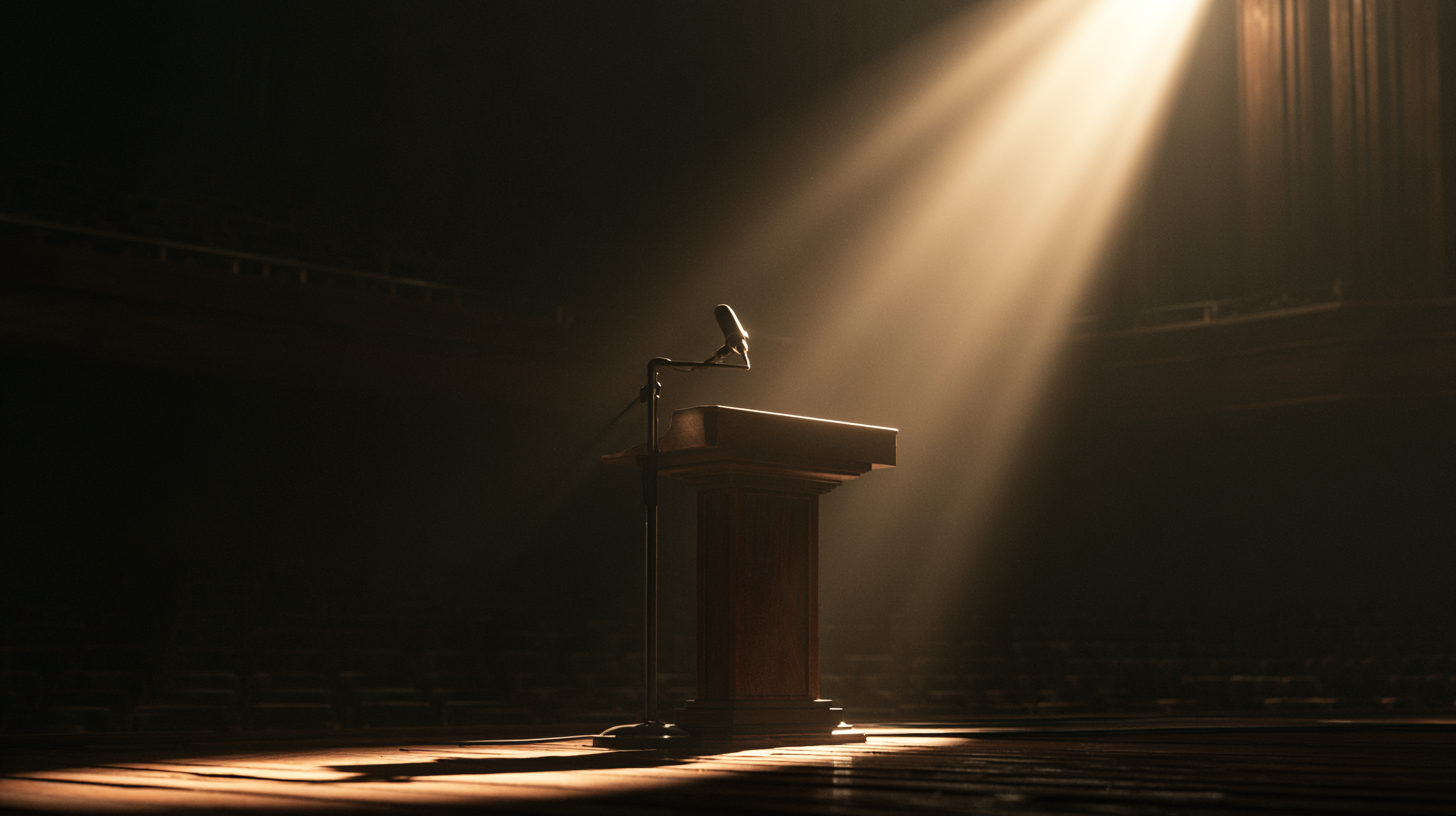
The most important Fed speech in years happens this morning — and nobody knows what Warsh is going to say.
Kevin Warsh steps to the podium at Jackson Hole at 10 a.m. ET today for his first major address as Federal Reserve Chair, and going into it the market's position is unusual: 69% of fund managers surveyed by Bank of America expect a neutral tone. In financial markets, when that many people expect the same thing, the priced-in outcome is rarely the one that moves markets. It's the surprise that does.
The setup heading into the speech is genuinely uncomfortable. Inflation is running at 3.7% on PCE — nearly double the Fed's 2% target. The 30-year Treasury yield has been hovering near its highest level since 2007. The FOMC's last meeting saw three dissenting votes in favor of hiking rates immediately — the most hawkish internal split in nearly a decade. And Warsh himself said at a July press conference that he wanted to use Jackson Hole to "frame the big questions" — language that markets have been unable to decode ever since.
"A neutral address is already priced in. It is the surprise that moves markets — and the range of plausible surprises this year is unusually wide."
— Dark Bulls
What Wall Street actually wants is simple: a reaction function. That's the economic jargon for a clear statement of what would cause Warsh to raise rates, what would cause him to hold, and what conditions he's watching most closely. Since taking over from Jerome Powell in May, Warsh has deliberately withheld that kind of guidance — a strategy he's described as letting markets process data themselves rather than waiting for Fed signals. His critics say that approach has created unnecessary uncertainty at exactly the wrong moment.
The asymmetry going into this speech is worth understanding. A neutral address moves markets modestly. A hawkish surprise — reaffirming the 2% inflation commitment and signaling September hikes are possible — would reprice bonds and rate-sensitive equities sharply. A dovish read could trigger a bond selloff that pushes the 30-year yield to 5.5% or above. For anyone holding a mortgage, retirement savings, or bonds, today's 10 a.m. speech is worth paying attention to.
Jackson Hole Context · Aug 28, 2026
3.7%
PCE inflation (target: 2%)
34%
Odds of Sept rate hike
9–3
FOMC vote split (July)
Advertisement
🔒 REG A+ PRE-IPO OFFERING • $2.50/SHARE CHANGES AUG 31
Kevin O'Leary officially called it one of the biggest regrets in investment history.
Every single judge famously passed on a simple smart-home device during a live national television broadcast.
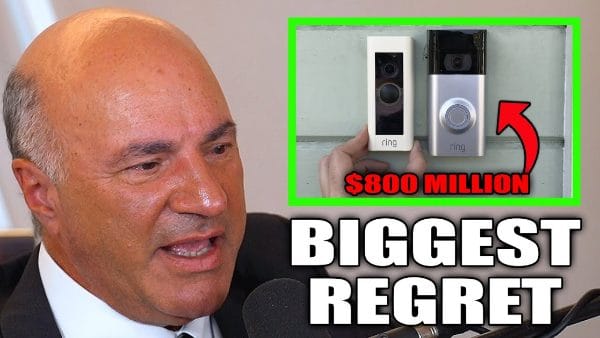 Years later, Amazon stepped in and acquired that exact company for over $1,000,000,000. Early believers walked away with a life-changing 67,765% return.
$20M+
Revenue To Date
70K+
Devices Sold
100+
Best Buy Stores
🏛️ Politics
The FBI just shut down a Chinese hacking operation that had been quietly inside America's most sensitive institutions for eight years.
The Justice Department and FBI announced Wednesday that they seized three internet domains powering two hacking platforms called QScan and QTRouter, instantly disabling an operation run by a Chinese state-sponsored group known as QTFY. The group, which operated through a Nanjing-based company called Xinjiuwei Network Technology, sold its hacking services to China's Ministry of State Security and the People's Liberation Army. The takedown ended an eight-year campaign that had successfully penetrated — or targeted — NASA, the Federal Reserve, the U.S. Senate, the Department of Energy, the National Institutes of Health, the Department of Justice, and the Department of Health and Human Services.
Court documents unsealed in San Diego describe QScan as carrying code for more than 200 different attack methods, capable of operating at massive scale and adapting quickly to newly discovered security flaws. In May 2024, the group exploited a vulnerability in Check Point security equipment within days of its public disclosure, stealing server settings and account information from more than 300 U.S. organizations. In June 2026, QTFY scanned a U.S. election system, though that attempt did not result in a breach.
"The domain seizures disabled the tools. What was already collected remains collected."
— Dark Bulls
FBI Director Kash Patel framed the operation as part of a sustained counter-offensive against Chinese cyber activity. "These tools were used by PRC cyber actors to hide the origin of their attacks," he said. The DOJ press release was careful with language — agencies like NASA and the Senate are described as both "victims" and "targeted," without specifying exactly which successful intrusions occurred at which institutions.
For Americans reading this, the practical implication is worth sitting with. The Federal Reserve was a target. So was the NIH, where medical research affecting millions of people is stored. So was the Senate. This wasn't corporate espionage for profit — it was state-directed intelligence collection, running continuously for eight years, inside the institutions that manage U.S. monetary policy, national security legislation, and public health infrastructure. The domain seizures disabled the tools. What was already collected remains collected.
Advertisement
Sell Alert: 5 Stocks to Avoid Right Now
Let me ask you something… Do you own any stocks on this list?
Because if you do… you may be exposed to the next market drop.
Behind the scenes, the market is starting to shift. And according to new data, five popular stocks our data suggests are worth watching closely if volatility spikes.
Millions of investors still hold them. But if selling pressure accelerates, these stocks could fall much faster than most people expect.
That's why a new report reveals:
· 5 stocks investors may want to sell now
· Why these companies could be at risk
· What smart investors are watching instead
🌍 Science & World
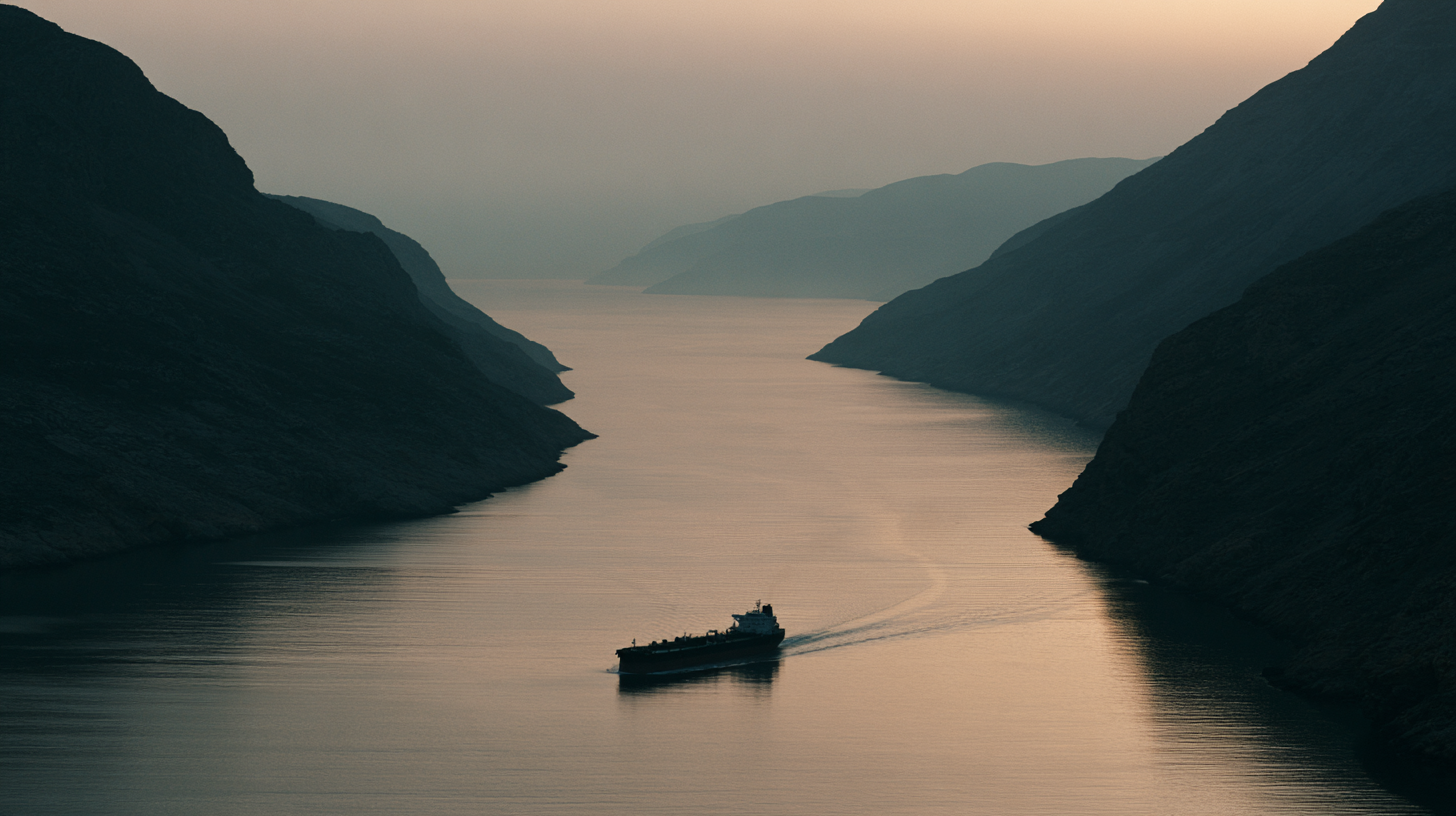
Iran has agreed to write down its conditions for reopening the Strait of Hormuz — the first concrete diplomatic step in weeks.
Qatar's prime minister and foreign minister Sheikh Mohammed bin Abdulrahman Al Thani arrived in Tehran on Thursday for the first high-level Qatari visit to Iran since the war began in February. The talks focused on restoring shipping through Hormuz, with the Qatari side pressing Iranian officials to respect freedom of navigation under international law. Iran's Supreme National Security Council secretary Mohsen Rezaei said afterward that Tehran had agreed to draw up a formal list of conditions for reopening the strait — the first time Iran has committed to setting out its terms in writing.
The conditions Tehran is expected to name include ending the regional war, lifting U.S. port blockades, removing sanctions, and receiving compensation. Washington, however, has largely disengaged from direct talks, preferring its economic pressure campaign. White House Press Secretary Karoline Leavitt said Friday that the U.S. campaign would continue until Iran decides to negotiate meaningfully. Trump said Thursday that the United States was not talking with Iran at all.
"A list of conditions is not an agreement. But it's more than there was a week ago."
— Dark Bulls
On the ground, U.S. Navy Admiral Brad Cooper reported that American forces have cleared sea mines from the strait that Iran's Revolutionary Guard had placed months ago. Some commercial shipping is moving through a temporary corridor jointly managed by Iran and Oman. Cooper put a number on the effort: U.S. forces have helped 1,500 commercial vessels carrying nearly 750 million barrels of crude oil transit the strait in recent months.
The gap between the corridor being technically passable and the strait being fully, formally, and reliably open remains wide. Iran's conditions will take time to produce and longer to negotiate. The U.S. position — maximum pressure, no direct talks — is not designed to accelerate that timeline. For oil prices, which have been falling on optimism about the talks, the practical question is whether the optimism is warranted. A list of conditions is not an agreement. But it's more than there was a week ago.
Advertisement
Every rocket ever built has the same problem. Fuel has weight. So you need more fuel to carry your fuel. Which adds weight. Which demands more fuel.
Engineers call it the rocket equation. By launch time, most of a rocket is not payload — it is fuel to fight gravity from a dead stop at sea level. A Falcon 9 burns roughly $200,000 of fuel per mission. That cost is part of every ground-launch company, forever. Because physics does not negotiate.
But a tiny company in Florida found a cheat code. They don't launch from the ground. They launch from 45,000 feet… at 1,100 miles per hour.
They have a fleet of specialized supersonic jets that carry rockets to altitude, release them, land, refuel… and could fly again three times in a single day.
It cuts fuel costs to $20,000. One tenth the cost.
Nobody is talking about this $7 stock yet. But Robert Kiyosaki's top intelligence guy just exposed the whole operation.
🏀 Sports

The US Open starts Sunday — and the biggest story isn't who's playing. It's who's coming back.
Carlos Alcaraz confirmed Thursday that he will play the 2026 U.S. Open, ending a four-month absence caused by tenosynovitis — an inflammation of the connective tissue surrounding the tendons — in his right wrist. He hasn't played a competitive match since the Barcelona Open in April. In that time, he missed the entire European clay season, both rounds of Wimbledon, and the North American hard-court events in Toronto and Cincinnati. It's the longest injury absence of his career.
The 23-year-old Spaniard has been training in Murcia with Danish star Holger Rune, gradually increasing his workload and testing the wrist at competitive intensity. "I haven't played for four months," he said. "I don't know exactly how I'll feel when I walk onto the court." What he does know is that he's the defending U.S. Open champion — and that he enters New York without Jannik Sinner, the world No. 1, who withdrew citing continued knee problems after his Wimbledon victory.
"Without Sinner, Alcaraz — injury concerns and all — becomes the man most expect to win. Assuming his wrist holds."
— Dark Bulls
Sinner's absence reshapes the entire men's draw. Without him, Alcaraz becomes the man most expect to win, assuming his wrist holds. Alexander Zverev, ranked third, is the next most credible threat. On the women's side, world No. 1 Aryna Sabalenka enters as the two-time defending champion but on a peculiar slump — losing five of seven three-set matches since March, and upset in Cincinnati by an unseeded 20-year-old.
The total prize money is $108 million, the largest in the tournament's history, with the singles champions each taking home $5.5 million. The main draw begins Sunday, August 30. For tennis fans 45 and older, the prospect of watching Alcaraz — one of the most genuinely entertaining players the game has produced in decades — return from injury at the game's biggest American stage is the sporting story of the weekend.
Advertisement
 Calls. Puts. Strikes. Premiums. Greeks.
If you've ever tried to learn options and your eyes glazed over by paragraph two… you're not alone.
This free guide strips out the jargon. No textbook talk. No confusing formulas. Just options explained the way a friend would explain it over coffee — with real trade examples you can copy into your own account.
Normally $29.97. Free today while the link works.
Calls. Puts. Strikes. Premiums. Greeks.
If you've ever tried to learn options and your eyes glazed over by paragraph two… you're not alone.
This free guide strips out the jargon. No textbook talk. No confusing formulas. Just options explained the way a friend would explain it over coffee — with real trade examples you can copy into your own account.
Normally $29.97. Free today while the link works.
🧠 Health & Life · 50+
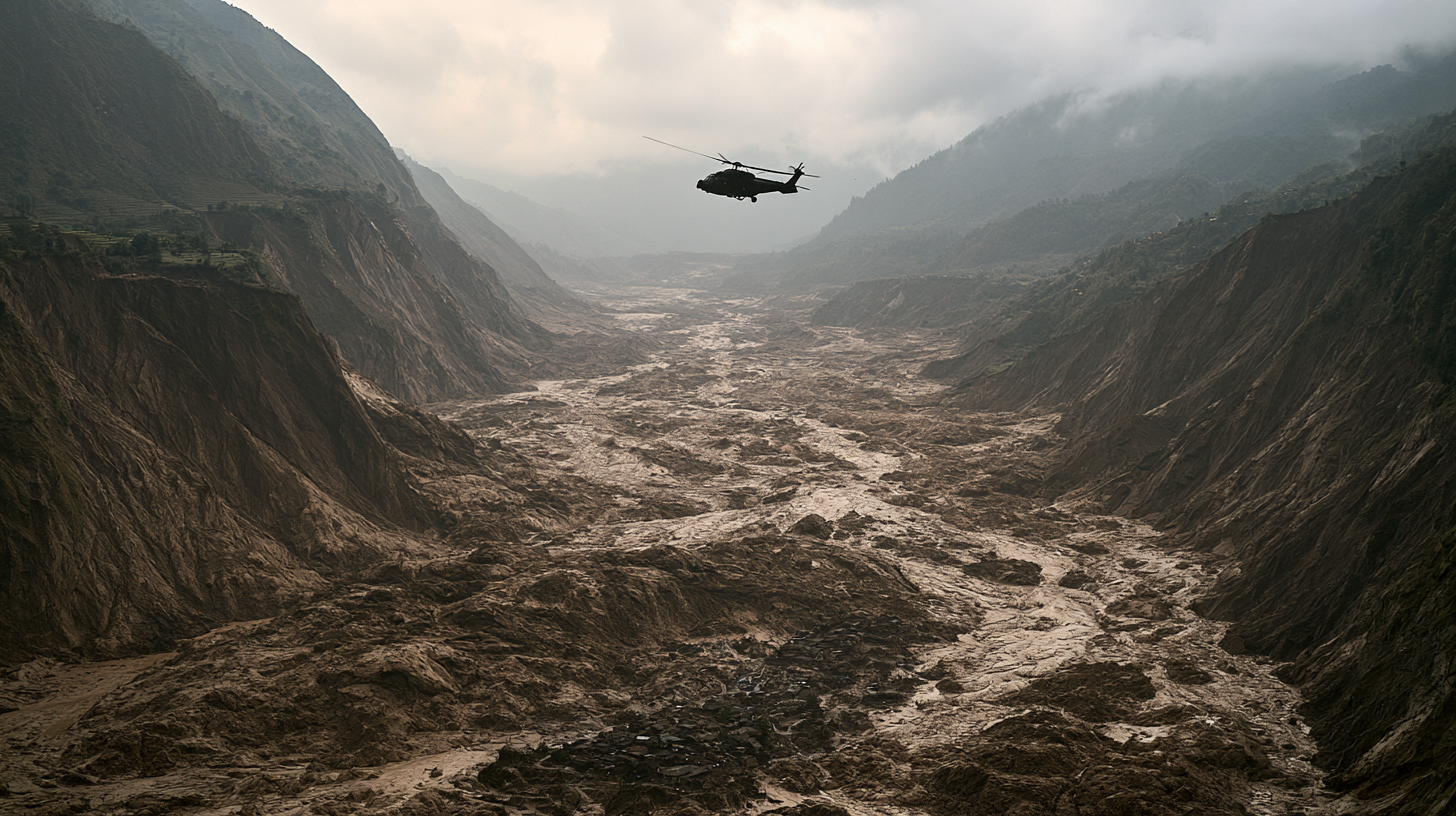
The death toll in Nepal has passed 550 — and 90 Americans are among the missing as rescue teams race against two unstable lakes upstream.
Three days after a glacial collapse sent a wall of mud and ice down the Bhote Koshi River on the Nepal-Tibet border, the situation remains critical and still evolving. Nepal police reported a death toll of 553 as of Friday, with the highest number of bodies recovered in the Chitwan district, dozens of miles downstream from the original impact zone — a sign of how far and fast the water traveled. More than 1,000 people remain missing. The U.S. State Department confirmed that approximately 90 American citizens are among those unaccounted for, and said as of Thursday morning it was not aware of any confirmed U.S. deaths. The disaster has created a second layer of danger that rescue workers are now managing alongside the ongoing recovery operation. Two glacial lakes have formed upstream from the main flood zone. One of them began overflowing Thursday afternoon. If either lake fails completely, a second major surge could sweep through valleys where rescue operations are actively underway. Helicopter evacuations have been the only practical option for most of the affected area — the floods destroyed approximately 40 kilometers of roads and 35 bridges.
"Today's number will not be the final number. The situation on the ground is still moving."
— Dark Bulls
The USGS estimated that more than 100 million cubic meters of ice, rock, and debris were displaced in the initial event — triggered by a 4.4-magnitude seismic event approximately seven minutes before the surge reached the river. The region sits in one of the most geologically active zones on earth, where climate change has been accelerating glacial melt and increasing the frequency of exactly this type of event.
For families still waiting for news: the U.S. Embassy in Kathmandu has established direct communication with Nepali authorities and is updating information on U.S. nationals as it becomes available. Nepal's government has also set up an Emergency Control Room specifically for foreign nationals affected by the disaster. The situation on the ground is still moving. Today's number will not be the final number.
📋 In Brief
Warsh speaks at 10 a.m. ET — markets are watching.
Going into the speech, the S&P 500 is roughly 1.5% below its August 13 record. Bond markets have been more agitated, with the 30-year yield elevated and the FOMC split 9-3 at the last meeting. Options pricing suggests traders see a larger potential move than in a typical Jackson Hole year. Whatever Warsh says — or doesn't say — the reaction begins within minutes of the text hitting the wire.
A federal judge blocked the USPS mail-in voting plan.
A judge ruled late Thursday that the Postal Service's plan to limit certain mail-in ballot processing was a "likely unconstitutional regulation" and blocked it for at least two weeks. Several state attorneys general had filed suit challenging the plan. The dispute heads into the court system with the November election less than three months away.
The lunar eclipse last night.
Thursday night's partial lunar eclipse covered 96% of the moon at its peak — the deepest partial eclipse visible from North America in years. No special equipment needed, just a clear sky. If you were watching, you saw it. If not, the next comparable event isn't until 2028.
— David
Dark Bulls
Published Monday–Friday