Trump's Venezuela oil deal explained: what he said, what actually happened, and what it means for your gas bill

Monday · August 31, 2026
The Daily Digest
Dark Bulls
Warsh opened the door to a September rate hike. The U.S. and Iran traded strikes over the weekend. Trump announced the "biggest oil deal in history." And Venus Williams played what may have been her last Grand Slam singles match — past midnight in New York.
It's a Monday that starts with more noise than most. Warsh's Jackson Hole speech Friday was deliberately vague — and yet the bond market immediately priced in a September hike. Over the weekend, the U.S. struck Iran on Larak Island; Iran hit back at American bases in Jordan and the UAE. Trump unveiled a Venezuela oil deal that won't lower gas prices anytime soon. And in Nepal, the death toll from last week's glacial disaster has crossed 900. Let's get into it.
📈 Money & Markets
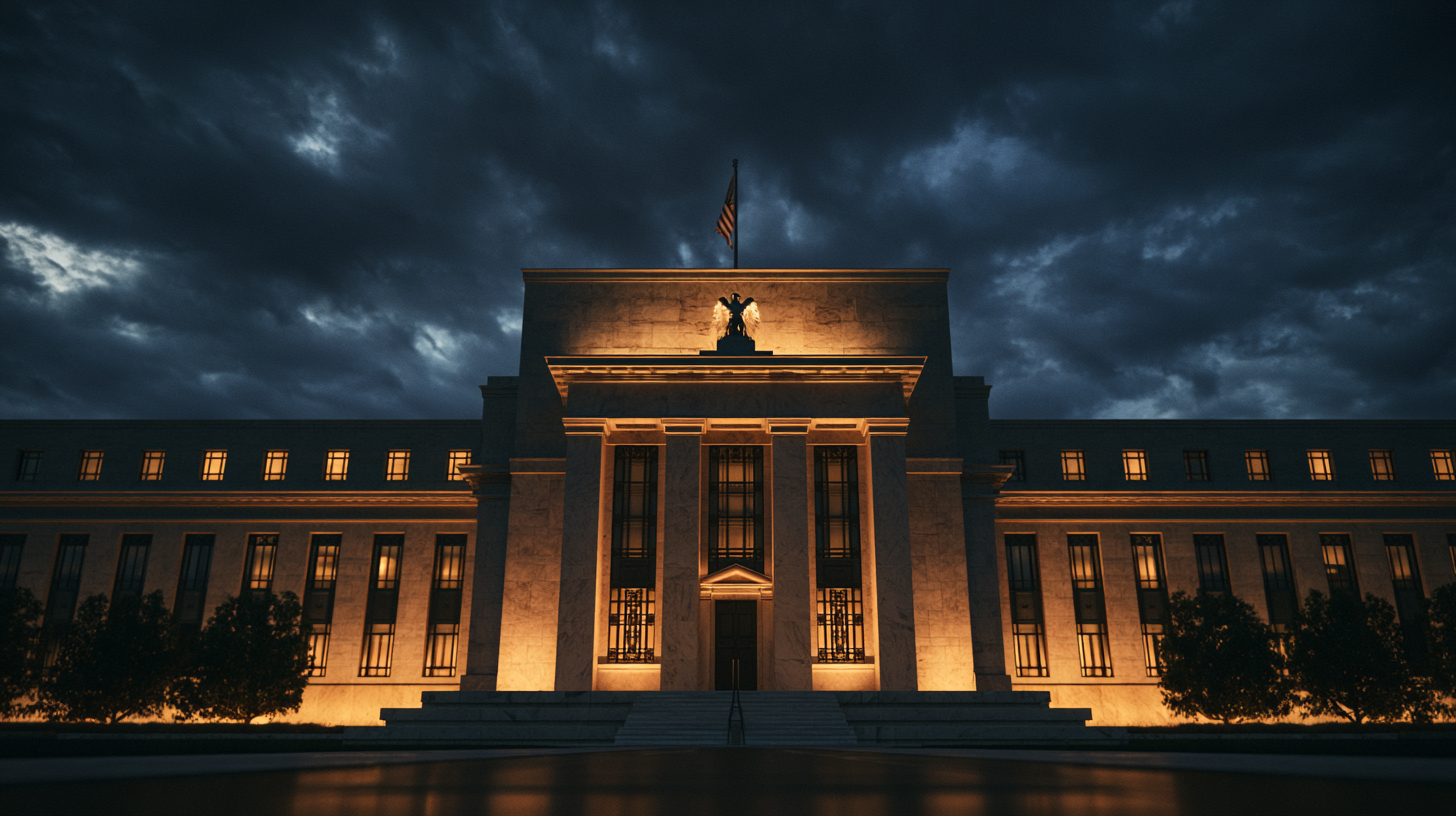
Warsh said the Fed still has "work to do" on inflation — and markets immediately priced in a September rate hike.
Friday's Jackson Hole speech was brief — roughly 30 minutes — deliberately vague on specific rate guidance, and yet unmistakably hawkish in tone. "None of these measures are perfect, but they all tell a similar story: inflation is running above our 2% target," Warsh said. "The Fed's predominant focus right now should be on prices." He refused to give a reaction function — any clear signal of what would trigger a rate move. But what he said was enough: traders' odds of a September hike jumped from 35% to 57% within hours.
Short-term Treasury yields moved sharply. The 2-year yield spiked more than 12 basis points, closing at 4.356% — its highest since May. The 10-year yield edged higher to 4.73%. Stocks, paradoxically, ended the day modestly positive — the S&P 500 rose roughly 0.3%. Analysts interpreted the calm reaction as a sign that investors actually welcomed the clarity, even if the message was uncomfortable. "The positive market reaction highlights that investors place a premium on policy clarity, even when that clarity carries a more hawkish message," said Seema Shah at Principal Asset Management.
"Market participants will always try to anticipate what we will do next. But we should not indulge a regime in which they are looking primarily to the Fed for their next trade." — Kevin Warsh, Jackson Hole, August 28
— Federal Reserve Chair
Coming into the long holiday weekend, that sets up a loaded September. The next FOMC meeting is September 15-16. If Warsh meant what he said, a hike is now the base case for roughly half of bond traders. For Americans carrying adjustable-rate mortgages, home equity lines, or variable-rate car loans, this matters directly. A 25-basis-point hike would add roughly $25-$50 per month on a $200,000 variable-rate balance.
Warsh also broke from his predecessors in a notable way. Rather than using Jackson Hole to signal the next move, he used it to explain why he wouldn't be doing that going forward. That framing — a less-communicative Fed by design — is either principled reform or a recipe for more volatility. The next few months will tell us which.
After Jackson Hole · Aug 28, 2026
57%
Sept hike odds (was 35%)
4.36%
2-yr Treasury yield
+0.3%
S&P 500 on Friday
Advertisement
Elon Musk has spent years talking about a future where technology does more than drive your car. He believes your home should be intelligent too — predicting when you will arrive, adjusting the rooms you use, and managing energy automatically.
But the most overlooked part of that vision may not be the solar roof, the battery, or even the household robot. It may be the windows.
Window coverings control natural light, privacy, glare, temperature, and energy use. Yet approximately 92% of shades are still operated manually.
Tesla is building an intelligent energy system for the home. But someone still has to automate the billions of shades, blinds, and curtains already hanging inside those homes.
I found the company doing it. It is called RYSE.
RYSE makes patented retrofit devices that turn existing window coverings into connected, AI-ready systems — without replacing the shades, opening the walls, or hiring an electrician. Mount the device. Connect it. Set a schedule. Then let the shades adjust automatically based on time, sunlight, weather, and your daily routine.
And this is not merely a prototype:
· 80,000+ devices sold
· $15 million+ in reported revenue
· 10 patents granted
· More than 4,000 investors
· Sold through Best Buy, The Home Depot, Lowe's, Amazon, and Linen Chest
· RYSE has reserved the Nasdaq ticker symbol $RYSS
Its Regulation A+ offering is currently open at $2.50 per share. Qualifying investors may also receive up to 50% bonus shares. But RYSE's investor page is already warning that the share price is set to increase. Once the current round changes, the $2.50 price and today's bonus terms may be gone.
Important disclosures. This is a paid advertisement for RYSE Inc. made pursuant to a Regulation A+ offering and involves risk, including the possible loss of principal. The valuation is set by the Company; there is currently no public market for the Company's Common Stock. Nasdaq ticker "$RYSS" has been reserved by RYSE; any potential listing is subject to future regulatory approval and market conditions. Past share-price appreciation does not guarantee future returns. SEC qualification does not constitute SEC approval of the merits. RYSE Inc., 96 Spadina Avenue, Suite 500, Toronto, ON M5V 2J6, Canada
🏛️ Politics

The U.S. struck Iran on Sunday, Iran struck back at American bases in Jordan and the UAE, and the war that had been cooling for a month just got hot again.
U.S. Central Command confirmed Sunday that American forces carried out drone strikes on two Iranian rocket launchers on Larak Island in the Strait of Hormuz after observing Iran's Revolutionary Guard preparing to launch rockets carrying sea mines into the waterway. The strikes killed two people and injured two others, according to Iranian state media. It was the first confirmed U.S. military action against Iranian assets since July 29 — a month-long pause that had generated cautious optimism about the diplomatic track.
Iran's response came within hours. The IRGC launched ballistic missiles at King Hussein Air Base and Al-Azraq Air Base in Jordan, and separately sent drone strikes at Al Minhad Air Base in the UAE. The IRGC claimed to have caused "heavy damage" to technical and maintenance facilities and fighter-jet positions. Jordan's military said its air defense systems intercepted eight missiles that entered Jordanian airspace at dawn. The UAE did not immediately confirm or deny damage.
"Iran apparently decided to remind the world it still controls the waterway militarily. The next 48 hours will determine whether this was a controlled escalation or the start of something larger."
— Dark Bulls
CENTCOM described the Larak strike as a "limited, precise action against IRGC minelaying forces posing an imminent threat" to international shipping. The timing is notable — just days after Admiral Brad Cooper had declared that U.S. forces had cleared all sea mines from the strait's shipping lanes, Iran was apparently preparing to lay new ones. The Larak Island site has been used by Iran to charge commercial vessels $2 million per crossing.
What this weekend's exchange demonstrates is that the diplomatic and military tracks are running simultaneously and pulling in opposite directions. Qatar had just secured Iran's agreement to write down its conditions for reopening the strait. Washington was publicly refusing direct talks. Iran, reading that combination as a sign that diplomatic concessions weren't forthcoming, apparently decided to act militarily. The next 48 hours will determine whether this was a controlled escalation or the start of something larger.
Advertisement
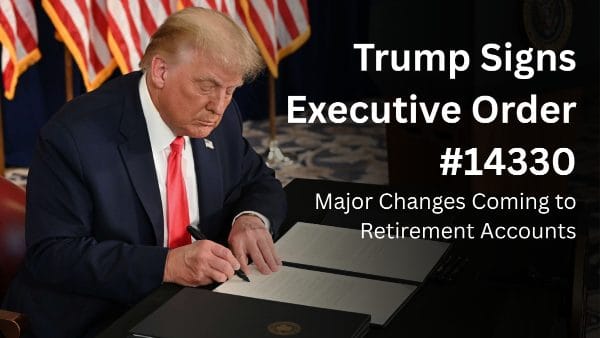 On August 7th President Trump signed Executive Order #14330.
For the first time ever, Americans will soon be able to hold precious metals (like gold & silver) inside 401(k)s.
That means more than $12 trillion in retirement savings could soon start flowing into the precious-metals market, creating one of the largest wealth shifts in modern history.
Since the announcement, gold prices have soared from $3,400 to over $4,000 per ounce, a 17% jump in just months. And the momentum may just be getting started.
Once the order takes effect in 2026, J.P. Morgan believes the demand could send gold prices toward $6,000 per ounce.
Billionaire investor Ray Dalio now recommends keeping 10–15% of your portfolio in gold to protect against inflation, debt, and market volatility.
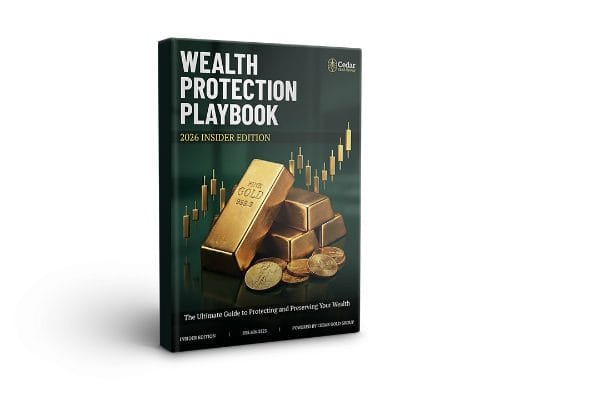
To help investors stay ahead of the curve, Cedar Gold Group released the 2026 Wealth Protection Playbook — a free guide revealing a little-known strategy for buying and storing gold BEFORE this executive order takes effect. (Yes, this works with 401(k), IRA, TSP, 403(b), or even cash.)
On August 7th President Trump signed Executive Order #14330.
For the first time ever, Americans will soon be able to hold precious metals (like gold & silver) inside 401(k)s.
That means more than $12 trillion in retirement savings could soon start flowing into the precious-metals market, creating one of the largest wealth shifts in modern history.
Since the announcement, gold prices have soared from $3,400 to over $4,000 per ounce, a 17% jump in just months. And the momentum may just be getting started.
Once the order takes effect in 2026, J.P. Morgan believes the demand could send gold prices toward $6,000 per ounce.
Billionaire investor Ray Dalio now recommends keeping 10–15% of your portfolio in gold to protect against inflation, debt, and market volatility.
To help investors stay ahead of the curve, Cedar Gold Group released the 2026 Wealth Protection Playbook — a free guide revealing a little-known strategy for buying and storing gold BEFORE this executive order takes effect. (Yes, this works with 401(k), IRA, TSP, 403(b), or even cash.)
 Don't wait. With demand accelerating after this executive order, waiting could cost you.
Sincerely,
Don't wait. With demand accelerating after this executive order, waiting could cost you.
Sincerely,Cedar Gold Group
🌍 Science & World
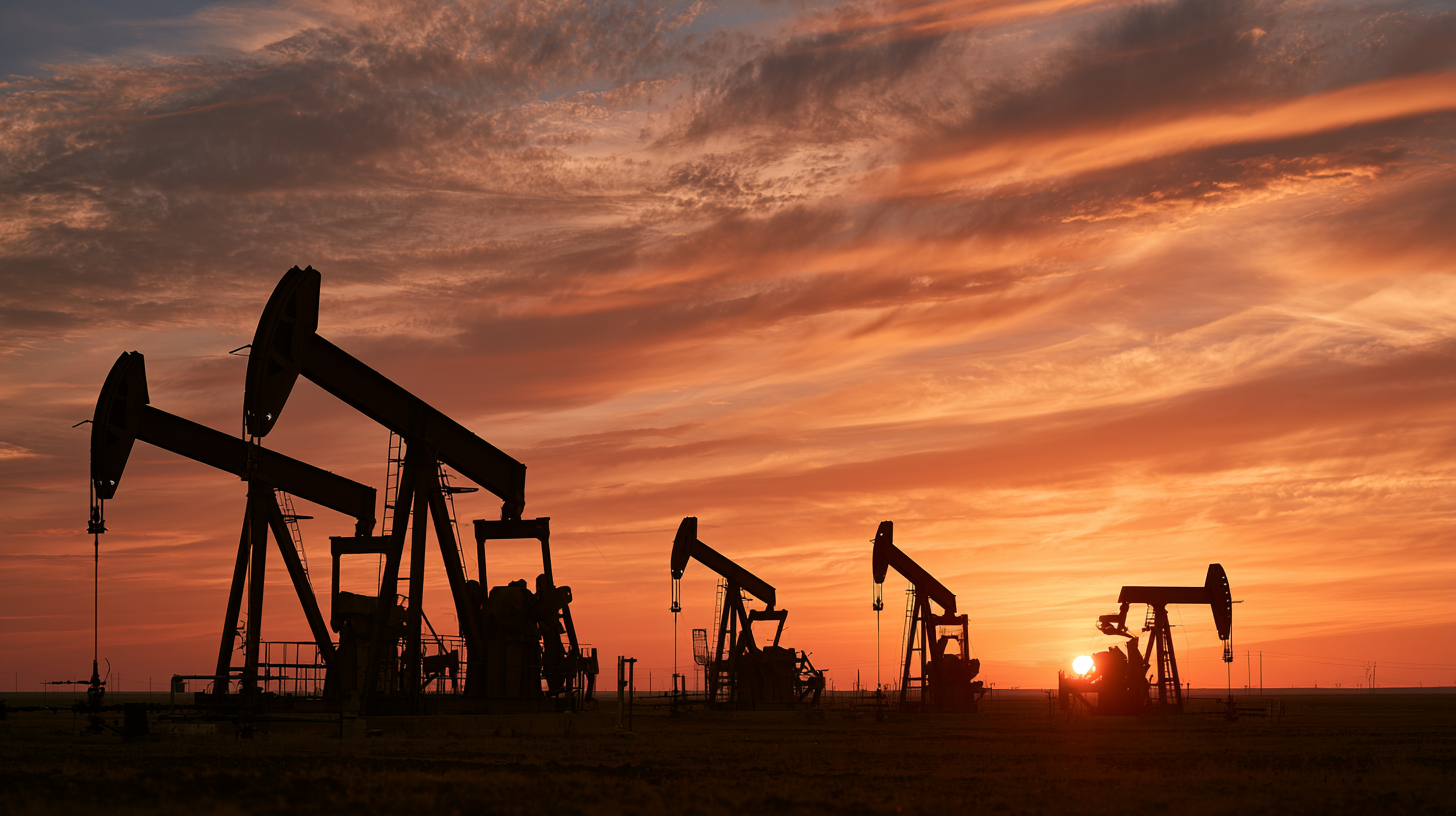
Trump announced "the biggest oil deal in world history" with Venezuela — and the details are more complicated than the headline.
Late Friday night, President Trump posted on Truth Social that the United States had entered into an agreement with Venezuela giving the U.S. majority control of more than 65 billion barrels of proven Venezuelan oil reserves — "at no cost to the American taxpayer." He called it "THE BIGGEST OIL DEAL IN WORLD HISTORY" and predicted it would substantially lower gas prices. Venezuela's acting president Delcy Rodríguez, who took over after Maduro's arrest in January, described the deal as a step toward economic recovery.
The actual structure is a joint venture giving the United States a 55% stake in oil produced from 17 Venezuelan fields over the next 100 years, with roughly $100 billion in private American investment expected to flow into Venezuela's energy sector. That's significantly different from "taking control of 65 billion barrels" — it's a production-sharing agreement over a century, not a transfer of reserves. The distinction matters for anyone trying to understand what this means for gas prices this fall.
"Venezuelan oil won't solve America's near-term energy problem. Americans are paying $4.08 per gallon today. The Iran war disrupted global oil markets, and that disruption will not be resolved by a deal whose production benefits are years away."
— Dark Bulls
Venezuela's oil infrastructure has deteriorated severely from decades of underinvestment and mismanagement. Its crude is extremely heavy — sometimes compared to asphalt in viscosity — requiring lighter hydrocarbons to be mixed in before it can flow through pipelines. Rebuilding Venezuelan production capacity takes years, not months.
Democrats were swift and sharp in their criticism — Sen. Tim Kaine called it "corruption at epic scale." Republicans framed the deal as a historic geopolitical achievement. The midterms are nine weeks away, and energy prices are the most direct measure voters have of whether Washington is managing the economy. Whether the deal moves the needle at the pump before November is the question both parties are watching.
Advertisement
 You will NOT believe what Elon Musk is doing next. Hidden inside the SpaceX S-1 is the master plan for Elon's next big disruption. It could transform the world… rewrite the rules of AI… And create the most valuable company EVER.
This is the AI story no one's talking about… yet.
You will NOT believe what Elon Musk is doing next. Hidden inside the SpaceX S-1 is the master plan for Elon's next big disruption. It could transform the world… rewrite the rules of AI… And create the most valuable company EVER.
This is the AI story no one's talking about… yet.
🏀 Sports

Venus Williams lost at the US Open past midnight — and it may have been her last singles match at a Grand Slam.
The 46-year-old Williams fell in straight sets to fellow American wild card Sofia Kenin, 6-2, 7-6(6), finishing her match after midnight local time in New York. It was her 14th consecutive singles defeat — her last tour-level singles victory came in Washington in July 2025. She has now lost six consecutive first-round matches at the US Open since winning there in 2019. Kenin, herself a former Australian Open champion rebuilding her own career, was the stronger player throughout.
What made the match worth watching had nothing to do with the score. Williams played her 26th US Open singles appearance on the same courts where she won back-to-back titles in 2000 and 2001, at an age when most professional athletes retired a decade ago. The crowd gave her an extended ovation. Afterward, asked whether this might be her last singles Grand Slam, Williams declined to close the door. "I don't think I should have to," she told reporters. She will play doubles with her sister Serena later in the tournament.
"Asked whether this might be her last singles Grand Slam, Williams declined to close the door. 'I don't think I should have to.'"
— Venus Williams, post-match, Flushing Meadows
Elsewhere in the Day 1 draw, Djokovic opened with a straightforward victory over Mariano Navone — playing with the quiet efficiency of a man who has been here many times before. Daniil Medvedev advanced past Hugo Gaston in the evening session. The tournament's defending champion Carlos Alcaraz plays his first-round match today against Roman Safiullin — his first competitive singles match since April.
If Alcaraz's wrist holds through the first set, most analysts expect him to advance comfortably. Sabalenka also opens today against Camila Osorio. For tennis fans 45 and older, watching these names back on the biggest American court — alongside a 46-year-old Venus Williams who still won't say she's done — is one of the pleasures of a sport with no mandatory retirement age.
🧠 Health & Life · 50+

The Nepal death toll has crossed 900, more than 4,200 people are still missing, and 90 Americans are among them.
Six days after a glacial collapse sent a catastrophic surge of mud, ice, and rock through the Bhote Koshi River valley on the Nepal-Tibet border, the disaster is still being measured. Nepal's disaster management authority reported a death toll of at least 903 as of Monday, with 4,247 people listed as missing inside Nepal alone. Of the nearly 600 foreigners unaccounted for across both sides of the border, approximately 90 are American citizens, according to the State Department.
The U.S. has now committed $3.6 million in humanitarian assistance — up from the $500,000 announced in the first days after the disaster. The aid includes emergency food assistance for up to 10,000 flood-affected households for up to three months. More than 8,100 people have been rescued to date, with over 90,000 people affected across the region. The barrier lake that formed near the original landslide site has stabilized, Chinese officials confirmed over the weekend, though monitoring continues.
"The search operation continues, but the window for finding survivors is narrowing with each day that passes."
— Dark Bulls
Weather remains a constraint on helicopter operations — the only practical means of reaching many cut-off communities. More than 35 bridges and 40 kilometers of roads were destroyed in the initial event. The USGS estimated that more than 100 million cubic meters of ice, rock, and debris were displaced, triggered by a 4.4-magnitude seismic event. The region sits in one of the most geologically active zones on earth, where climate change has been accelerating glacial melt and increasing the frequency of exactly this type of event.
For families still waiting for news: the U.S. Embassy in Kathmandu has established direct communication with Nepali authorities and is updating information on U.S. nationals as it becomes available. Nepal's government has also set up an Emergency Control Room specifically for foreign nationals. The search continues, but the window for finding survivors is narrowing with each day that passes.
Advertisement
One of the world's biggest banks just ran the numbers on gold for the next five years.
Deutsche Bank's research team just published a target most American retirees will never see in their newspaper. $8,000 per ounce. By 2031. That's roughly 80% higher than where gold trades today.
They ran a "what-if" test: if the world's biggest governments keep moving their money out of U.S. dollars and into gold at the same pace they've been moving it, where does gold end up in five years? The answer came back: $8,000.
"Gold is poised to benefit significantly from an increasingly fragmented world as nations continue to pivot into the metal and away from the U.S. dollar as their go-to reserve asset."
This isn't a fringe call. Other major banks are saying similar things for the near term:
Brett Bultje
CEO | Cedar Gold Group
· JPMorgan: $6,000/oz by the end of this year
· Goldman Sachs: $5,400/oz
· UBS: $5,900/oz by late 2026
Here's what matters for American retirees.
If most of your savings sit in dollars — bonds, mutual funds, cash, 401(k) accounts — you may be on the wrong side of a move the world's largest central banks are already making. Inside the free Wealth Protection Guide, you'll find what most retirees miss about positioning before — not after — a move like this plays out.
Sincerely,Brett Bultje
CEO | Cedar Gold Group
📋 In Brief
September hike odds at 57%.
Following Warsh's Jackson Hole speech Friday, federal funds futures are pricing a better-than-even chance of a 25-basis-point rate hike at the September 15-16 FOMC meeting. The next major data point before that meeting is the August jobs report, due Friday, September 5. A strong number would likely push hike odds higher; a weak one could reset expectations considerably.
Iran-Jordan-UAE: what we know this morning.
Jordan's military confirmed it intercepted eight ballistic missiles overnight. No American casualties have been reported at either Jordanian base. The UAE has not publicly confirmed the drone strike at Al Minhad. The Pentagon briefed reporters this morning. Oil markets are responding — WTI crude opened higher on the escalation news.
Alcaraz plays today — Sabalenka too.
The defending US Open champion takes the Arthur Ashe Stadium court today against Roman Safiullin — his first competitive singles match in more than four months. Sabalenka opens against Camila Osorio. Top seed Alexander Zverev starts Tuesday against Lorenzo Sonego. The US Open runs through September 13.
— David
Dark Bulls
Published Monday–Friday