The week that could end the Iran war starts in New York today

The Daily Digest
Dark Bulls
Monday · September 21, 2026
Brent crude fell to $101.67 for the fourth straight day as Trump said he is "probably open" to meeting Iran's president at the UN. Oil is pricing in diplomacy. Trump meets Gulf leaders today. A new NBC poll shows his approval at a second-term low of 41%. AG Blanche has three days left.
Monday. The most consequential week of the Iran war's diplomatic phase opens in New York with both Trump and Iranian President Pezeshkian in the same building — and no meeting on the schedule, but the door cracked open. Oil has fallen four straight sessions on that crack. A new NBC News poll shows Trump at his lowest approval of the second term as voters blame him for the economy. And the clock on AG Blanche's Epstein deadline is now measured in days, not weeks. Let's get into it.
Advertisement
Trump Warned Us: The Digital Dollar Is Coming
Back in 2024, Donald Trump stated he would never allow a Central Bank Digital Currency (CBDC) if re-elected.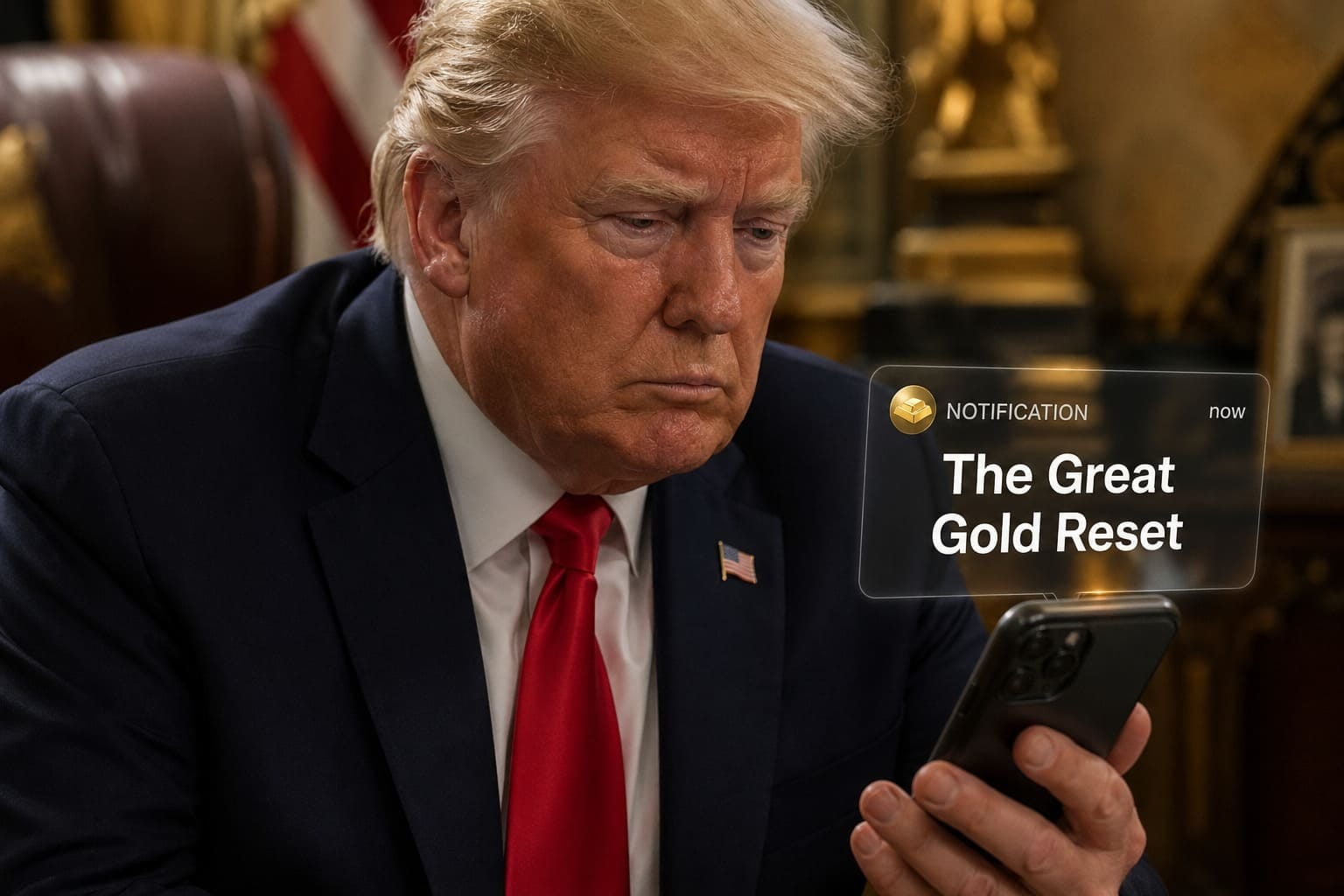 Why? Because he knows exactly what it means: the government could gain total control over your money.
With a CBDC in place, the government could:
▶ Track every purchase you make
▶ Decide what you're allowed to buy
▶ Freeze your accounts instantly with a click
In the wrong hands, this is the ultimate financial surveillance and control tool.
Here's the truth: CBDC is already moving forward — fast. And if you don't act now, you could lose your financial freedom before the next election.
👉 That's why we've created a critical FREE guide showing you exactly how to legally protect your cash and privacy — starting today.
Once CBDC becomes law, opting out may be impossible. Trump is trying to stop it, but until then, it's up to you.
Get the facts. Take action. Protect your money.
📈 Money & Markets

Brent crude fell for a fourth straight day to $101.67 as Trump said he is "probably open" to meeting Iran's president at the UN — and oil markets priced in the possibility of peace.
Market Pulse · Sept 21, 2026
$101.67
▼ Brent Crude
4th drop in a row
$6.33
▼ Drop from high
Was $108 last week
3.75-4%
◆ Fed rate
Post-hike baseline
196K
▼ Jobless claims
Low since 1969
Brent crude fell for a fourth consecutive session Monday, dropping to $101.67 a barrel — down more than $6 from last week's $108 high — as markets priced in the possibility of direct diplomatic contact between the United States and Iran at the United Nations General Assembly. Trump told reporters Sunday he is "probably open" to meeting Iranian President Masoud Pezeshkian on the sidelines in New York. Pezeshkian's delegation arrived with valid U.S. visas — a quiet signal that neither side has entirely closed the door.
The four-day oil slide is the clearest market signal yet that investors believe the Iran war's most acute phase may be nearing a turning point — or at least a pause. The Saudi East-West pipeline remains offline, Hormuz remains partially constrained, and there is no ceasefire in place. But the combination of Trump's stated openness to talks, Iran's attendance at UNGA despite the active war, and Qatar's position as the primary back-channel between the two sides has given markets enough to work with. Every session without escalation is a session where the diplomacy narrative gains credibility.
"
There's no indication whether Tehran is also open to a US-Iran presidential meeting during the UNGA. But oil prices are falling as if they think something is possible.
— The National, September 21, 2026
For Americans who fill up regularly — and for retirees on fixed incomes who have watched gas approach $4.40 this month — the four-day slide in crude is the most tangible good news of the week. Gas prices typically lag crude by one to two weeks. If the diplomatic signal holds and Brent stays below $103, pump prices could begin to ease before the end of the month. The next key price moment is Tuesday, when Trump addresses the General Assembly and Pezeshkian speaks Wednesday.
Advertisement
Trump Had a Hidden Reason for Bombing Iran.
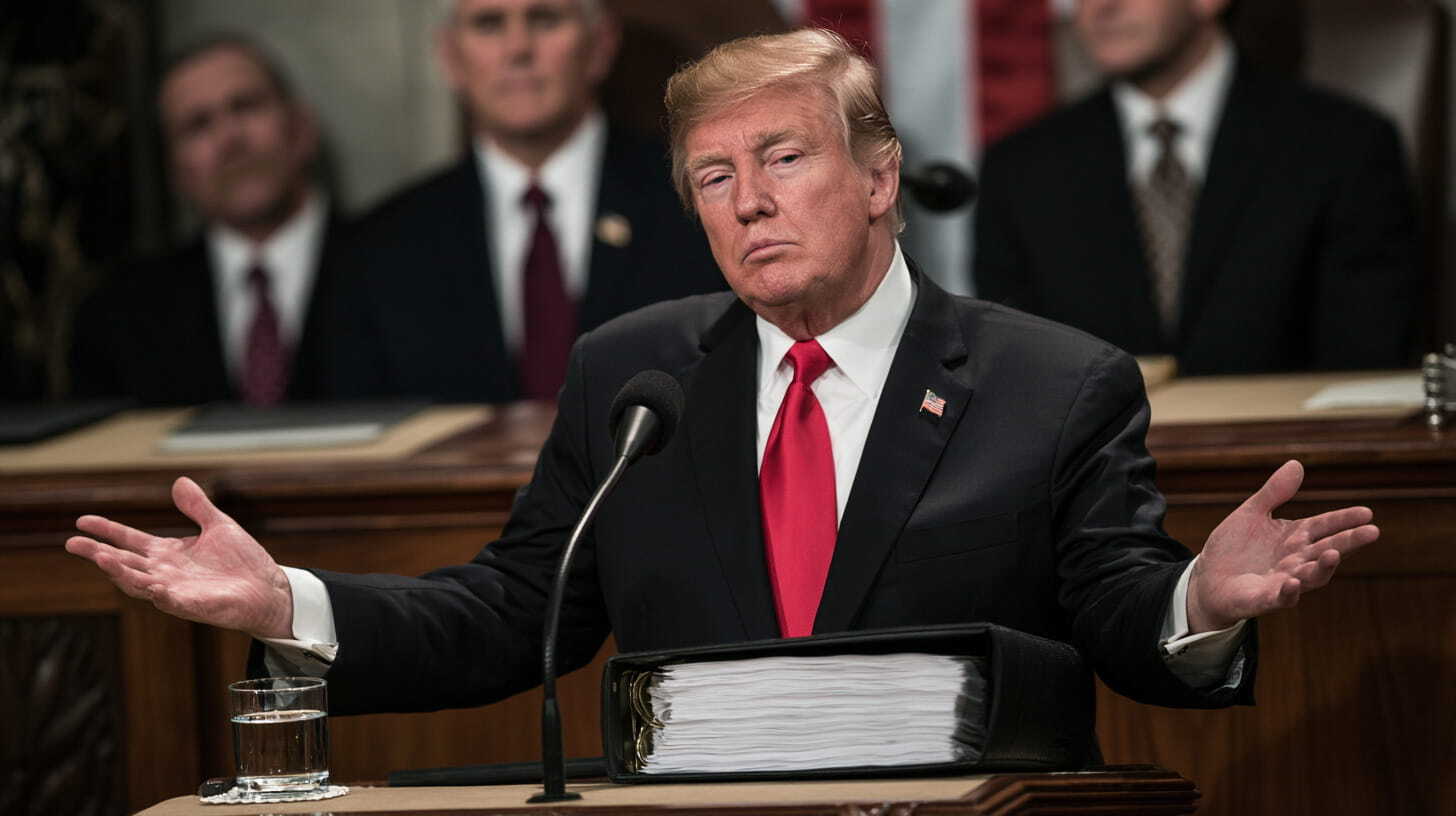 According to this presentation…
Iran may never have been the real target.
It was only the first move in a much larger war that could reshape the global economy.
See the full story →
🏛️ Politics
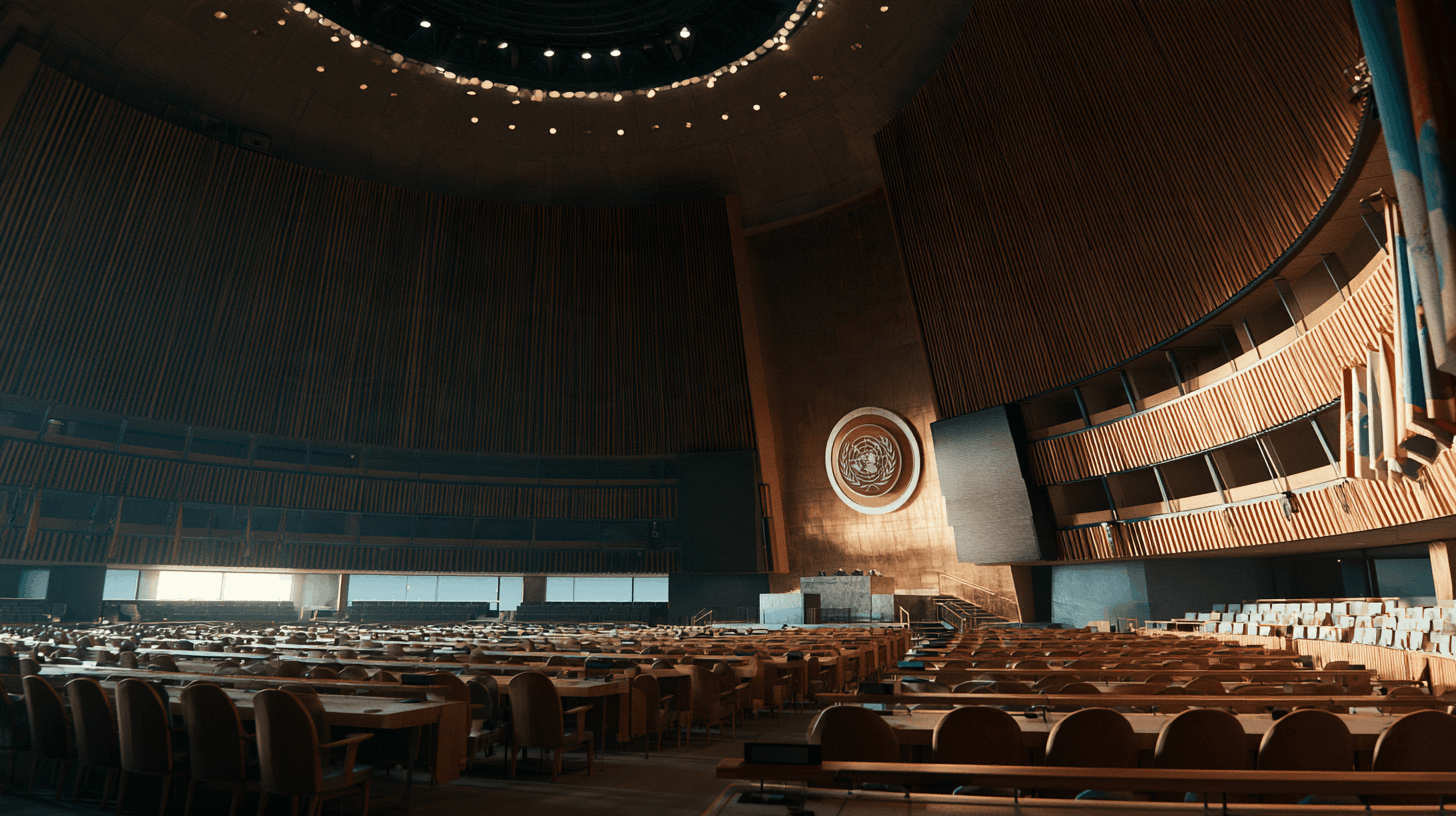
Trump meets Gulf leaders, Iraq, Jordan, and possibly Egypt at the UN today — as Iran's president arrives in New York under the most restrictive diplomatic conditions ever imposed on a foreign leader.
Trump's meeting with Gulf Cooperation Council leaders Monday expanded beyond the original six Gulf states to include Iraq and Jordan, with Egypt likely to participate as well. The talks are the highest-level US-Arab diplomatic gathering on the Iran war since the Islamabad Memorandum expired, and they are expected to focus on Iran and its proxies — particularly the Houthis, whose control over the Bab al-Mandab strait has kept Gulf export routes effectively closed for weeks — and on what a post-war regional architecture might look like. The UAE's diplomatic adviser said the rebuilding of trust with Iran will be "a mountain to climb."
Iranian President Masoud Pezeshkian arrived in New York under the most punitive travel restrictions ever imposed on a foreign leader attending the UN General Assembly. His delegation is confined to a six-block radius around the UN building, denied a press corps, and barred from American stores and institutions. Through Qatar's mediation, Tehran transmitted seven conditions to Washington, the specifics of which remain undisclosed. There is no confirmed meeting between Trump and Pezeshkian on the schedule — but Trump said Sunday he is "probably open" to one, and oil fell $4 on that sentence alone.
"
Big things will happen. I think big things will happen this week at the United Nations.
— President Trump, September 20, 2026
Trump addresses the General Assembly Tuesday. Pezeshkian speaks Wednesday. Palestinian leader Mahmoud Abbas was denied a U.S. visa for the second consecutive year and will not be present. Trump is also expected to sign a Greenland security agreement at the UN margins, granting the United States permanent military basing rights on the island while formally preserving Danish sovereignty — a move that brings to fruition what began as a controversial suggestion in Trump's first term and became, quietly, one of the most significant territorial agreements of the second.
🌍 Science & World
Trump's approval hit a second-term low of 41% — and 43% of voters say their midterm vote is a signal of opposition to him, the highest share recorded in three decades of NBC polling.
Trump approval
41%
Second-term low · NBC
Generic ballot
Dems +5
50% vs 45% GOP
War unpopular
6 in 10
Say Iran not worth it
President Trump's approval rating has fallen to 41% among registered voters — a second-term low — according to a new NBC News poll released Sunday. A majority of voters, 55%, say his policies have hurt the economy, up from 48% in March before the Iran war pushed gas prices and inflation higher. Democrats hold a five-point lead in the generic congressional ballot, 50%-45% — smaller than the 12-point advantage they held at this point before the 2018 blue wave, but significant. Both parties are viewed negatively by majorities of voters.
The most striking finding in the NBC poll is the anti-Trump signal in the midterm electorate: 43% of registered voters say their congressional vote is meant as opposition to Trump — the highest such share recorded in three decades of NBC polling ahead of a midterm election. Only 27% say their vote reflects support for the president. Among independents, nearly half say their vote represents opposition, compared with just 10% who see it as support. More than six in ten voters say the Iran war has not been worth it. Competitive Senate races in Alaska, Iowa, Kansas, North Carolina, Ohio, and Texas are all polling within the margin of error.
"
Roughly 43 percent of registered voters said their congressional vote is meant to signal opposition to Trump — the highest such share recorded in three decades of NBC News polling ahead of a midterm election.
— NBC News poll, September 20, 2026
For investors and retirees, the midterm picture matters. A Democratic House takeover — which the polling suggests is possible but not certain — would create a divided government that historically has been associated with lower legislative risk and, by some measures, better stock market performance. The 2018 midterms, when Democrats last took the House, were followed by one of the strongest S&P 500 years in recent memory. History doesn't repeat, but it rhymes.
Advertisement
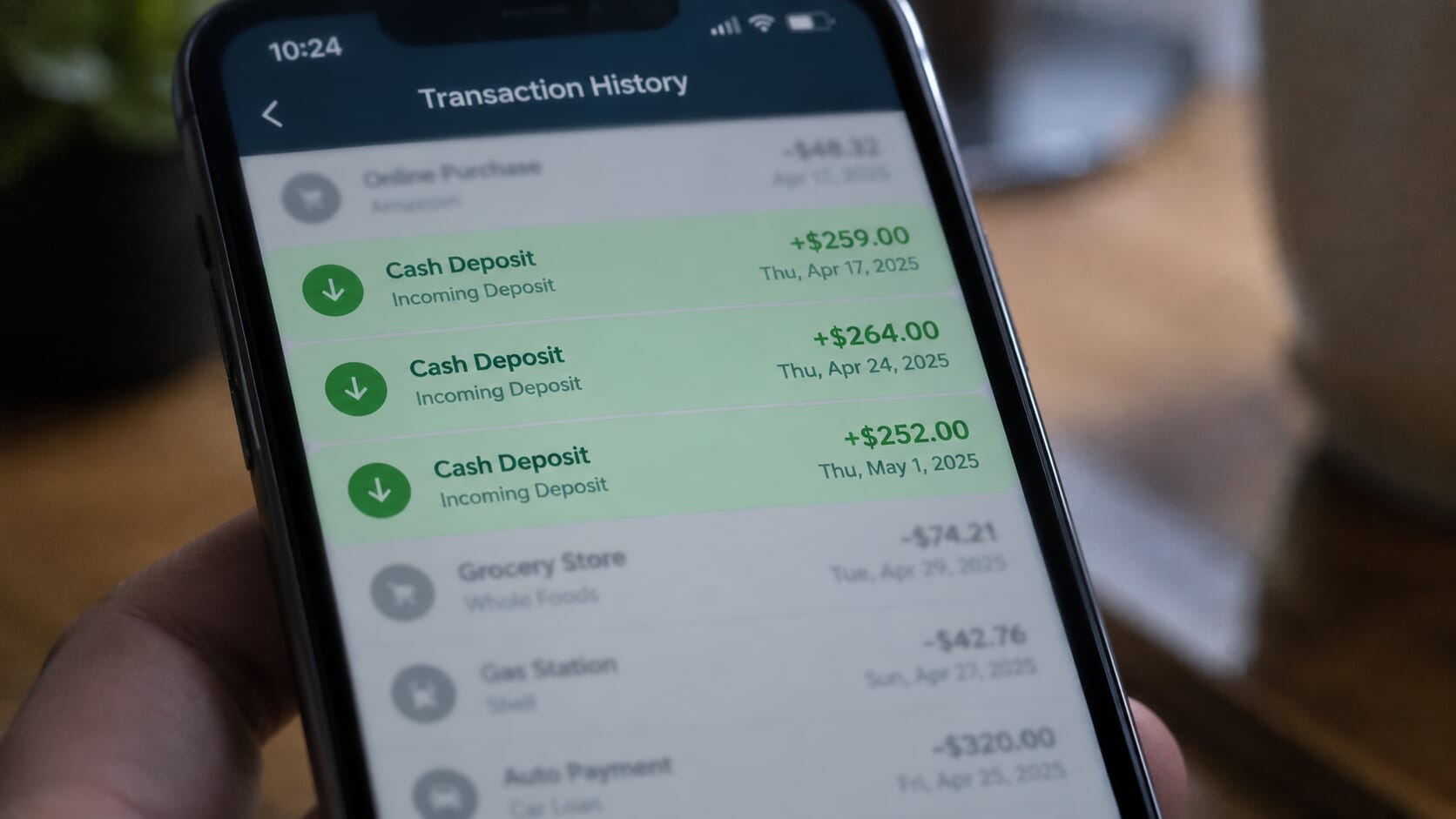 Look closely at the dates on those deposits.
They arrive exactly seven days apart. Always on a Thursday.
While the mainstream media begs everyday Americans to pour their life savings into overpriced AI tech stocks, a small group of insiders is doing something completely different.
They aren't buying shares of Nvidia or Palantir and praying the market doesn't crash.
Instead, they are quietly exploiting a bizarre new market anomaly.
This hidden mechanism is literally forcing the trillion-dollar AI boom to spit out hard cash.
And it distributes that cash directly into regular bank accounts every single week.
You don't need a Wall Street broker to set this up, and it has absolutely nothing to do with traditional dividend investing.
The financial elite desperately want to keep this quiet.
Click here to see the leaked footage of how this Thursday payout strategy actually works.
🧠 Health & Life · 50+

Six in ten Americans say the Iran war has not been worth it — and for people over 50, the math is personal: gas, groceries, and a portfolio that has spent seven months reacting to a conflict most voters never wanted.
The NBC News poll that found Trump's approval at 41% also asked Americans directly whether the Iran war has been worth it. More than six in ten said no. That number tracks almost exactly with the share of voters who say Trump's policies have hurt the economy — which means for most Americans, the war and the economic pain are the same story. Gas hit $4.36 this month. The Fed just raised rates for the first time in three years. Groceries have been running above 5% inflation since spring. For Americans on fixed incomes or approaching retirement, the cumulative effect of seven months of war-driven inflation is not abstract.
The four-day drop in Brent crude — from $108 to $101.67 — is the first sustained relief signal since the East-West pipeline went offline. If diplomacy at UNGA produces even a ceasefire framework, energy analysts project Brent could fall to the mid-$80s within weeks, which would pull gas below $3.80 and meaningfully reduce inflationary pressure heading into winter. For retirees and near-retirees managing drawdown portfolios, lower energy prices also reduce headline inflation, which affects Social Security COLA calculations for 2027.
"
More than six in ten voters say the Iran war has not been worth it. They ranked the cost of living as their most pressing issue in both March and September — before and after the war drove gas above $4.
— NBC News poll, September 20, 2026
What to watch this week: Trump's UNGA speech Tuesday and Pezeshkian's Wednesday address will set the tone for markets through the end of September. A diplomatic signal — even a vague one — will likely push crude lower and ease pressure on household budgets. An escalation signal — or a breakdown in the Gulf talks — will push Brent back toward $108 and potentially higher. For anyone managing a fixed income or a retirement portfolio, the next 72 hours in New York matter more than any Fed meeting this year.
Advertisement
For decades, families built estate plans around one assumption: inherited retirement accounts could grow and distribute gradually, across an entire lifetime.
Congress eliminated that runway.
Bob Carlson built a timeline comparison showing the before-and-after in stark terms.
A hypothetical $500,000 inherited IRA could have stretched across 30 or more years under the old rules. Under the forced 10-year liquidation rule, that same account must be emptied on Congress' schedule.
Compressing those distributions into a single decade pushes heirs into higher tax brackets at the worst possible moment — while they're still working, still earning, still being taxed at peak rates.
The visual contrast is not subtle. The tax acceleration is not theoretical.
Bob Carlson built a detailed breakdown of this compression curve — and identified 7 legal maneuvers designed to interrupt it before the IRS timeline becomes the family's timeline.
See the 10-year account drain comparison chart here
The window to act before the first forced distribution narrows with every tax year that passes.
⚖️ Crime & Law

AG Blanche has three days to turn over the FBI's Epstein interview notes — including testimony from a woman who says Trump abused her — or face contempt of court himself.
The September 24 deadline set by U.S. District Judge Beryl Howell is now three days away. Attorney General Todd Blanche — who served as Trump's personal defense attorney before becoming the nation's top law enforcement officer — must produce FBI agents' handwritten notes from interviews conducted during the Epstein investigation. Among those notes is an interview with a woman who told federal agents that both Trump and Epstein abused her when she was a girl. Howell ruled last week that Blanche is still withholding files the law requires him to release, and warned explicitly that he could face contempt proceedings if the deadline is missed.
Blanche is also required to prove that the names redacted from previously released documents belong to actual victims — as the Justice Department has claimed — rather than to individuals whose identities the department is protecting for other reasons. Howell said the court is not satisfied with the department's prior explanations. The Justice Department has made no public statement about whether it will comply with the September 24 order. The Leon Black contempt referral — passed unanimously by the House last week — is also sitting on Blanche's desk awaiting a prosecution decision.
"
If Blanche misses the September 24 deadline, Judge Howell has the power to hold the sitting attorney general of the United States in contempt of a federal court — an event with no modern precedent.
— Dark Bulls
The political geometry here is as constrained as it gets. Producing the documents exposes the president to new scrutiny on the Epstein record at the worst possible moment — during UNGA week, with midterms seven weeks away, and Trump's approval already at its second-term low. Defying the court exposes Blanche personally and creates a constitutional confrontation with no clean resolution. There is no good option. The deadline is Wednesday.
📋 In Brief
Trump speaks at UNGA Tuesday.
Trump addresses the General Assembly Tuesday. Pezeshkian speaks Wednesday. No bilateral meeting is on the schedule, but Trump said Sunday he is "probably open" to one. Qatar is the back-channel. Oil fell to $101.67 on that signal alone.
Greenland deal at UNGA.
Trump is expected to sign a Greenland security agreement on the UNGA sidelines granting the U.S. permanent military basing rights while preserving Danish sovereignty. The agreement fulfills one of the most controversial foreign policy proposals of his first term.
Blanche deadline: Wednesday.
September 24 is three days away. AG Blanche must produce FBI Epstein interview notes or face contempt. The Justice Department has not said whether it will comply. Judge Howell is waiting.
— David
Dark Bulls
Published Monday–Friday