The US sent Iran a counteroffer and then Rubio told the delegation to leave the country

The Daily Digest
Dark Bulls
Thursday · October 1, 2026
The U.S. quietly sent Iran a counteroffer through Qatar — a seven-day confidence-building period tied to the June memorandum. Then Rubio expelled Iran's delegation from the country. Inflation came in better than expected. Hegseth announced a drone warfare command and cut 20% of generals. Nike reports today. The new fiscal year just started.
Thursday, October 1. The first day of the new fiscal year opens with the most significant Iran diplomatic development in weeks — a real American counteroffer transmitted through Qatari mediators — immediately complicated by Rubio ordering Iran's delegation out of the country. PCE inflation surprised to the downside. Hegseth remade the Pentagon's command structure. And Nike's earnings tonight will tell us whether American consumers are still spending. Let's get into it.
Advertisement
Is your bank branch next to close in 2026?!
 Across the country, banks are quietly shutting down locations with little warning and even less explanation.
Here's what's already happening:
▶ PNC Bank: 22 branches closing
▶ JP Morgan Chase: 66 branches closing
▶ Citizens Bank: 18 branches closing
▶ Bank of America: 45 branches closing
In just one recent week, 64 bank branch closures were announced.
This isn't random. And it's not about foot traffic.
Behind the scenes, banks are restructuring how and where your money is stored and accessed. When branches disappear, so does direct access. And when access disappears, control shifts.
👉 Click here to see why branches are closing and what steps some Americans are taking to shield their savings while there's still time.
This isn't about panic. It's about preparation.
Across the country, banks are quietly shutting down locations with little warning and even less explanation.Here's what's already happening:
▶ PNC Bank: 22 branches closing
▶ JP Morgan Chase: 66 branches closing
▶ Citizens Bank: 18 branches closing
▶ Bank of America: 45 branches closing
In just one recent week, 64 bank branch closures were announced.
This isn't random. And it's not about foot traffic.
Behind the scenes, banks are restructuring how and where your money is stored and accessed. When branches disappear, so does direct access. And when access disappears, control shifts.
👉 Click here to see why branches are closing and what steps some Americans are taking to shield their savings while there's still time.
This isn't about panic. It's about preparation.
In Focus
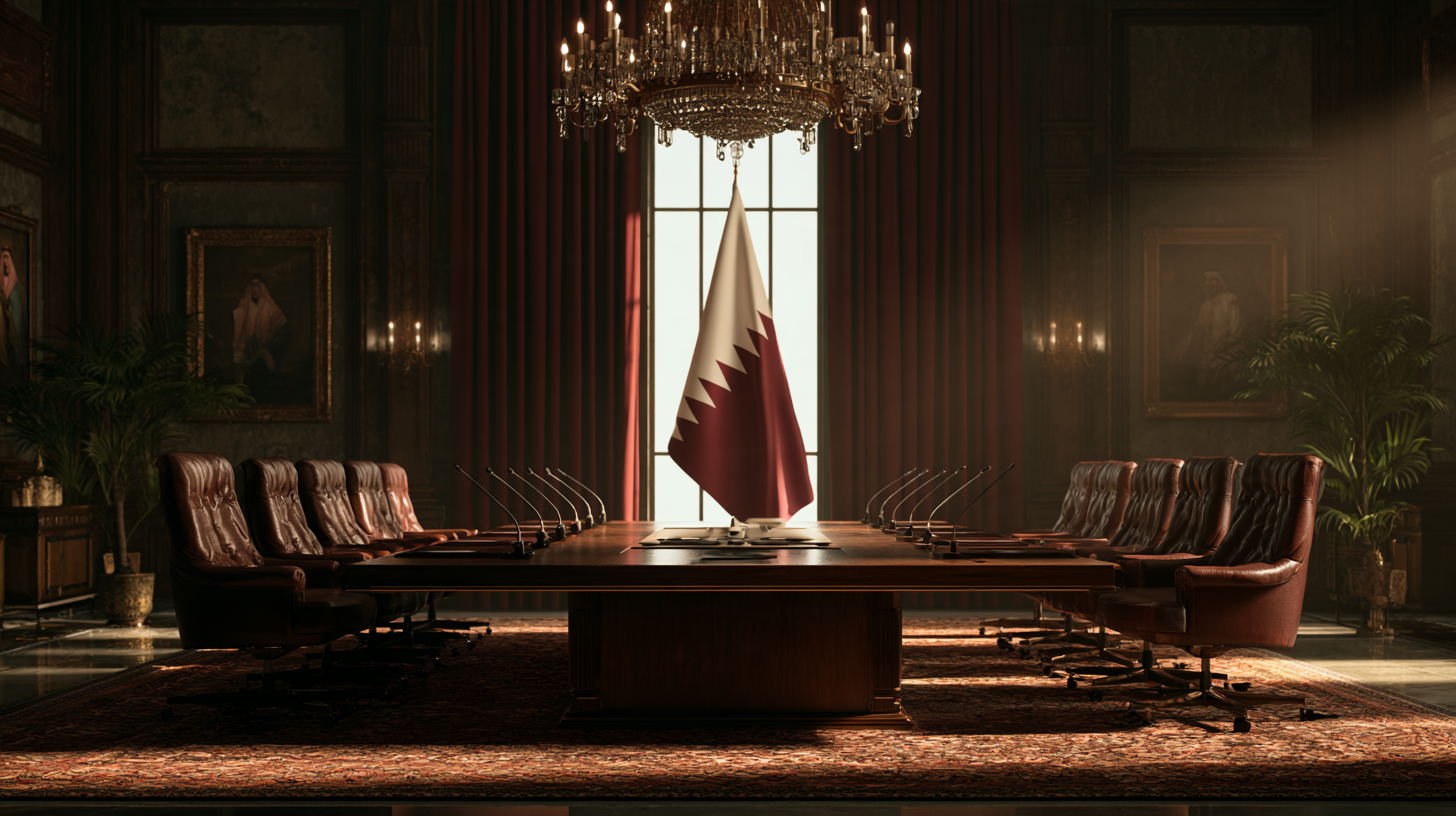
The U.S. sent Iran a formal counteroffer through Qatari mediators — a seven-day confidence-building period tied to the June memorandum — then Rubio ordered the Iranian delegation to leave the country.
October 1, 2026 · War / Diplomacy
Qatari mediators delivered a formal U.S. counteroffer to Iranian Foreign Minister Abbas Araghchi during a stop in Doha on his way home from New York. According to sources familiar with the document, the American proposal calls for a seven-day period of confidence-building measures — both sides pulling back from offensive operations — as a bridge back to an expanded version of the June memorandum of understanding. That memorandum originally called for a cessation of hostilities, a reopening of Hormuz, and 60 days of negotiations toward a final agreement. It collapsed in July when the two sides disagreed on sequencing, nuclear steps, and the release of frozen Iranian assets.
The counteroffer is the most substantive American diplomatic move since UNGA week — and it arrived after the president publicly denied making any offer at all. When Axios reported last week that the White House had proposed sanctions relief and asset unfreezing in exchange for nuclear steps, the president called it "fake news" and demanded a retraction. The counteroffer now confirmed by multiple sources suggests the reporting was directionally accurate, even if the specific terms differed. Araghchi had said Tuesday he expected a U.S. response by Wednesday. He got one.
Advertisement
Medicine was not scientific for most of human history. Bloodletting, leeches, holy water — healers threw whatever they could against the wall. Cancer has plagued humanity for thousands of years. Ancient Egypt depicted it. Persian Queen Atossa had her slaves cut off her breasts to remove a "bleeding lump." There was never any solution.
Today we've advanced enough to actually combat it. And in capitalism, you are paid in direct proportion to the difficulty of the problems you solve.
 Moderna popped almost 200% in 24 hours on a successful Phase 3 cancer drug trial. Merck added $43 billion to its market cap on the same news.
We are entering what I call Biotech's Ignition Point. The free-fall in AI computing costs is now fusing with advanced AI models and 24/7 autonomous wet labs. Development timelines are collapsing by up to 80%. Early-stage clinical success rates are reportedly hitting 90%. Previously "undruggable" diseases are suddenly wide open.
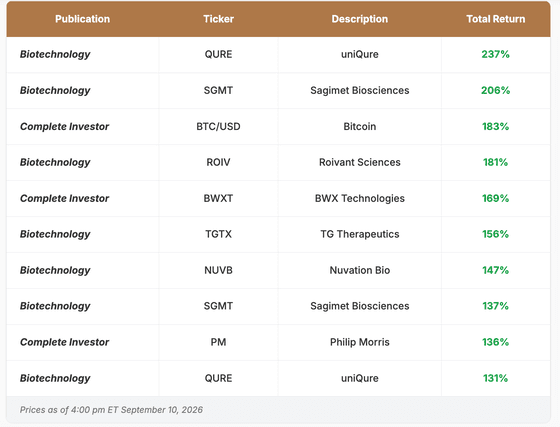 Six of our top 10 highest-performing positions right now are from biotech. 237% on uniQure. 206% on Sagimet Biosciences. 156% on TG Therapeutics. And we delivered those gains before this Ignition Point has even truly begun.
Click here to stream the Ignition Point broadcast immediately.
Good investing,
Porter Stansberry
Today we've advanced enough to actually combat it. And in capitalism, you are paid in direct proportion to the difficulty of the problems you solve.
Moderna popped almost 200% in 24 hours on a successful Phase 3 cancer drug trial. Merck added $43 billion to its market cap on the same news.We are entering what I call Biotech's Ignition Point. The free-fall in AI computing costs is now fusing with advanced AI models and 24/7 autonomous wet labs. Development timelines are collapsing by up to 80%. Early-stage clinical success rates are reportedly hitting 90%. Previously "undruggable" diseases are suddenly wide open.
Six of our top 10 highest-performing positions right now are from biotech. 237% on uniQure. 206% on Sagimet Biosciences. 156% on TG Therapeutics. And we delivered those gains before this Ignition Point has even truly begun.Click here to stream the Ignition Point broadcast immediately.
Good investing,
Porter Stansberry
The complication arrived almost simultaneously. Secretary of State Marco Rubio ordered Iran's UN delegation — which had remained in the United States after UNGA week on diplomatic visas — to leave the country. The expulsion followed the breakdown of direct talks in New York and was described by sources as a signal that Washington was not going to wait indefinitely for Tehran to respond to the counteroffer. The move puts Iran's foreign minister in the position of responding to a U.S. proposal from Tehran rather than through in-person channels, adding friction to a diplomatic process that is already running entirely through intermediaries.
Oil moved on every word. WTI was up about 2% Thursday morning at $92.40 — reversing some of the week's decline — as markets parsed the counteroffer as a genuine diplomatic signal while the delegation expulsion added uncertainty. For a third straight week, oil is pricing the Iran diplomatic track more than any supply or demand fundamental. The pattern is now well-established: every signal of progress sends crude lower; every signal of breakdown pushes it higher. The seven-day confidence-building period in the counteroffer, if accepted, would be the most significant de-escalation since the June memorandum.
"
The American counteroffer calls for a seven-day period of confidence-building measures as a bridge back to an expanded version of the June memorandum — the most substantive U.S. diplomatic move since UNGA week.
— Sources familiar with the document, via mediators, October 1, 2026
What happens next depends on Tehran's response — and on whether the supreme leader's office, which has repeatedly undercut President Pezeshkian's more moderate signals, allows Iran to engage with the counteroffer. The June memorandum collapsed in part because of internal Iranian disagreement between the foreign ministry and the IRGC. That divide has not been resolved. Araghchi is traveling home. Rubio is waiting. Qatar is in the middle. And oil is watching every move.
Today's Digest
Advertisement
CNBC called it the "hottest IPO of the year." Even Warren Buffett, who almost never invests in IPOs, took a stake.
But Goldman Sachs and Morgan Stanley priced Snowflake at $120 a share — a price that was never available to ordinary investors. By the time it opened for public trading, shares were already above $245. A 104% overnight jump that retail investors didn't capture.
Investors who chased Snowflake after the opening earned just 6% over the following years. While one overlooked stock connected to the same IPO wave climbed 1,248%.
Now, with OpenAI, Anthropic, SpaceX and hundreds of other companies approaching the public markets, a former Wall Street insider believes the same setup is returning. He calls the overlooked stocks surrounding these deals:
"IPO MULTIPLIERS"
See where he's looking before the next major AI IPO arrives.
— David
Dark Bulls
Published Monday–Friday