Jensen Huang said three words that changed how Wall Street thinks about AI

Thursday · August 27, 2026
The Daily Digest
Dark Bulls
Nvidia doubled its revenue in a year and says the boom is just starting. The CIA flew to Moscow in secret. A glacier collapsed in the Himalayas with 65 Americans missing. And Meta just paid $16.7 billion for what it did to your kids.
A lot happened after Wednesday's close. Nvidia's earnings came in $4 billion above expectations and Jensen Huang said something markets will spend weeks thinking about. The CIA director's secret Moscow trip got more complicated when sources revealed its actual purpose. A glacial disaster in Nepal is still unfolding with American lives in the balance. And the Meta settlement over child safety is being called the tobacco moment for social media. Jackson Hole is open today — Warsh speaks tomorrow. Let's get into it.
📈 Money & Markets
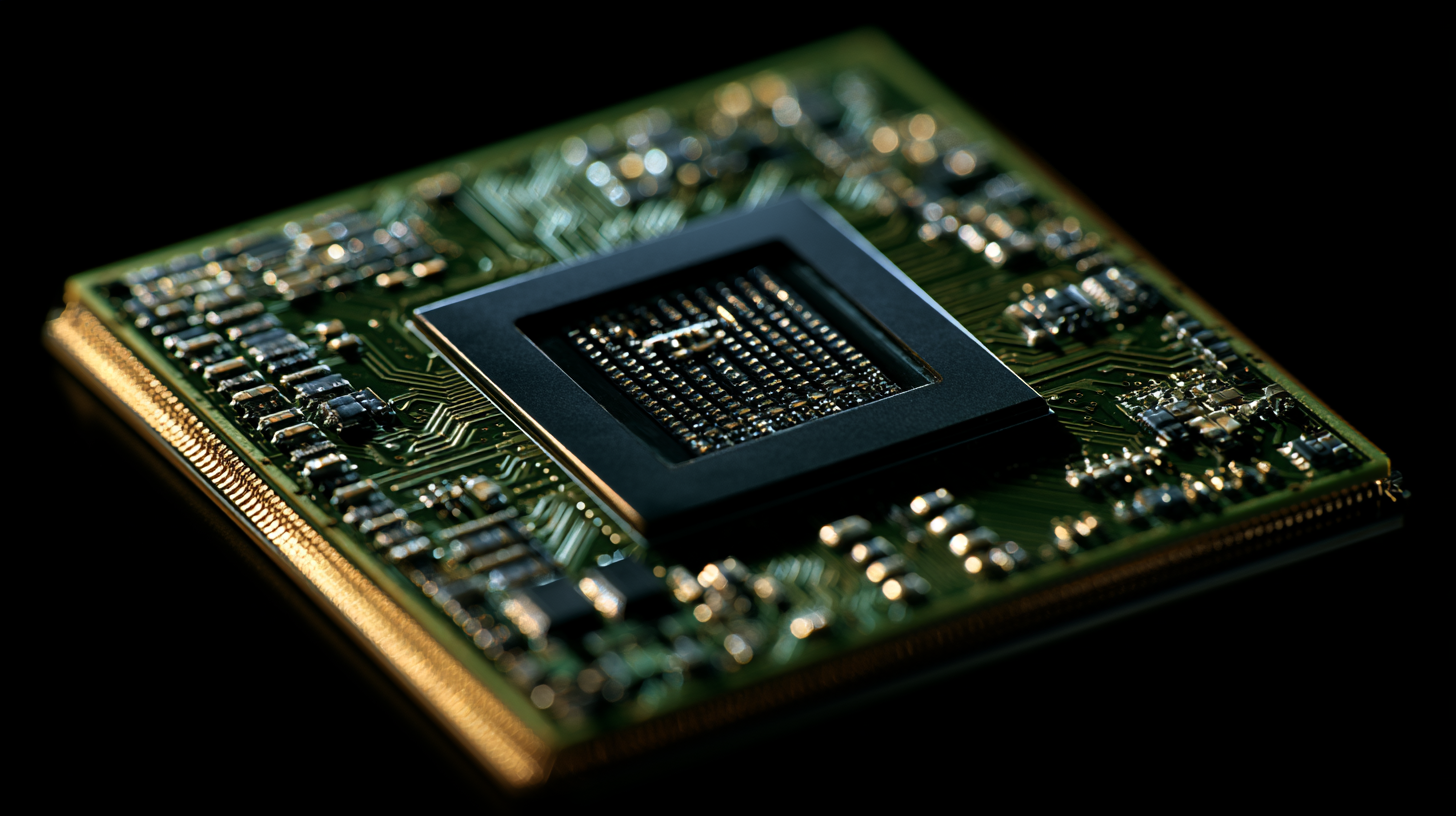
Nvidia just doubled its revenue in a single year — and Jensen Huang says the AI boom is only now getting started.
After the close on Wednesday, Nvidia reported second-quarter revenue of $96.2 billion — up 106% from a year ago and $4 billion above what Wall Street had expected. Earnings per share came in at $2.22 non-GAAP, versus the $2.09 consensus. Gross margins held at 75%, a number that would be extraordinary for a software company and is almost unheard of for a hardware manufacturer at this scale. The company also announced that Amazon Web Services will purchase 2 million Nvidia GPUs as part of a dramatically expanded partnership.
CEO Jensen Huang's framing was deliberate. "AI has reached its inflection point," he said on the earnings call. "It's doing useful work. Its tokens are productive and profitable. Now, compute is revenue." That last phrase is the one markets will be repeating. It's Nvidia's answer to investors who've been asking whether the AI infrastructure buildout will eventually slow — Huang's position is that the spending isn't speculative anymore, it's tied directly to revenue generation at the companies deploying the chips.
"Compute is revenue." — Jensen Huang, Nvidia CEO. Three words that changed how Wall Street thinks about AI spending.
— Dark Bulls
The guidance was equally striking. Nvidia projected that hyperscaler capital expenditure will rise from roughly $800 billion this year to $1.3 trillion in 2027. For Nvidia, which captures a dominant share of that spending, that number implies continued growth that most analysts had not yet built into their models. Separately, Nvidia confirmed reports that it has agreed to acquire AI model platform Hugging Face for approximately $13 billion — a deal that would give it a direct foothold in the open-source AI ecosystem.
For regular investors, this report matters beyond the stock price. When Microsoft, Google, Amazon, and Meta collectively spend $166 billion on AI infrastructure in a single quarter — up 87% from a year earlier — they are betting their businesses on it. Nvidia is the company selling the picks and shovels. Wednesday's numbers suggest the gold rush is accelerating, not tapering.
Nvidia Q2 FY2027 · Aug 26, 2026
$96.2B
Revenue (+106% YoY)
75%
Gross margin
$1.3T
Hyperscaler capex 2027
Advertisement
SUPPLY CHAIN ANALYSIS
The Hidden Middleman Cut Built Into Every Cup of Coffee
 Ground coffee prices hit a record high of $9.72 per pound at U.S. grocery stores earlier this year, and remain elevated at over $9.30 per pound today.
Yet famous coffee brands do not own coffee trees. They act as asset-light marketers who buy green beans through networks of exporters, traders, and brokers. Every middleman takes a fee along the way, passing costs directly to the consumer while squeezing profits.
Green Coffee Company built a direct solution. As the largest producer of Colombian arabica coffee, we grow coffee on our own 45 farms, process it in our proprietary eco-mills, and maintain control of it all the way through roasting and delivery to store shelves. By controlling every step from seed to sale, we eliminate middleman markups and capture margin across the entire supply chain.
Ground coffee prices hit a record high of $9.72 per pound at U.S. grocery stores earlier this year, and remain elevated at over $9.30 per pound today.
Yet famous coffee brands do not own coffee trees. They act as asset-light marketers who buy green beans through networks of exporters, traders, and brokers. Every middleman takes a fee along the way, passing costs directly to the consumer while squeezing profits.
Green Coffee Company built a direct solution. As the largest producer of Colombian arabica coffee, we grow coffee on our own 45 farms, process it in our proprietary eco-mills, and maintain control of it all the way through roasting and delivery to store shelves. By controlling every step from seed to sale, we eliminate middleman markups and capture margin across the entire supply chain.
Traditional Brand Model
Green Coffee Company Model
Buys beans from exporters
Owns 45 farms & 10,000+ acres
No farming or milling control
Proprietary water-efficient mills
Absorbs middleman markups
Captures value from seed to shelf
Standard licensing deals
Exclusive U.S. Juan Valdez® rights
🏛️ Politics

The CIA director flew to Moscow in secret — and the real reason was to warn Russia not to touch NATO.
CIA Director John Ratcliffe made an unannounced trip to Moscow on Tuesday, landing at Vnukovo airport on a U.S. Air Force C-17 after departing from Riga, Latvia. The visit wasn't announced by Washington — it was spotted by commercial flight trackers. Before Ratcliffe departed, the Trump administration asked Ukraine to suspend drone and missile strikes on Moscow, St. Petersburg, and northern Russia for the duration of the visit. The Ukrainians complied.
CBS News reported Wednesday evening, citing multiple sources, that the primary purpose of the visit was to deliver a direct warning: Russia should not attack NATO member states. Recent U.S. and European intelligence assessments had flagged that Putin might order a limited provocation — cyberattacks, hybrid operations, or a physical incursion — to test the alliance's resolve under the new American administration. Ratcliffe also raised Iran, warning that additional sanctions would follow if the Strait of Hormuz remained closed to shipping.
"The point of a CIA director's visit is precisely that it allows communication that doesn't have to be acknowledged."
— Dark Bulls
President Trump, asked about the visit on Wednesday, described it as "semi-routine" and pushed back on both reported purposes. "John Ratcliffe is a fantastic guy," Trump said. "He is not in there for any of the things that you said." Trump pointed instead to Ukraine peace efforts as the broader context, saying "something may come out of it" and that both sides want to see the war ended. The Kremlin confirmed Ratcliffe met with Russian intelligence counterparts but did not meet with Putin.
The gap between what Trump said publicly and what CBS sources said privately is not unusual for intelligence diplomacy. What's notable is that the visit happened at all. This is the highest-level Trump administration visit to Moscow since January, at a moment when the Russia-Ukraine war has no negotiated end in sight, NATO is watching its eastern flank nervously, and American credibility in the region is being actively tested. Whether Ratcliffe's warning landed is a question that won't be answered publicly for some time.
Advertisement
West Virginia Governor Patrick Morrisey recently welcomed a massive $850 million project to Mason County.
This announcement aligns directly with Washington's aggressive push for American energy dominance.
Instead of burning coal, Frontieras North America uses its patented FASForm™ process to convert raw coal into clean hydrogen, diesel, and fertilizer with zero smoke.
With global patents across 9 countries, Frontieras is positioning itself to capture a major share of the $2.1 trillion energy market.
They have already reserved the NASDAQ ticker "FASF" and raised over $45M from 14,000 investors alongside a $150M institutional commitment.
Before they officially list on the stock exchange, everyday Americans can acquire shares in this private Reg A+ round. Shares are currently priced at $9.87 per share with a $1,352.19 minimum investment.
This is a paid advertisement for Frontieras's Regulation A offering. Please read the offering circular at https://invest.frontieras.com/
Reservation of the ticker symbol is not a guarantee that we will be listed on the NASDAQ. Listing on the NASDAQ is subject to approvals.
Sources* The global market for our products is worth a combined value of over $2.1 trillion — GlobeNewsWire.com, MarketsAndMarkets.com, TransparencyMarketResearch.com, FortuneBusinessInsights.com, MarketResearchFuture.com, PrecedenceResearch.com
🌍 Science & World
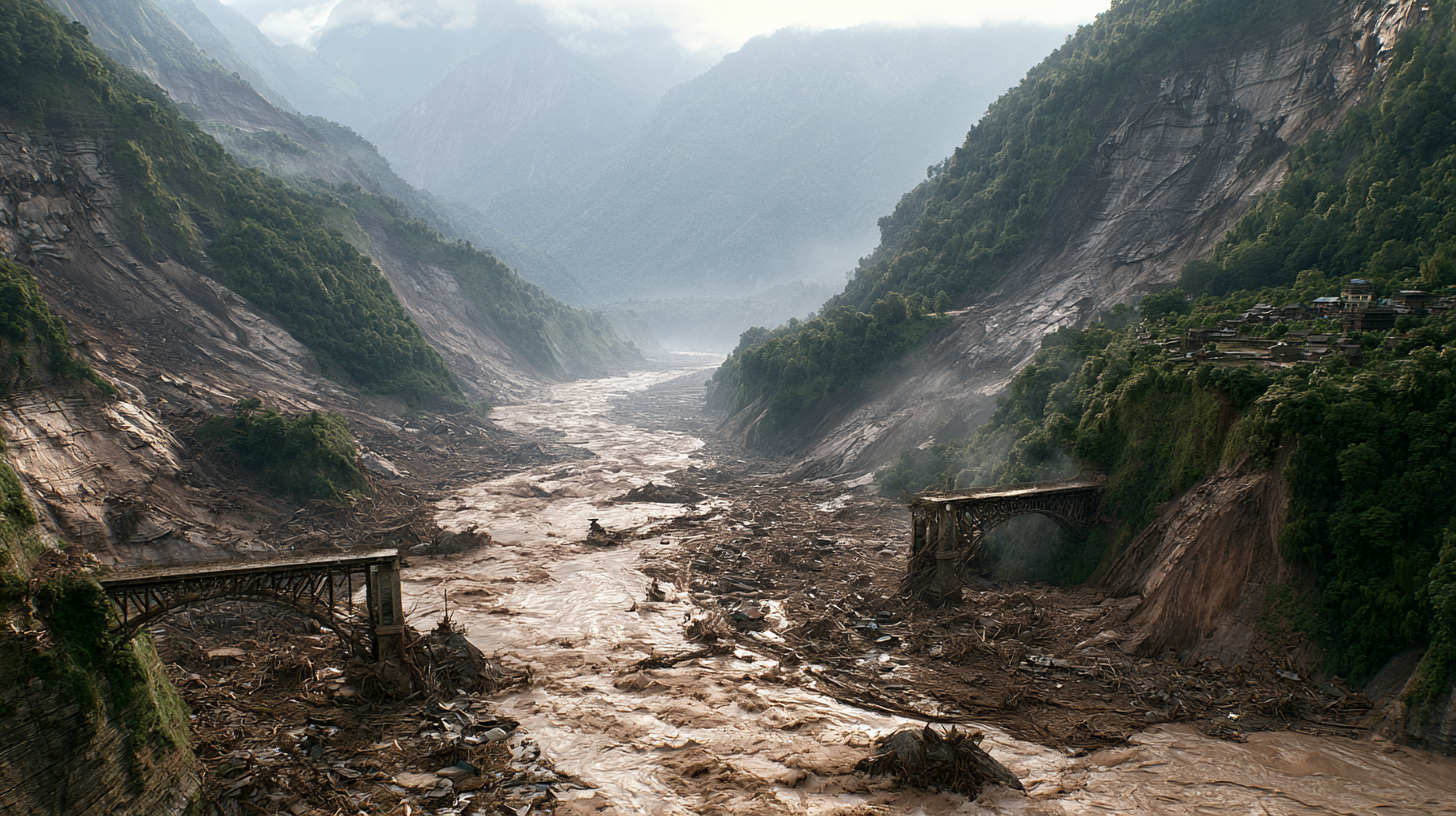
A glacier collapsed into a Himalayan river on Wednesday morning — and 65 Americans are among more than 1,300 people still missing.
The disaster struck at 8:40 a.m. local time in Nepal's Rasuwa district, along the Nepal-Tibet border, when a massive wall of mud, rock, and glacial ice collapsed into the Bhote Koshi River. The resulting surge swept through valleys at extraordinary speed, destroying villages, bridges, roads, and a major hydropower facility. By Thursday, Nepal's police reported at least 353 dead and 826 missing on the Nepali side. In Tibet, Chinese state media reported 3 dead and 558 missing, 260 of them foreigners.
Among the missing are at least 65 American citizens, according to the Nepal Tourism Board — a number that more than doubled from the previous day as authorities gained a clearer picture of who was in the region. The area draws significant international tourism, particularly pilgrimages to Mount Kailash in Tibet, a sacred site for Hindus from around the world. The India-based Isha Foundation reported that 77 people from one of its pilgrimage groups were caught in the flooding near the Nepal-China immigration crossing.
"A barrier lake has formed in the Tibetan section of the affected zone — if it fails, a secondary surge is possible."
— Dark Bulls
The Nepalese army has been running helicopter evacuations since Thursday morning, pulling survivors from locations that road access can no longer reach — nearly 40 kilometers of roads were damaged or destroyed in the initial event. A barrier lake has formed in the Tibetan section of the affected zone, creating the risk of a secondary surge if it fails. Chinese military aircraft were deployed to the region on Thursday.
For American families waiting for news, the State Department has said the number of U.S. nationals affected is still being determined and has fluctuated throughout the day. The U.S. Embassy in Kathmandu is in direct contact with Nepali authorities. If you have family or friends who were traveling in the Nepal-Tibet border region, the Embassy's emergency line is the most direct point of contact.
Advertisement
We caught Wall Street in the act.
Take a look:
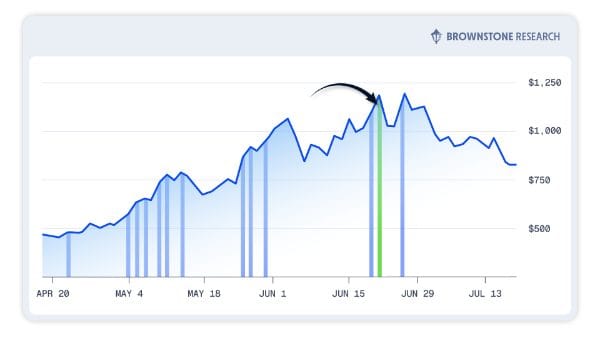 Right here in June… BlackRock made a strange move. It put nearly $1 billion into a forgotten-about corner of the AI market.
In fact, we flagged a number of strange transactions from gigantic firms like Goldman Sachs and JPMorgan… into two specific stocks in this critical but rarely talked about corner of AI.
I believe these companies are loading up ahead of November 3.
Right here in June… BlackRock made a strange move. It put nearly $1 billion into a forgotten-about corner of the AI market.
In fact, we flagged a number of strange transactions from gigantic firms like Goldman Sachs and JPMorgan… into two specific stocks in this critical but rarely talked about corner of AI.
I believe these companies are loading up ahead of November 3.
Right here in June… BlackRock made a strange move. It put nearly $1 billion into a forgotten-about corner of the AI market.
In fact, we flagged a number of strange transactions from gigantic firms like Goldman Sachs and JPMorgan… into two specific stocks in this critical but rarely talked about corner of AI.
I believe these companies are loading up ahead of November 3.
🧠 Health & Life · 50+

Meta just agreed to pay $16.7 billion for designing Facebook and Instagram to addict children — and the changes it's agreeing to make are long overdue.
The settlement, announced Wednesday and involving 29 U.S. states, resolves a landmark federal trial that accused Meta of knowingly engineering its platforms to maximize engagement among minors, hiding internal research about the harms, and collecting data from children in violation of federal law. Meta did not admit wrongdoing. But the company agreed to something arguably more significant than the money: sweeping changes to how Facebook and Instagram operate for users under 18.
Under the terms, Meta will impose a two-hour daily usage limit for teenagers, block platform access from midnight to 6 a.m., restrict notifications during school hours, and give teens and their parents the option of a chronological feed rather than the algorithmic one that's been optimized to keep them scrolling. Kids also won't be able to see likes or reactions on posts. The settlement is being compared in scale and consequence to the tobacco industry's landmark 1990s agreement — which also didn't involve an admission of wrongdoing but fundamentally reshaped an industry's relationship with public health.
"Internal Meta documents revealed during the trial showed the company's own researchers identified serious harms years ago. The settlement doesn't undo that history."
— Dark Bulls
The financial terms are significant but survivable for Meta. The company said it expects to take a $10 billion charge in the current quarter. Meta shares actually edged up slightly on the news — investors had been bracing for a jury verdict that could have reached $1.4 trillion in penalties if the trial had run to its conclusion. As part of the settlement, Meta also sent an open letter to TikTok and YouTube calling on them to join the agreement, with roughly $5 billion of the settlement contingent on those platforms adopting similar restrictions.
For parents and grandparents watching how much time the younger generation spends on these platforms, the practical question is whether Meta will implement these changes as agreed, and whether they'll make a measurable difference. The research on that is genuinely mixed. What isn't mixed is what Meta's own researchers found and didn't disclose. The settlement doesn't undo that history. It does, at least, establish that the behavior had a price.
Advertisement
Trump's Retirement Revolution Starts NOW
Retirees, listen up: President Trump's back, and your golden years just got a major upgrade.
 His bold economic moves — extending the 2017 tax cuts and unleashing deeper reforms — could flood your pockets with cash and unlock insane wealth-building potential.
But here's the catch: traditional 401(k)s, IRAs, and TSPs? They're ticking time bombs. One market crash, one shady manipulation, and poof — decades of savings, gone.
Trump left you a lifeline — a wealth-protection secret the IRS doesn't want you to know. It's your chance to shield your retirement from chaos, tax-free and penalty-free, with a rock-solid strategy.
This window's closing fast. Don't wait for the next crisis to wish you'd acted. Secure your future. Thrive in Trump's America.
His bold economic moves — extending the 2017 tax cuts and unleashing deeper reforms — could flood your pockets with cash and unlock insane wealth-building potential.
But here's the catch: traditional 401(k)s, IRAs, and TSPs? They're ticking time bombs. One market crash, one shady manipulation, and poof — decades of savings, gone.
Trump left you a lifeline — a wealth-protection secret the IRS doesn't want you to know. It's your chance to shield your retirement from chaos, tax-free and penalty-free, with a rock-solid strategy.
This window's closing fast. Don't wait for the next crisis to wish you'd acted. Secure your future. Thrive in Trump's America.
His bold economic moves — extending the 2017 tax cuts and unleashing deeper reforms — could flood your pockets with cash and unlock insane wealth-building potential.
But here's the catch: traditional 401(k)s, IRAs, and TSPs? They're ticking time bombs. One market crash, one shady manipulation, and poof — decades of savings, gone.
Trump left you a lifeline — a wealth-protection secret the IRS doesn't want you to know. It's your chance to shield your retirement from chaos, tax-free and penalty-free, with a rock-solid strategy.
This window's closing fast. Don't wait for the next crisis to wish you'd acted. Secure your future. Thrive in Trump's America.
📋 In Brief
Jackson Hole is open — Warsh speaks tomorrow.
The Kansas City Fed's annual symposium opened today at Jackson Lake Lodge in Wyoming, with roughly 120 central bankers and officials from more than 70 countries. New Fed Chair Kevin Warsh delivers his first keynote tomorrow, Friday August 28, at 10 a.m. ET. After Wednesday's hotter-than-expected PCE print, the pressure on him to give markets a clear signal about December rates just increased considerably. The theme this year is "Financial Innovation: Implications for Payments and Policy" — but what traders actually want to hear is simple: does the Fed plan to hike, or not.
Nvidia acquires Hugging Face for $13 billion.
Sources confirmed Thursday that Nvidia has agreed to buy Hugging Face, the open-source AI model platform used by hundreds of thousands of developers worldwide. The deal would give Nvidia direct control over the largest community hub for AI models and datasets — extending its dominance from chips into the software layer above them. Coming the same day as its record earnings report, the acquisition signals Nvidia isn't content to be just the hardware company of the AI era.
Federer's Hall of Fame induction is today.
After Tuesday night's standing ovation at Arthur Ashe Stadium, Roger Federer will be formally inducted into the International Tennis Hall of Fame this afternoon in Newport, Rhode Island. McEnroe, Agassi, and Roddick — his partners and opponents from Tuesday's exhibition — will all be present. The U.S. Open main draw begins Sunday.
— David
Dark Bulls
Published Monday–Friday