Iran offered to open Hormuz in seven days and oil fell below $95

The Daily Digest
Dark Bulls
Friday · September 25, 2026
Iran offered to open the Strait of Hormuz within seven days if the U.S. lifts its port blockade — and Brent fell below $95. The US-China summit produced a $30 billion trade deal and an AI dialogue framework. Hurricane Nolo is heading for Hawaii with potentially catastrophic flooding. And Judge Sullivan moved to hold AG Blanche in contempt.
Friday. The week that may have changed the trajectory of the Iran war ends with the most concrete diplomatic offer since February: Hormuz open in seven days if the U.S. steps back. Oil is pricing it in hard. The US-China summit wrapped with tangible if modest results. A hurricane is bearing down on Hawaii. And the Epstein standoff between a federal judge and the attorney general escalated to contempt. Let's close the week.
Advertisement
An 11 ounce bag of coffee sells for close to $14 at Target, and the grower who actually produced it sees about $2 of that.
The rest gets split six ways before the bag ever reaches a shelf. The wet mill takes a cut, then the dry mill, then the exporter, the roaster, the distributor, and finally the retailer. Every hand along the way adds its margin, and the whole bill lands on you at checkout.
What almost nobody realizes is that the famous coffee names on that shelf sit at the very end of that same line. They do not run farms and they never touch a harvest. They buy pre-processed beans from brokers, put a logo on the bag, and let everyone upstream keep the value that was actually created.
Which means the most profitable position in the entire coffee business — owning the dirt the coffee grows in — has been sitting empty this whole time.
One company took it. Green Coffee Company owns 45 farms across more than 10,000 acres of Colombian mountainside, along with the largest processing mills in the country, and they maintain control of their coffee the whole way from seed to shelf.
Every dollar those six middlemen used to take now stays in the house — which is why revenue has gone from $1 million to $26 million and why their coffee is already sitting in more than 3,000 stores.
The company is still private, and until September 30 you can buy in at the current share price instead of just paying that $14 at the register.
Invest in Green Coffee Company before September 30
This is a paid advertisement for Green Coffee Company's Regulation A offering. Please read the offering circular at https://invest.greencoffeecompany.com/. Timelines are subject to change. Listing on the NASDAQ is contingent upon necessary approvals.
📈 Money & Markets

Iran's foreign minister offered to reopen the Strait of Hormuz within seven days if the U.S. lifts its port blockade — and Brent crude fell below $95 for the first time since January, its lowest level since before the war.
Market Pulse · Sept 25, 2026
<$95
▼ Brent Crude
Below $95 since Jan
7 days
▼ Iran offer
Hormuz reopens
$30B
◆ US-China deal
Board of Trade
$4.12
▼ Avg. Gas
Down from $4.36
Iranian Foreign Minister Abbas Araghchi announced Thursday that Iran has transmitted through its mediators a new seven-day proposal to reopen the Strait of Hormuz and restart talks to end the war. The proposal is built on the memorandum of understanding signed between Iran and the United States in June. Araghchi said that if "certain conditions are met" — specifically, the U.S. beginning to lift its naval blockade of Iranian ports and halting military operations around the strait — "the strait will be open in seven days." Oil markets responded immediately and dramatically: Brent fell below $95 a barrel for the first time since January, completing a $13 drop from last week's $108 high in just eight sessions.
The seven-day proposal is the most concrete diplomatic offer since the war began in February. Previous diplomatic signals have been vague — "openness to talks," "conditions being studied," "back-channel discussions." This is a specific timeline with a specific trigger. U.S. Energy Secretary Chris Wright issued a counter-statement arguing that Iran's blockade of Hormuz is already failing, claiming nearly 9 million barrels per day are transiting the strait. Independent tanker-tracking analysts put the actual figure at 4-6 million barrels per day — well below the pre-war level of roughly 21 million. The gap between Wright's number and the independent assessment reflects how contested the basic facts of the blockade remain.
"
Iran's mediators have offered the White House a new seven-day proposal to reopen the Strait of Hormuz and restart talks to end the war. The proposal ensures that if certain conditions are met — the strait will be open in seven days.
— Iranian Foreign Minister Abbas Araghchi, September 24, 2026
For American households, the oil move this week has been the most significant economic development since the Fed's rate hike. Gas nationally averaged $4.12 Friday — down 24 cents from last week's $4.36 high. If Brent holds below $95 and the Hormuz proposal moves toward implementation, analysts project gas could fall below $3.80 by mid-October. That would represent the first sustained sub-$4 gas in months — meaningful relief heading into the fall for anyone who drives, heats with oil, or carries inflation-sensitive debt. The week that might have changed the war's trajectory also changed your energy bill.
Advertisement
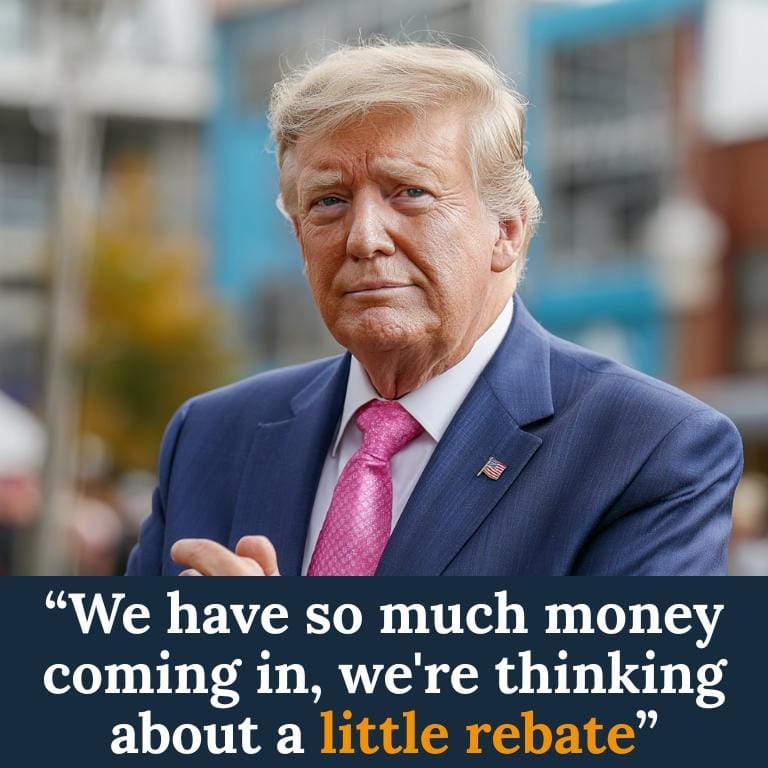 At a rally, he confirmed his Rebate Stimulus Plan — but it's not just about sending out checks.
Behind closed doors, his team is pushing a strategic wealth-protection move that could matter far more than a one-time payment.
Why now?
✅ Skyrocketing inflation
✅ A weakening dollar
✅ Markets spinning out
This isn't just a "bonus" — it's a chance to shield your savings from what's coming. And while Washington hands out checks, the people who act before the next wave hits could be the only ones who come out ahead.
Get your FREE 2026 Gold Protection Guide now.
It's fast, no cost, and could be the smartest move you make this year.
Claim My Free Guide Before the Checks Hit »
P.S. Once those checks start rolling out, this window may slam shut.
🏛️ Politics
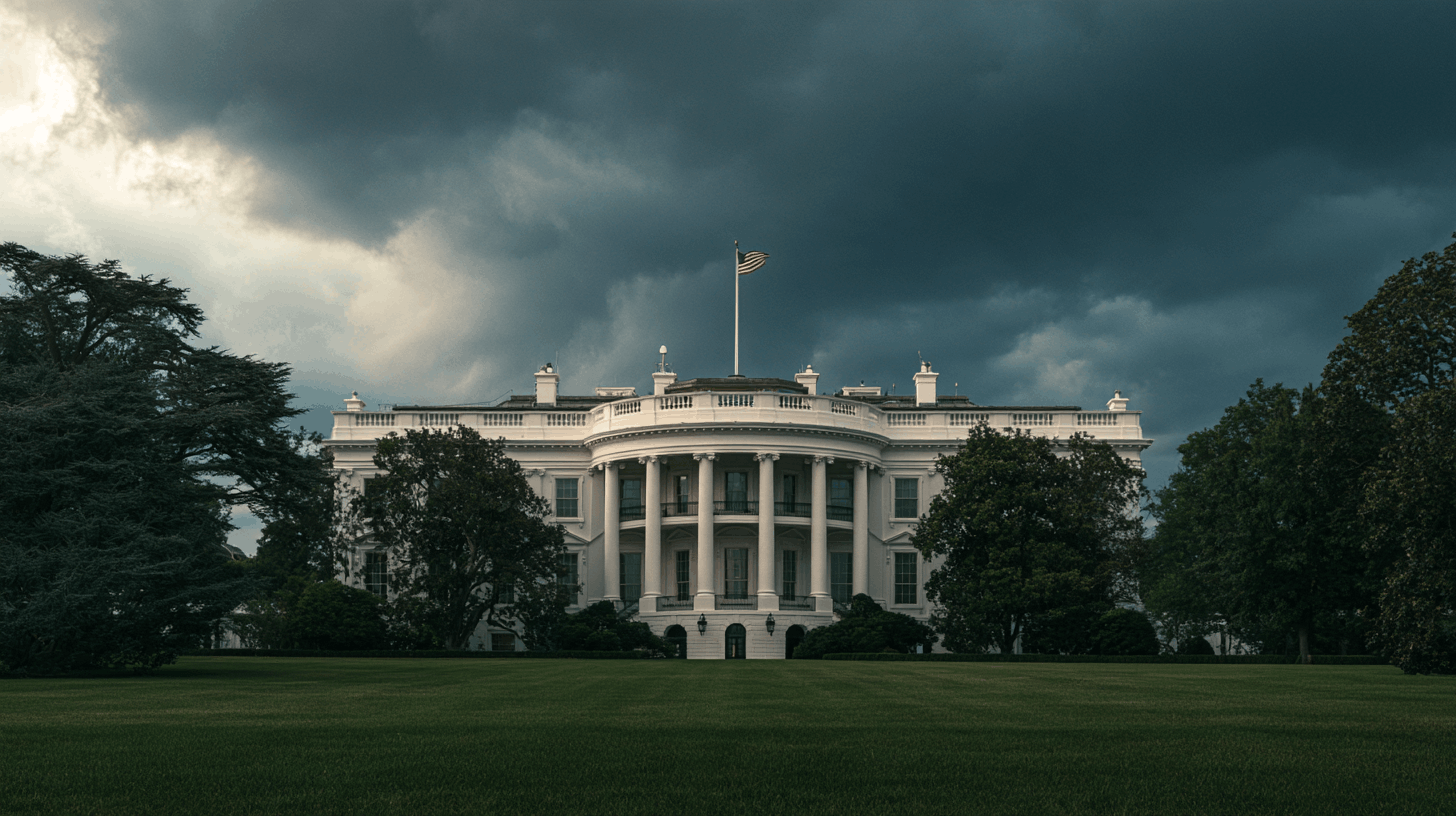
The US-China summit ended with a $30 billion trade deal, an AI dialogue framework, and a tariff truce extension — no chip breakthroughs, but enough to keep the relationship stable heading into APEC and the G20.
The one-day summit at the White House produced three concrete deliverables. First, a roughly $30 billion "Board of Trade" agreement covering matched purchases of non-sensitive goods — Chinese purchases of American agricultural products, energy, and manufactured goods in exchange for U.S. purchases in categories where China has comparative advantage. Second, a framework for a "US-China AI Dialogue" — a notification mechanism for AI incidents that rise to a national security level, the first bilateral AI safety structure between the two countries. Third, an extension of the existing tariff truce, with both sides agreeing to continue existing rates while negotiations on a broader framework continue.
What the summit did not produce: any resolution on semiconductor export controls, any agreement on Chinese AI companies allegedly distilling from American models, and any formal statement on Taiwan. Xi's decision to come to Washington for a single day — skipping UNGA entirely — signals that Beijing views the bilateral relationship as the primary diplomatic priority. Two summits in one calendar year is the highest pace of US-China leader engagement since before the first trade war began in 2018. Xi departs today. The next scheduled meetings are APEC in Shenzhen in November and the G20 in Florida in December.
Trade deal
$30B Board of Trade
Non-sensitive goods
AI dialogue
First ever
Incident notification
Next summits
APEC + G20
Nov + Dec 2026
"
The current trajectory reflects a relationship that is stabilizing on trade while continuing to deteriorate in strategic sectors. Economic engagement and strategic competition proceed simultaneously rather than replacing one another.
— Bower Group Asia analysis, September 2026
For investors, the summit outcome is a relief rally setup — no escalation, no new restrictions, modest progress on the trade side. Tech and semiconductor stocks that had been pricing in accelerated decoupling may see some reversal. The AI dialogue framework is symbolically significant even if it lacks enforcement mechanisms: it is the first time Washington and Beijing have agreed to a bilateral communication channel specifically for AI safety incidents. Given that the AI race is the defining strategic competition of the era, a hotline is not nothing.
Advertisement
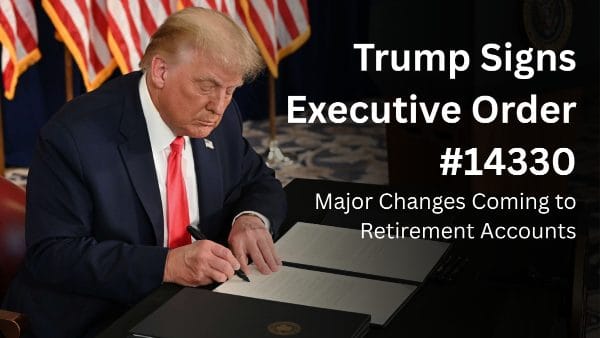
On August 7th the president signed Executive Order #14330.
For the first time ever, Americans will soon be able to hold precious metals (like gold & silver) inside 401(k)s.
That means more than $12 trillion in retirement savings could soon start flowing into the precious-metals market, creating one of the largest wealth shifts in modern history.
Since the announcement, gold prices have soared from $3,400 to over $4,000 per ounce — a 17% jump in just months.
Once the order takes effect in 2026, J.P. Morgan believes the demand could send gold prices toward $6,000 per ounce.
Billionaire investor Ray Dalio now recommends keeping 10–15% of your portfolio in gold to protect against inflation, debt, and market volatility.
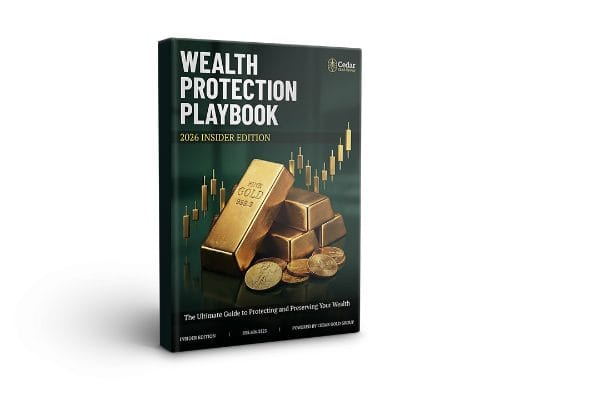
To help investors stay ahead of the curve, Cedar Gold Group released the 2026 Wealth Protection Playbook — a free guide revealing a little-known strategy for buying and storing gold BEFORE this executive order takes effect.
(Yes, this works with 401(k), IRA, TSP, 403(b), or even cash.)
When the 401(k) floodgate opens, being in on gold early could make all the difference.
Don't wait. With demand accelerating after this executive order, waiting could cost you.
Sincerely,
Cedar Gold Group
For the first time ever, Americans will soon be able to hold precious metals (like gold & silver) inside 401(k)s.
That means more than $12 trillion in retirement savings could soon start flowing into the precious-metals market, creating one of the largest wealth shifts in modern history.
Since the announcement, gold prices have soared from $3,400 to over $4,000 per ounce — a 17% jump in just months.
Once the order takes effect in 2026, J.P. Morgan believes the demand could send gold prices toward $6,000 per ounce.
Billionaire investor Ray Dalio now recommends keeping 10–15% of your portfolio in gold to protect against inflation, debt, and market volatility.
To help investors stay ahead of the curve, Cedar Gold Group released the 2026 Wealth Protection Playbook — a free guide revealing a little-known strategy for buying and storing gold BEFORE this executive order takes effect.
(Yes, this works with 401(k), IRA, TSP, 403(b), or even cash.)
When the 401(k) floodgate opens, being in on gold early could make all the difference.
Don't wait. With demand accelerating after this executive order, waiting could cost you.
Sincerely,
Cedar Gold Group
🌍 Science & World

Hurricane Nolo is bearing down on Hawaii with potentially catastrophic flooding — 15 to 30 inches of rain expected on the Big Island and Maui — as Hurricane Polo simultaneously batters Mexico's Pacific coast.
Hurricane Nolo
15-30 inches rain
Big Island + Maui
Target
Kauai + Niihau
Catastrophic flooding
Also active
Hurricane Polo
Mexico Pacific coast
Hurricane Nolo became a hurricane in the Pacific Ocean Thursday night and is expected to strengthen as it turns toward Hawaii's Big Island. The National Hurricane Center warned that the Big Island could see rainfall totals of 15 to 30 inches — with higher amounts possible — through Saturday, with catastrophic flooding a serious risk for Kauai and Niihau. Forecasters described the storm as carrying the potential for "major rainfall flooding that may prompt many evacuations and rescues" and warned that rivers and streams could overflow rapidly in multiple locations. Roads and bridges may close. Flash flood warnings are in effect across most of the main Hawaiian islands.
Simultaneously, Hurricane Polo was battering Mexico's Pacific coast Thursday — one of the strongest storms ever recorded in that corridor, according to AP reporting. Mexico's west coast residents stacked sandbags and evacuated beachfront areas as Polo's winds hit. The two simultaneous Pacific hurricanes represent an unusual convergence: Hawaii has already experienced its worst flooding in 20 years earlier in 2026 — a Kona Low event in March that caused more than $1 billion in damage to airports, schools, roads, and hospitals. Another catastrophic storm arriving six months later would strain the state's recovery resources significantly.
"
Hurricane Nolo became a hurricane Thursday night and was expected to strengthen while turning toward the Big Island. Forecasters warned the Big Island could see rainfall totals of 15 to 30 inches, with higher amounts possible through Saturday.
— National Hurricane Center / Associated Press, September 25, 2026
For anyone with family or property in Hawaii — and for the 1.4 million residents of the state — the next 48 hours are critical. Evacuation orders are expected for low-lying areas. Residents are urged to move to higher ground and avoid flooded roadways. The storm's track means the Big Island and Maui face the heaviest rainfall, while Kauai and Niihau face the most serious flooding and surge risk. The Federal Emergency Management Agency has been in contact with state officials. Hawaii Governor Josh Green declared a state of emergency Thursday evening.
Advertisement
Editor's Note: Hedge fund legend Larry Benedict went 20 consecutive years without a single losing year. Now, he's stepping forward to reveal what could be the biggest profit opportunity of his career — all tied to one overlooked ticker. Click here for the full details or read more below…
His approval is tanking over Iran… But the REAL motive changes everything… And it could hand everyday folks a once-in-a-generation windfall.
Because, according to hedge fund legend Larry Benedict — a man who went 20 years without a losing year — the Iran war has nothing to do with nukes…
And everything to do with something CNBC calls: "The lifeblood of the economy — and the key to the stock market."
And Larry says, if you know how to position yourself correctly today… You could turn these moves into fast, easy payouts of…
✅ $2,482 in two days
✅ $7,623 in eight days
✅ $8,704 in six days
All on one single ticker you can buy in any brokerage account.
Larry just gave out the name of that ticker for free in a new interview.
Click here to watch it now.
Regards,
Lauren Wingfield
Managing Editor, The Opportunistic Trader
🧠 Health & Life · 50+

The Packers beat the Falcons 27-20 in Thursday Night Football — and the NFL's Week 3 standings are starting to show which teams are for real and which ones have questions.
The Green Bay Packers beat the Atlanta Falcons 27-20 Thursday night at Lambeau Field in a game Atlanta desperately needed after getting demolished 34-3 by Carolina last week. The Falcons got the result they needed for most of the game — they led at halftime — but Green Bay's Jordan Love found his rhythm in the second half and the Packers pulled away. Green Bay improves to 2-1. Atlanta falls to 1-2 and the questions about their offensive line — which was supposed to be fixed this offseason — are back on the table.
The emerging picture after three weeks: Kansas City is 3-0 and looks like the same machine that's defined the AFC for five years. Carolina is 2-1 with the best win of any team in the NFC so far — that 34-3 demolition of Atlanta. San Francisco is 2-1 after handling Miami easily. The teams in serious trouble are Pittsburgh (1-2, being outscored in back-to-back weeks), the Giants (1-2, two consecutive blowouts), and Baltimore (1-2, a loss to the Saints they should have won). Week 4 is next Sunday and several of those struggling teams face must-win situations before October.
"
Green Bay pulls away in the second half to hand Atlanta their second loss of the young season. The Falcons' offensive line — rebuilt this offseason — continues to underperform, and the schedule doesn't get easier in Week 4.
— Dark Bulls
⚖️ Crime & Law

Judge Sullivan moved to hold AG Blanche in contempt over the Epstein files — ruling he failed to comply with court orders and initiating the process for the first contempt finding against a sitting U.S. attorney general in modern history.
U.S. District Judge Emmet Sullivan initiated contempt proceedings against Attorney General Todd Blanche Thursday after the 11am deadline for FBI Epstein interview notes passed without full compliance. The Justice Department had told Politico it "produced all responsive documents," but journalist Katie Phang's legal team — which filed the underlying lawsuit to enforce the Epstein Files Transparency Act — said the handwritten notes from an FBI interview with a woman who told agents that the president and Jeffrey Epstein abused her when she was a teenager remain unproduced. Sullivan ruled that Blanche had "failed to comply" with his orders and that the department's justifications for withholding documents were inadequate.
Sullivan's contempt initiation puts the case in a new phase. A formal contempt finding — which requires a separate hearing and ruling — would be unprecedented for a sitting U.S. attorney general. The practical tools available to Sullivan if he finds Blanche in contempt include fines, referral to Congress, and in extreme cases the appointment of a special master to manage document review. The fine request from Phang's team — $1,000 per day — is relatively modest; the symbolic weight of a contempt order against the nation's chief law enforcement officer is anything but.
"
The Attorney General refuses to review foreign-language documents. He refuses to produce an explanation for his redactions. And he refuses to produce documents he concedes contain no victim information.
— Katie Phang's legal team, filing before Judge Sullivan
The week ends with a constitutional standoff that has no clean resolution. Blanche — who was the president's personal defense attorney before becoming attorney general — is being asked to produce documents that may implicate his former client. He has chosen non-compliance at every step. Sullivan has run out of patience. The contempt hearing will set a date and process for the formal finding. Until then, the handwritten FBI notes from the Epstein investigation remain sealed inside the Justice Department, and the clock runs at $1,000 a day.
📋 In Brief
Iran's seven-day window.
The Hormuz proposal has been delivered through mediators. The U.S. has not publicly responded. If Washington accepts the basic framework, Hormuz could begin reopening as early as next week. Oil is already trading as if a deal is coming. The next 72 hours of diplomatic signals will move markets.
Hawaii: evacuate now.
Hurricane Nolo is expected to make its closest approach to the Big Island and Maui tonight and Saturday. Residents in low-lying areas of Kauai and Niihau face catastrophic flood risk. Governor Green has declared a state of emergency. Evacuation orders are in effect. Do not drive through flooded roads.
Week ahead: APEC prep begins.
Xi departs today. The next US-China summit is APEC in Shenzhen in November. The G20 in Florida follows in December. The AI dialogue framework agreed yesterday needs operational details filled in before either meeting. On Iran: the Hormuz proposal is on the table. The midterms are six weeks away. The war's next phase starts now.
— David
Dark Bulls
Published Monday–Friday