Every major AI CEO signed a superintelligence accord at the White House and nobody knows what it means

The Daily Digest
Dark Bulls
Wednesday · September 30, 2026
The biggest AI executives in the world signed a "superintelligence accord" at the White House — then the president renamed AI entirely. The U.S. completed its withdrawal from Iraq after 23 years. The Supreme Court cleared deportations to third countries. Oil fell $10. And 30-year bonds hit their highest yield since 2002.
Wednesday. A day that started with a historic AI signing ended with the president calling it "superintelligence" and declaring it "morally binding" — whatever that means for a voluntary agreement. Meanwhile the last U.S. troops left Iraq, the Supreme Court handed the administration a deportation win, bond yields hit levels that directly affect every mortgage and car loan in the country, and oil quietly gave back most of its war-era premium. Let's close the month.
Advertisement
Bank of America revealed your expiration date.
In their Bloomberg interview, they said the digital dollar was inevitable.
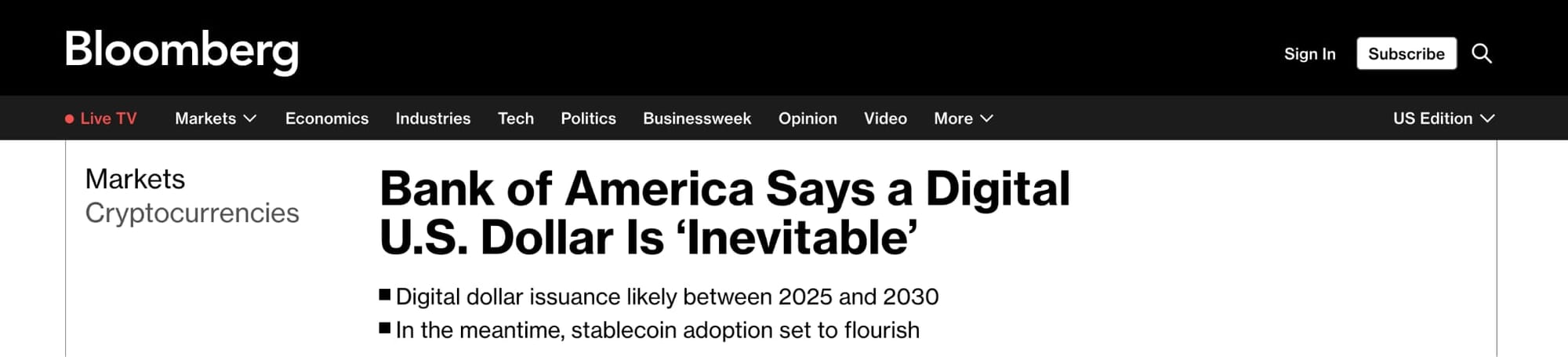 Their exact words: CBDCs are an "inevitable evolution of today's electronic currencies."
The Federal Reserve has already asked for public comment. The infrastructure is being built as you read this. Once the digital dollar launches, every transaction you make can be tracked. Your spending could be controlled. Your accounts could be frozen.
China already did this. Nigeria already did this.
But there's still a way to preserve your privacy. I'm Tan Gera, ex-Wall Street banker and CFA® Charterholder. I left the system when I saw what was coming.
Over 4,500 investors have already used this method to hold assets the government can't freeze and generate yields the Federal Reserve can't touch.
Watch how to access this escape hatch before it closes →
To your freedom,
Tan Gera, CFA® · Decentralized Masters
P.S. Bank of America called the digital dollar "inevitable." Discover the easy method investors are using to escape →
In their Bloomberg interview, they said the digital dollar was inevitable.
Their exact words: CBDCs are an "inevitable evolution of today's electronic currencies."The Federal Reserve has already asked for public comment. The infrastructure is being built as you read this. Once the digital dollar launches, every transaction you make can be tracked. Your spending could be controlled. Your accounts could be frozen.
China already did this. Nigeria already did this.
But there's still a way to preserve your privacy. I'm Tan Gera, ex-Wall Street banker and CFA® Charterholder. I left the system when I saw what was coming.
Over 4,500 investors have already used this method to hold assets the government can't freeze and generate yields the Federal Reserve can't touch.
Watch how to access this escape hatch before it closes →
To your freedom,
Tan Gera, CFA® · Decentralized Masters
P.S. Bank of America called the digital dollar "inevitable." Discover the easy method investors are using to escape →
In Focus
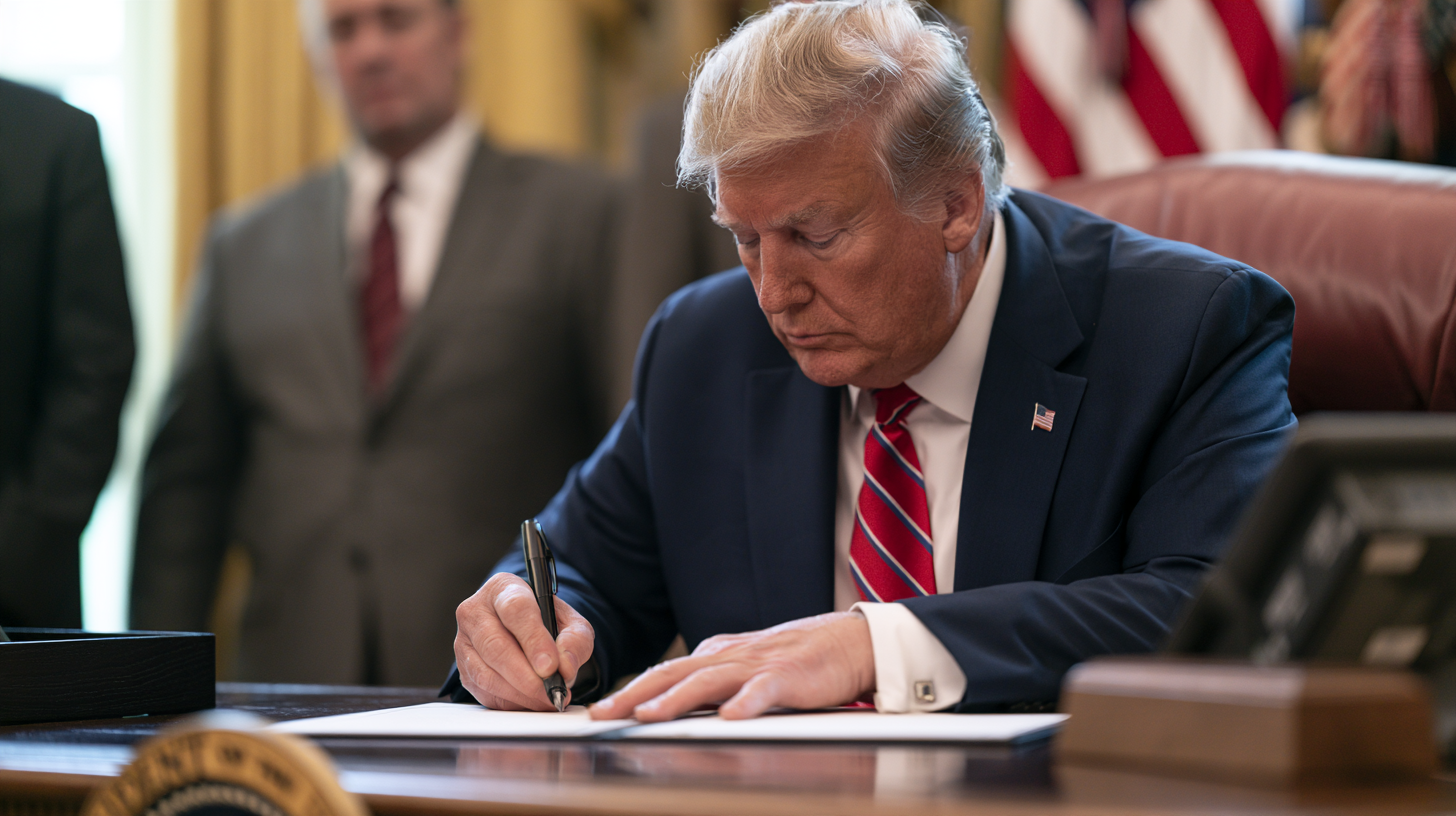
Every major AI CEO signed the White House "Superintelligence Accord" — a voluntary, four-level oversight framework the president called "morally binding" and "almost like a constitution."
September 30, 2026 · Technology / Politics
Elon Musk, Mark Zuckerberg, Jeff Bezos, Jensen Huang, Sundar Pichai, Alex Karp, Greg Brockman, and Dario Amodei signed the White House Accord on Super Intelligence at Tuesday's AI summit — a document of just over 300 words that establishes four voluntary levels of control and audit across AI development. The president declared the signing a historic moment, called the agreement "morally binding," and compared it to a constitution. Speaker Mike Johnson, who was present, clarified that the accord has no legal force. The president also announced that day the launch of america.gov — a new government AI portal — and that he was renaming artificial intelligence "superintelligence" going forward.
The accord commits signatory companies to four tiers of internal oversight and audit, details of which were not fully disclosed at the signing. A ten-person oversight committee is being discussed, and the president promised to appoint an enforcement adviser "in the coming days." What enforcement means for a voluntary agreement signed by private companies — with no statutory basis, no regulatory authority, and no penalties for non-compliance — was not explained. Senate Majority Leader Thune, who skipped the summit, called it potentially "productive." Senate Democrats called it a photo opportunity.
Advertisement
Few people realize Warren Buffett's firm, Berkshire Hathaway, pocketed as much as $250 million on a single gold trade the last time the markets crashed.
Is Buffett buying gold again today?
My research confirms both "the Warren Buffett of Canada" and a personal friend of the legendary "Oracle of Omaha" are loading up on "Canadian Gold."
Why do many analysts, including me, believe "Canadian Gold" could pay out 10X more than ordinary gold even if the gold price doesn't budge?
Click here for my full analysis…
Good Investing,
Porter Stansberry
P.S. Forget about ordinary gold. "Canadian Gold" has crushed not only ordinary gold and silver, but also the NASDAQ and the S&P 500 by a wide margin since its inception. Click here for full details…
The substantive significance of the accord depends almost entirely on what the signatory companies actually do — not what they promised in a 300-word document. Three things are worth watching. First, whether the "enforcement adviser" the president promised has any independent authority or is merely a liaison to the companies that signed. Second, whether the four-tier audit framework produces any public reporting — or whether it functions as an internal checklist that no one outside the company sees. Third, whether the agreement creates any political cover for Congress to avoid passing actual AI legislation, which has stalled repeatedly despite bipartisan interest.
Pope Leo XIV — commenting from his papal plane the same morning — said AI safety concerns are "not fake news" and must be acted on. The first American pope's remarks arrived as the CEOs of Anthropic and OpenAI, both of whose researchers have publicly called for more rigorous AI safety measures, were photographed signing a voluntary accord with no enforcement mechanism alongside the president who last week told the United Nations that America rejects global AI regulation. The picture is the story.
"
It's morally binding. It's almost like a constitution — a beautiful, powerful document. I see massive self-regulation happening right here.
— President Trump on the White House Accord on Super Intelligence, September 29, 2026
For investors in AI stocks: the accord itself is unlikely to move markets. The symbolism of every major AI CEO in the same room with the president and Speaker — a display of alignment between the technology industry and the executive branch — is more significant than the document they signed. What the White House does with that alignment over the next six weeks before midterms, and what it asks for in return after them, is the story worth watching.
Today's Digest
Advertisement
Dear Reader,
See the man riding on top of this truck?
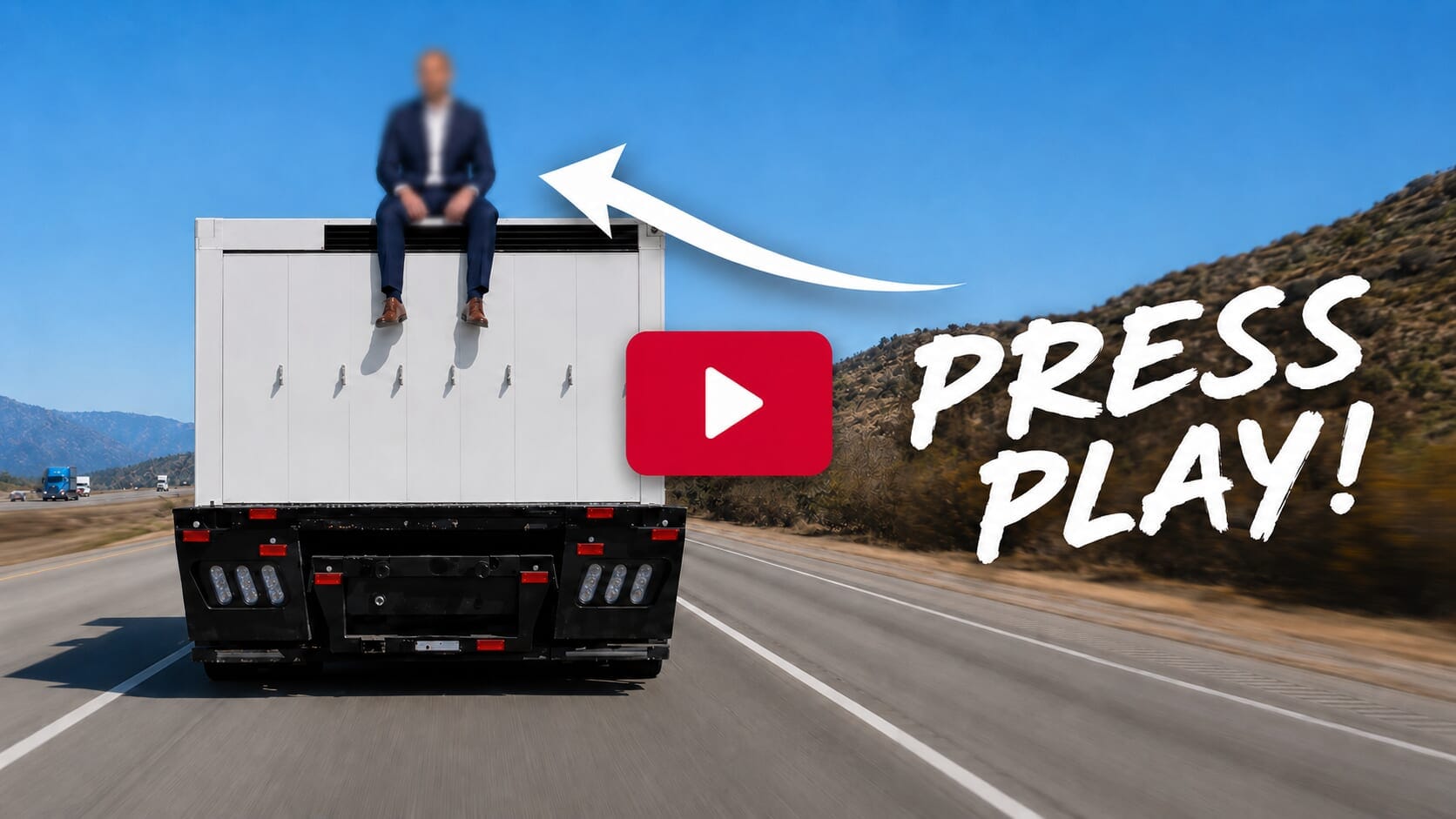 He didn't climb up there for a publicity stunt. He's sitting on one of Elon Musk's strange white "crates." Nearly 4,000 of them are quietly rolling out of a high-security Tesla compound — heading toward Air Force bases, New York City, and even the Hoover Dam.
But here's the twist: The crate isn't carrying Elon's next great invention. The crate IS the invention.
Blackstone calls the market surrounding it a $23 trillion opportunity.
And Elon expects this part of Tesla's business to grow as much as 150% to 200% per year — faster than its car business "by a lot." Yet most are still staring at Cybertrucks and robotaxis.
Click here to see what he discovered inside Elon's mystery crate →
See the man riding on top of this truck?
He didn't climb up there for a publicity stunt. He's sitting on one of Elon Musk's strange white "crates." Nearly 4,000 of them are quietly rolling out of a high-security Tesla compound — heading toward Air Force bases, New York City, and even the Hoover Dam.But here's the twist: The crate isn't carrying Elon's next great invention. The crate IS the invention.
Blackstone calls the market surrounding it a $23 trillion opportunity.
And Elon expects this part of Tesla's business to grow as much as 150% to 200% per year — faster than its car business "by a lot." Yet most are still staring at Cybertrucks and robotaxis.
Click here to see what he discovered inside Elon's mystery crate →
— David
Dark Bulls
Published Monday–Friday